Have Terrorists Taken an Unconventional Winter Risk in J&K?
Synopsis
In an unprecedented move, terrorists in Jammu and Kashmir are attempting operations during the harsh winter of Chilai Kalan. This article explores the shift in their tactics and the challenges faced by security forces. As the Indian Army intensifies its efforts, the situation remains critical amid changing dynamics of terrorism in the region.
Key Takeaways
30-35 terrorists are active in Jammu and Kashmir despite harsh winter conditions.
The Indian Army is conducting a significant operation in response to changing terrorist tactics.
Terrorists are isolating themselves at higher altitudes, a new strategy for them.
Community support for terrorists has diminished following the Pahalgam attack .
A heightened state of alert has been issued by Amit Shah for security forces in the region.
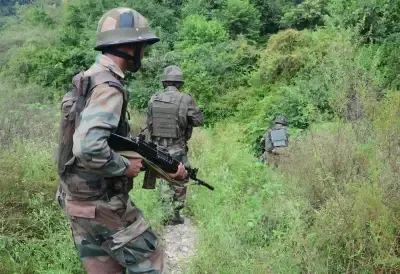
New Delhi, Dec 29 (NationPress) Over the past week, the Indian Army has been conducting a significant operation aimed at apprehending approximately 30-35 terrorists in Jammu and Kashmir. This mission is regarded as one of the most challenging endeavors launched by the forces in recent times, influenced by various factors.
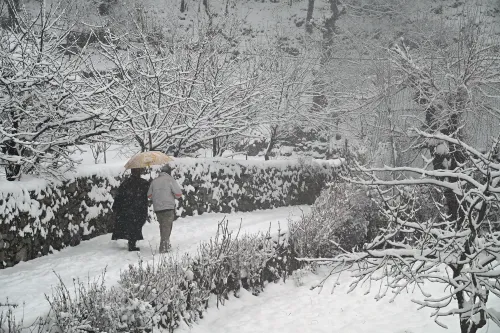
One major factor is the harsh winter conditions during Chilai Kalan, which spans from December 21 to January 31, bringing extreme cold to the region.
An official indicated that substantial progress in the ongoing operation is anticipated after January 31, as weather conditions will become more favorable for security personnel.
Despite the adverse climate, security agencies have observed a significant shift in the operational behavior of the Jaish-e-Mohammad terrorists.
This time, rather than remaining dormant as they typically do during this period, they are attempting to execute operations in defiance of the unhelpful weather.
These terrorists, now dispersed across the Doda and Kishtwar regions, are displaying a marked change in their operational pattern.
Additionally, they have chosen to isolate themselves at higher altitudes, a strategy they have not previously employed.
In the past, during this season, terrorists would often take refuge in local homes, receiving food and support from residents. However, this time, they are maintaining distance from the local populace.
Officials attribute this shift to the locals' refusal to assist them following the Pahalgam attack, prompting terrorists to isolate themselves.
An Intelligence Bureau official commented that the terrorists are undertaking considerable risks, both in terms of logistics and health, as operating at high altitudes in such weather increases their vulnerability to security forces.
The decision to take this risk indicates a desperate situation, as these terrorists are likely to attempt a low-scale attack, according to an official.
The Operation Sindoor, undertaken by the Indian armed forces in response to the Pahalgam attack, has significantly weakened the terrorist infrastructure.
With infiltration rates plummeting, Pakistan has resorted to activating some of its existing terrorist assets in the Valley to orchestrate attacks.
Even a low-scale attack in Jammu and Kashmir is viewed as critical for recruitment purposes. Pakistani officials believe that any such incident could bolster the morale of existing militants and attract new recruits.
Moreover, the terrorists are keeping communication to a minimum to evade detection.
These operatives have also opted to function in smaller groups, reducing the likelihood of mass elimination by the forces, as agencies have reported.
The operational landscape for these terrorist factions has shifted dramatically. Typically, activities would come to a standstill during this period due to severe weather. Nevertheless, these groups are now willing to engage in terrorist activities regardless of the climatic challenges they face. They are fully cognizant of their incapacity to launch large-scale attacks under these conditions, yet they are prepared to take the risk, which further signifies their desperation.
This development poses an ongoing challenge for security forces, who must remain vigilant throughout the year.
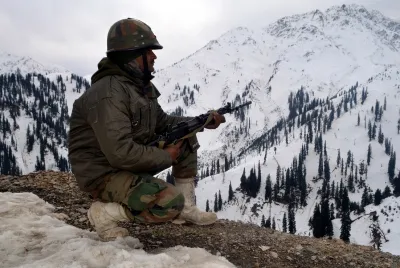
The army has intensified its operations, adapting to the harsh winter climate and rugged terrains. It has revised its strategies, adopting a more provocative stance during winter months. Unlike previous years, where activities were scaled back, operations have increased, including the establishment of snowbound bases to counter these threats.
Union Home Minister Amit Shah has instructed security forces to maintain a heightened state of alert in Jammu and Kashmir, anticipating that terrorists may exploit snowfall to cross into India from Pakistan. Indian agencies have reported the emergence of several launch pads in Pakistan-occupied Kashmir (PoK). However, infiltration remains challenging due to heightened security and constant surveillance.
Point of View
It is crucial to remain vigilant and adaptive in the face of evolving terrorist tactics. The Indian Army's proactive stance during winter operations highlights a commitment to national security. Ensuring safety in Jammu and Kashmir requires comprehensive strategies and cooperation with local communities, especially in challenging climates.
NationPress
30 Sept 2026
Frequently Asked Questions
What is Chilai Kalan?
Chilai Kalan is the coldest phase of winter in Kashmir, lasting from December 21 to January 31, characterized by heavy snowfall and freezing temperatures.
Why are terrorists operating during winter?
Terrorists are attempting operations during winter due to a shift in strategy, possibly driven by desperation and the need to maintain relevance amid declining support from local communities.
What is Operation Sindoor?
Operation Sindoor is a counter-terrorism operation launched by the Indian armed forces in response to the Pahalgam attack, aimed at dismantling terrorist infrastructure in Jammu and Kashmir.
How are security forces adapting to these changes?
Security forces are increasing their operational tempo during winter, establishing snowbound bases, and modifying their strategies to counteract the new tactics employed by terrorists.
What impact do low-scale attacks have on recruitment?
Low-scale attacks can boost the morale of existing militants and attract new recruits, making them significant for terrorist organizations like Jaish-e-Mohammad.