Anurag Thakur Greets Nation on Vijayadashami 2026
Synopsis
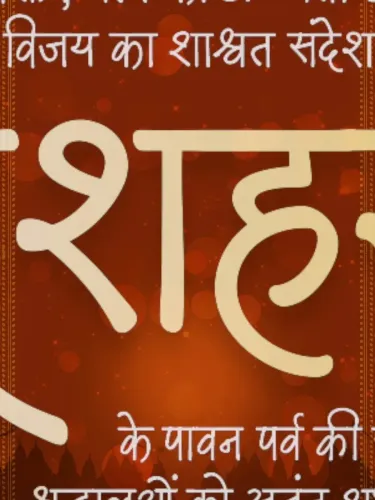
BJP MP Anurag Thakur marked Vijayadashami on 20 October 2026 with a bilingual Sanskrit-Hindi post invoking Lord Rama's victory and the perennial triumph of truth, dharma, and righteousness over evil — a culturally resonant message timed to India's biggest festival of good over evil.
Key Takeaways
Anurag Thakur , BJP Lok Sabha MP from Hamirpur, Himachal Pradesh , posted Vijayadashami greetings on 20 October 2026 .
The post opened in Sanskrit with a classical festival salutation before switching to Hindi.
Thakur invoked five contrasts: justice over injustice, righteousness over vice, divinity over demonism, dharma over adharma , and truth over falsehood.
The post closed with the devotional chant 'Siyavar Ram Chandra ki Jai' , invoking Lord Rama as consort of Sita.
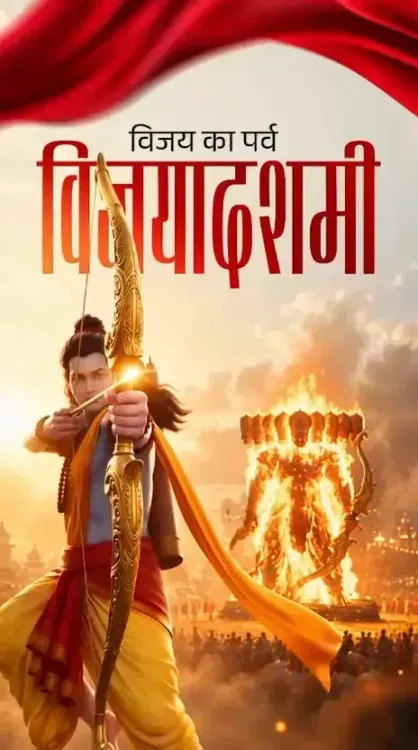
Vijayadashami, also called Dussehra , commemorates Rama's defeat of demon king Ravana and is marked nationwide by Ramlila performances and effigy burnings.
On the auspicious morning of Vijayadashami, BJP MP Anurag Thakur extended heartfelt wishes to the nation, invoking the timeless spirit of Yato dharmas tato jayah — 'Where there is dharma, there is victory.'
Posting on Tuesday, 20 October 2026, Thakur began with a Sanskrit salutation — 'Vijayadashamyah parvanas bhavatam bhavatinaam cha sarvesham krithe hardikya shubhakamnah. Vijayadashami vijayatam' — wishing all men and women the very best on this festival of victory. He then moved into Hindi, articulating the festival's layered moral architecture: the triumph of justice over injustice, righteousness over vice, divinity over demonism, dharma over adharma, and truth over falsehood. He closed with the devotional cry, 'Siyavar Ram Chandra ki Jai' — 'Victory to Lord Ram, consort of Sita.'
The Victory Vijayadashami Celebrates
Vijayadashami, also widely known as Dussehra, falls on the tenth day of the bright fortnight of the Hindu month of Ashwin. It commemorates the moment when Lord Rama — revered as an avatar of Vishnu and the supreme embodiment of dharma in the Ramayana — vanquished the demon king Ravana, freeing Goddess Sita and restoring cosmic order. Across India, the festival is marked by Ramlila performances and the ceremonial burning of effigies of Ravana, Meghnath, and Kumbhakarna — a dramatic, fire-lit enactment of evil's defeat that draws millions every year.
Why BJP Leaders Invoke Ram on This Day
For BJP leaders, Vijayadashami carries a particular cultural resonance that extends beyond the devotional. The festival's language — dharma triumphant, truth undefeated — maps naturally onto political messaging that the party has long cultivated around Hindu civilisational identity. Thakur, a five-term Lok Sabha MP from Hamirpur, Himachal Pradesh and a former Union Minister of both Information & Broadcasting and Youth Affairs & Sports, is one of the party's more visible voices on culture and youth. His post, bilingual in Sanskrit and Hindi and accompanied by a video, reflects a studied effort to ground the greeting in scriptural weight rather than mere seasonal courtesy.
Festival greetings of this kind from senior BJP parliamentarians are a consistent feature of India's political calendar — but the choice to open in Sanskrit signals a deliberate register: classical, pan-Hindu, and unmistakably rooted in the Sanatan tradition the party champions.
As effigies burn across the country tonight and Ramlila stages fall silent after weeks of performance, Thakur's message lands on a note that is both ancient and entirely intentional — Asatya par satya ki vijay, the victory of truth over falsehood, offered as both festival wish and political philosophy.
Point of View
The choice of register is unlikely to be accidental.
NationPress
20 Oct 2026
Frequently Asked Questions
What is Vijayadashami and why is it celebrated?
Vijayadashami, also called Dussehra, is a major Hindu festival celebrated on the tenth day of the bright fortnight of Ashwin, marking Lord Rama's victory over the demon king Ravana and the triumph of good over evil. It is commemorated through Ramlila performances and the burning of Ravana's effigy across India.
What did Anurag Thakur post for Vijayadashami 2026?
BJP MP Anurag Thakur posted bilingual Sanskrit-Hindi greetings on 20 October 2026, opening with a classical Sanskrit salutation, invoking the victory of dharma over adharma, truth over falsehood, and closing with 'Siyavar Ram Chandra ki Jai.'
What does 'Yato dharmas tato jayah' mean?
'Yato dharmas tato jayah' is a Sanskrit phrase meaning 'Where there is dharma, there is victory.' It is a celebrated maxim from the Mahabharata and is frequently invoked during Vijayadashami as an expression of righteousness prevailing over evil.
Who is Anurag Thakur and which constituency does he represent?
Anurag Thakur is a BJP Lok Sabha MP from Hamirpur in Himachal Pradesh and a five-term parliamentarian. He previously served as Union Minister of Information & Broadcasting and Union Minister of Youth Affairs & Sports.
Why do BJP leaders emphasise Hindu festivals like Vijayadashami?
BJP leaders consistently use major Hindu festivals such as Vijayadashami to reinforce the party's cultural identity rooted in Sanatan Hindu tradition. Festival greetings invoking dharma and Lord Rama are a regular part of the party's public communication strategy during the festive season.