Tharoor backs Prof C. Raj Kumar's 'India's Davos' vision for Sonipat
Synopsis
Congress MP Dr. Shashi Tharoor has publicly praised Prof. C. Raj Kumar's vision of making Sonipat 'India's Davos', citing the JGU founder's track record of building a world-class private university from scratch as grounds for optimism.
Key Takeaways
Shashi Tharoor backed Prof.
Raj Kumar's vision of transforming Sonipat into 'India's Davos' on 1 November 2026 .
Raj Kumar is the Founder and Vice-Chancellor of O.P.
Jindal Global University (JGU) , established in Sonipat, Haryana in 2009 .
JGU was built with an explicit focus on international academic standards, global faculty, and research partnerships.
Davos , Switzerland is the home of the annual World Economic Forum , synonymous with top-tier global economic and policy dialogue.
Sonipat's location in the National Capital Region gives it strategic proximity to Delhi's diplomatic and political infrastructure.
No specific public timeline or formal announcement for the 'India's Davos' initiative has been confirmed.
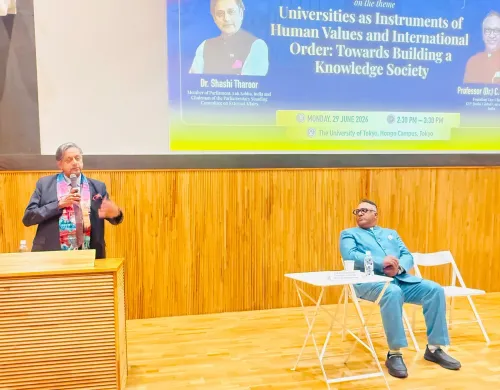
A city in Haryana's National Capital Region is being imagined as India's answer to the Swiss Alps summit that sets the global economic agenda — and Congress MP Dr. Shashi Tharoor thinks the man behind it might just make it happen. On Sunday, 1 November 2026, Tharoor publicly backed his friend, Prof. C. Raj Kumar, Founder and Vice-Chancellor of O.P. Jindal Global University (JGU), describing the ambition to transform Sonipat into 'India's Davos' as a 'typically bold vision.'
The man who built a world-class university in a Haryana field
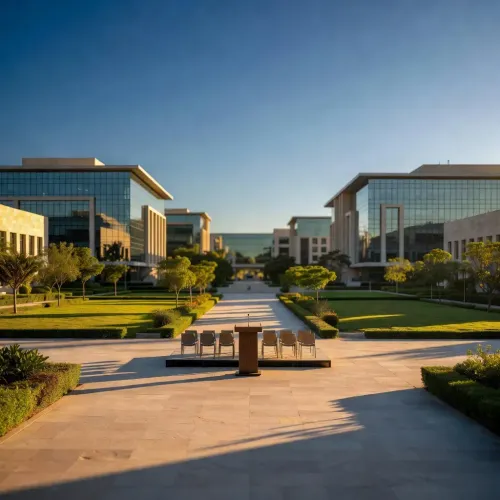
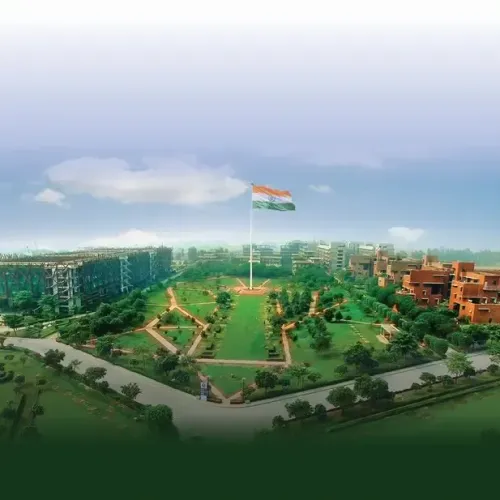
Prof. C. Raj Kumar founded O.P. Jindal Global University in Sonipat in 2009, with a stated mission to build an institution matching international standards in research, faculty, and academic partnerships. What began as a private university on the outskirts of Delhi has grown into one of India's most internationally connected campuses, drawing faculty and collaborations from across the globe. Tharoor's note — 'his track record suggests he might actually pull it off' — is a pointed endorsement, leaning on that 17-year institutional build as evidence of execution, not just aspiration.
Why 'India's Davos' — and why Sonipat?
Davos, the small Swiss town that hosts the annual World Economic Forum, has become shorthand for a particular kind of convening power: heads of state, CEOs, central bankers, and intellectuals in one room, shaping the global agenda for the year ahead. The phrase 'India's Davos' signals a bid not merely for a conference venue, but for that calibre of convening authority — a place where consequential conversations happen and decisions ripple outward. Sonipat, located within the National Capital Region, has geography working in its favour: proximity to Delhi's diplomatic and political infrastructure without being swallowed by it.
NCR's quiet ambition to host the next big idea
Indian states have periodically floated secondary cities near Delhi as emerging hubs for education, investment, and high-profile events. Private universities have been among the most visible catalysts in that push, often outpacing public infrastructure timelines. JGU's presence has already repositioned Sonipat in academic circles; the 'India's Davos' framing suggests an attempt to extend that repositioning into the economic and policy-dialogue space. Whether the vision materialises will depend on follow-through — partnerships, infrastructure upgrades, and the sustained political will of Haryana's government.
A politician-diplomat with Tharoor's global resume does not throw around the Davos comparison lightly. Watch this space.
Point of View
Global academic ambition, NCR geography — is precisely the template Indian policymakers have quietly hoped the private sector would replicate. Whether this remains a compelling metaphor or becomes a funded, structured initiative is the question Tharoor's endorsement now places on the table.
NationPress
1 Nov 2026
Frequently Asked Questions
What is Prof. C. Raj Kumar's vision for Sonipat as 'India's Davos'?
Prof. C. Raj Kumar, founder of O.P. Jindal Global University, envisions transforming Sonipat in Haryana into a high-level global conference and dialogue hub comparable to Davos, Switzerland, home of the World Economic Forum. No formal public timeline has been announced.
Who is Prof. C. Raj Kumar?
Prof. C. Raj Kumar is the Founder and Vice-Chancellor of O.P. Jindal Global University (JGU) in Sonipat, which he established in 2009 with a focus on international academic standards and global research partnerships.
Why is Sonipat being compared to Davos?
Davos is the Swiss town that hosts the World Economic Forum, globally associated with high-level economic and policy dialogue. The comparison signals an ambition for Sonipat to host similarly consequential international conversations, aided by its NCR location near Delhi.
What did Shashi Tharoor say about C. Raj Kumar's Sonipat vision?
Congress MP Dr. Shashi Tharoor posted on X on 1 November 2026 calling the vision 'typically bold' and adding that Raj Kumar's track record 'suggests he might actually pull it off,' referencing JGU's growth since 2009.
Where is O.P. Jindal Global University located?
O.P. Jindal Global University is located in Sonipat, Haryana, within the National Capital Region, approximately 45 kilometres north of New Delhi.