Tharoor Says He Hasn't Met Sonam Wangchuk Since
Synopsis
Congress MP Dr. Shashi Tharoor publicly noted on X that he has not met Ladakhi activist Sonam Wangchuk since a previous encounter. The exchange briefly highlights the unresolved question of Ladakh's political status and the gap between national opposition voices and regional civil society leaders.
Key Takeaways
Shashi Tharoor confirmed on 27 July 2026 via X that he has not met Sonam Wangchuk since their last encounter.
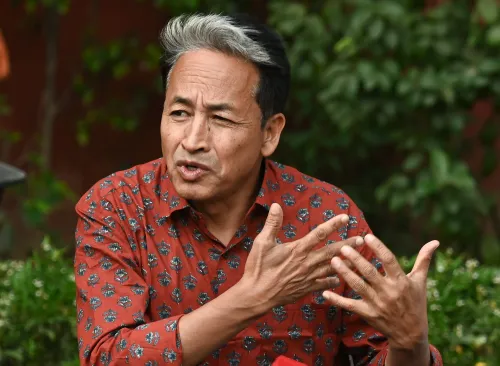
Sonam Wangchuk is a prominent Ladakhi activist campaigning for statehood, a legislature, and Sixth Schedule protections for the Union Territory.
Ladakh has been governed as a legislature-less Union Territory since August 2019 , following the abrogation of Article 370 .
National opposition leaders have periodically voiced support for Ladakh 's autonomy demands, though formal legislative progress has been limited.
The exchange highlights the gap between opposition solidarity in public statements and sustained engagement with regional civil society figures.
Congress MP Dr. Shashi Tharoor on Monday, 27 July 2026, publicly acknowledged that he has not met Sonam Wangchuk — the Ladakhi engineer, educator and activist — since a previous encounter, responding to a post on X in a brief but pointed exchange that drew attention to the ongoing conversation around Ladakh's political future.
Context
Tharoor's reply — 'Yes and I haven't met @wangchuk66 since!' — was made in response to an exchange on X, confirming a prior meeting with Wangchuk while noting the absence of any subsequent contact. The casual but candid tone underscored the distance, whether logistical or political, between national opposition voices and Ladakh's most prominent civil society figure.
Sonam Wangchuk has been among the most visible advocates for Ladakh's rights since the region was carved into a Union Territory in 2019, pushing for statehood, a dedicated legislature, and constitutional safeguards for its fragile ecology and indigenous communities.
Policy Backdrop
The reorganisation of Jammu and Kashmir in August 2019 — which abrogated Article 370 and bifurcated the state into two Union Territories — left Ladakh without a legislature of its own, a situation activists and residents have consistently flagged as a democratic deficit. Demands for Sixth Schedule protections under the Constitution, which would safeguard tribal land and cultural rights, have been central to Wangchuk's campaigns.
National opposition leaders, including those from the Indian National Congress, have at various points expressed solidarity with Ladakh's aspirations, though formal legislative or executive movement on the issue has remained limited. The centre-state dynamic here is particularly acute given that Ladakh is administered directly by the Union government.
Stakeholders and Impact
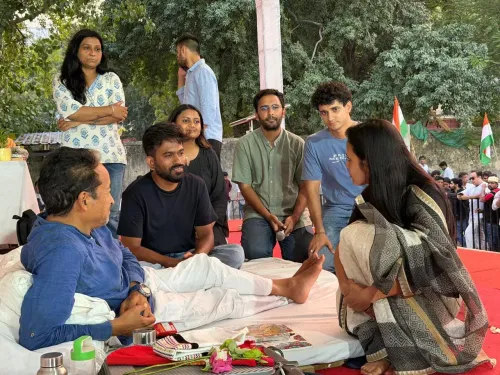
Sonam Wangchuk's activism has drawn support from a broad coalition — environmentalists concerned about the Himalayan ecosystem, constitutional scholars focused on federalism, and Ladakhi communities worried about land rights and demographic change. His hunger strikes and long marches have periodically elevated the issue to national prominence.
For opposition politicians like Dr. Tharoor, engagement with figures like Wangchuk carries both symbolic and strategic weight — signalling solidarity with marginalised regions while reinforcing a broader critique of the ruling dispensation's approach to federal governance. The acknowledgement that the two have not met since their last encounter may prompt renewed calls for such dialogue to resume.
What's Next
Parliamentary discussions on Ladakh's constitutional status are expected to continue, with civil society groups pressing for a concrete legislative roadmap. Whether Tharoor's public acknowledgement translates into renewed outreach to Wangchuk or a formal parliamentary push on Ladakh's demands remains to be seen. The exchange, however brief, keeps the spotlight on a governance question that has remained unresolved for over six years — and signals that opposition voices are unlikely to let it quietly fade.
Point of View
Ladakh represents a potent symbol of what critics call the Centre's centralising instinct post-2019, and any re-engagement with Wangchuk would amplify that narrative. The exchange is a reminder that civil society movements in peripheral regions often depend on national political champions to translate local grievances into legislative pressure — a bridge that, by Tharoor's own admission, has not been actively maintained.
NationPress
26 Oct 2026
Frequently Asked Questions
Has Shashi Tharoor met Sonam Wangchuk?
Yes, Dr. Shashi Tharoor has met Sonam Wangchuk on at least one occasion. In a post on X on 27 July 2026, Tharoor confirmed the meeting but noted he has not met Wangchuk since.
Who is Sonam Wangchuk and what does he campaign for?
Sonam Wangchuk is a Ladakhi engineer, educator and climate activist best known for advocating statehood for Ladakh, Sixth Schedule constitutional protections, and environmental safeguards for the Himalayan region following its reorganisation as a Union Territory in 2019.
What is Ladakh's current political status?
Ladakh has been a Union Territory without a legislature since August 2019, when Article 370 was abrogated and Jammu and Kashmir was bifurcated. Activists and residents have since demanded a legislature, statehood, and tribal land protections under the Sixth Schedule.
Why does the Congress party support Ladakh's autonomy demands?
Congress leaders have framed Ladakh's lack of a legislature as a democratic deficit and a symptom of excessive centralisation by the Union government. Supporting Ladakh's demands aligns with the party's broader critique of the BJP's approach to federalism and centre-state relations.
What is Article 370 and how does it relate to Ladakh?
Article 370 granted special status to Jammu and Kashmir. Its abrogation in August 2019 led to the region being split into two Union Territories — Jammu and Kashmir, and Ladakh. Ladakh, unlike Jammu and Kashmir, was not given a legislature, fuelling ongoing demands for greater autonomy.