Tharoor leads Vidyarambham for 60+ children in Thiruvananthapuram
Synopsis
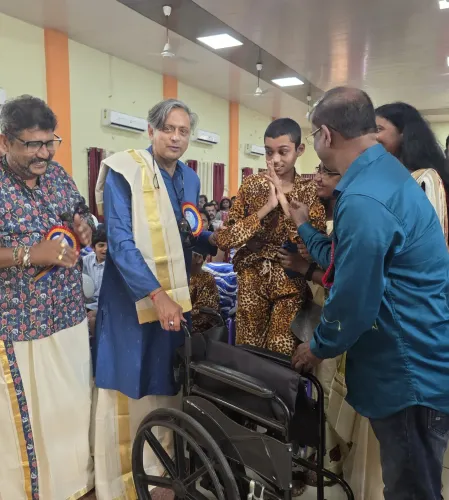
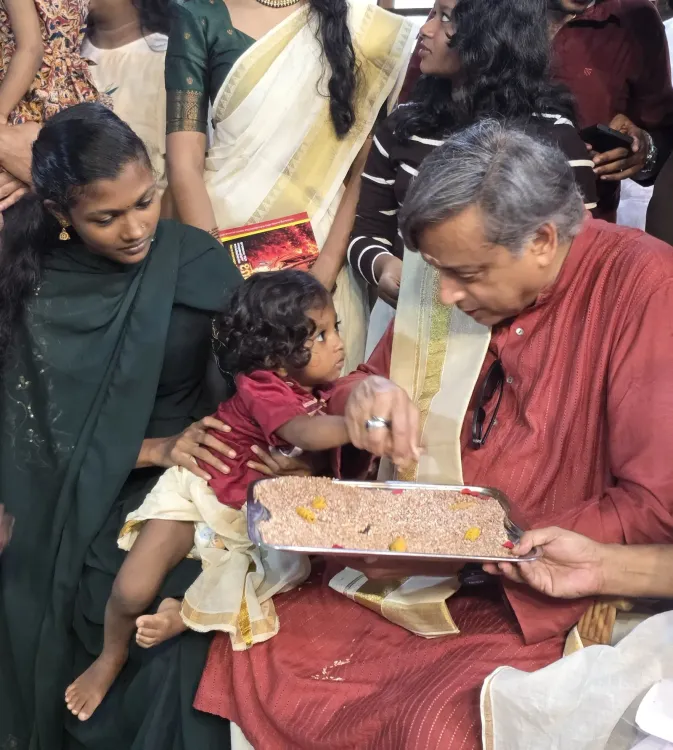
Congress MP Dr. Shashi Tharoor spent three hours on Vijayadashami guiding over 60 children through Kerala's Vidyarambham initiation ritual, writing 'Om Hari Shri' in Malayalam, Sanskrit, and English — with children from interfaith families participating without hesitation.
Key Takeaways
Shashi Tharoor participated in three separate Vidyarambham events on October 21, 2026 in Thiruvananthapuram, spending three hours with over 60 children .
Children traced the invocation 'Om Hari Shri' in Malayalam, Sanskrit, and English on a platter of grain, following centuries-old custom.
Tharoor highlighted that children from non-Hindu families participated fully without objection to the Hindu invocation.
Vidyarambham is traditionally observed on Vijayadashami , the final day of Navratri, across communities in Kerala.
Kerala maintains India's highest literacy rate , above 94 percent , rooted in decades of state-led education reform.
The state's Total Literacy Campaign (1989–1990) remains a national benchmark for mass literacy mobilisation.
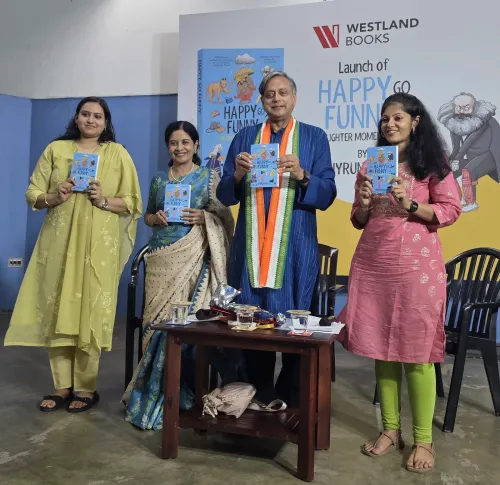
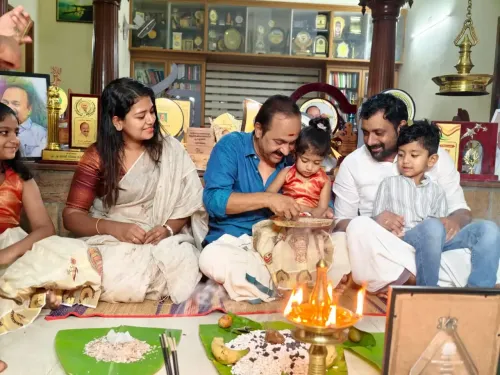
Three hours, three ceremonies, over sixty children — and a grain-filled platter carrying the oldest prayer in Kerala's calendar. Congress MP Dr. Shashi Tharoor marked Vijayadashami, October 21, 2026, by personally guiding children through the Vidyarambham initiation ritual in Thiruvananthapuram, tracing the invocation 'Om Hari Shri' in Malayalam, Sanskrit, and English across a bed of grain.
What Vidyarambham is — and why it still matters
Vidyarambham — literally 'beginning of learning' — is a centuries-old Kerala tradition performed on Vijayadashami, the final day of Navratri, when children are formally introduced to letters for the first time. A guiding elder holds the child's finger and writes the sacred syllables on a platter heaped with rice or grain, marking the first stroke of a lifelong relationship with the written word. The ritual is rooted in Hindu tradition but has long since outgrown any single community's calendar: across Kerala, families of varied faiths bring their children to temples, schools, and public stages on this day without reported friction, year after year.
Tharoor captured that dynamic precisely in his post. 'Many of the children were from families of other faiths,' he wrote, 'yet none objected to the Hindu invocation with which they began their writing.' That is not an anomaly in Kerala — it is, by any measure, the pattern.
Kerala's literacy story behind the ritual
Kerala holds India's highest literacy rate, sustained above 94 percent through successive governments' investment in public education and social reform dating back to the 1950s. The state's landmark Total Literacy Campaign of 1989–1990 became a national benchmark, turning mass mobilisation into near-universal adult literacy in a single decade. Vidyarambham is, in that sense, more than symbolism — it is a cultural memory that reinforces the same instinct the campaign formalised: that learning is a collective act, not a private privilege.
Political figures across Kerala's fractious party lines routinely participate in Vidyarambham events, signalling commitment to education and social cohesion. Tharoor's presence across three separate events in a single morning adds a personal and public weight to that tradition.
Unity written in three scripts
The detail that lands hardest in Tharoor's account is the trilingual invocation — Malayalam, Sanskrit, and English — on a single platter. It is an unspoken manifesto: Kerala's identity is not monolingual, not mono-faith, not static. That a child's first guided letters span three scripts is, in miniature, the state's entire pedagogical philosophy. The ritual does not ask children to choose between tradition and modernity. It asks them to hold both, from the very first stroke.
Sixty children began their formal journey with letters today. The grain will be swept away; the habit, if Kerala's numbers are any guide, will last a lifetime.
Point of View
Sanskrit, English) also implicitly pushes back against movements that frame linguistic or religious identity as exclusive. Kerala's exceptionalism in literacy and interfaith cultural practice remains a live political asset for parties invested in its governance legacy, and events like this keep that narrative visible at the constituency level.
NationPress
21 Oct 2026
Frequently Asked Questions
What is Vidyarambham and when is it celebrated?
Vidyarambham is a traditional Kerala ceremony initiating young children into formal learning, performed on Vijayadashami — the final day of the Navratri festival. An elder guides the child's finger to write sacred letters on a platter of rice or grain, symbolising the beginning of a lifelong pursuit of knowledge.
What does 'Om Hari Shri' mean in the Vidyarambham ritual?
'Om Hari Shri' is a traditional invocation written at the start of the Vidyarambham ceremony. 'Om' is the universal sacred syllable, 'Hari' refers to Vishnu, and 'Shri' is an auspicious salutation. The phrase consecrates the act of learning as a divine beginning.
Why do children of other faiths participate in Vidyarambham in Kerala?
Kerala has a long tradition of cross-community cultural participation. The Vidyarambham ritual, though rooted in Hindu practice, is widely observed across Muslim and Christian families in the state as a cultural and educational milestone, reflecting Kerala's documented pattern of communal accommodation.
What is Kerala's literacy rate compared to the rest of India?
Kerala consistently records India's highest literacy rate, above 94 percent, sustained through decades of state investment in public education. The state's Total Literacy Campaign of 1989–1990 is considered a landmark achievement in mass literacy mobilisation.
Why did Shashi Tharoor participate in Vidyarambham 2026?
As the Congress MP from Thiruvananthapuram, Tharoor participated in three separate Vidyarambham events on Vijayadashami, October 21, 2026, personally guiding over 60 children through the ritual. He highlighted the ceremony as an expression of Kerala's reverence for literacy and its tradition of interfaith unity.