Tharoor Remembers Manmohan Singh on Birth Anniversary
Synopsis
On Dr. Manmohan Singh's birth anniversary, Congress MP Dr. Shashi Tharoor recalled the former Prime Minister's rare blend of scholarship and statecraft, evoking the 1991 reforms that reshaped India's economy and his legacy of leading with quiet, vanity-free authority.
Key Takeaways
Shashi Tharoor paid tribute to Dr.
Manmohan Singh on his birth anniversary, 26 September 2026 , on X.
Tharoor described Singh as a leader who combined 'scholarship with statecraft' and carried 'responsibility with so little vanity.' As Finance Minister in 1991 , Singh dismantled the 'License Raj,' devalued the rupee, and opened India to foreign investment during a balance-of-payments crisis.
Singh served as Prime Minister for two terms from 2004 to 2014 , overseeing landmark social legislation including the Right to Information Act and MGNREGA.
Tharoor, a former UN official who served during Singh's premiership, described himself as 'privileged to witness' Singh's leadership firsthand.
Annual September tributes by Congress figures to Singh consistently reignite debate over the long-term effects of 1991 liberalisation on growth and inequality.
Quiet men, Dr. Manmohan Singh once said, can move the loudest mountains — and on Saturday, 26 September 2026, his birth anniversary, Congress MP Dr. Shashi Tharoor put that truth into words on X, remembering a leader whose restrained manner belied the seismic scale of his impact on India.
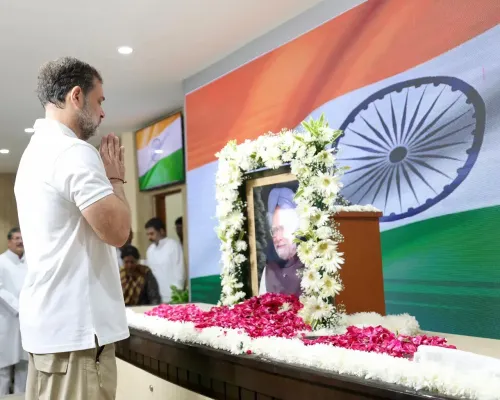
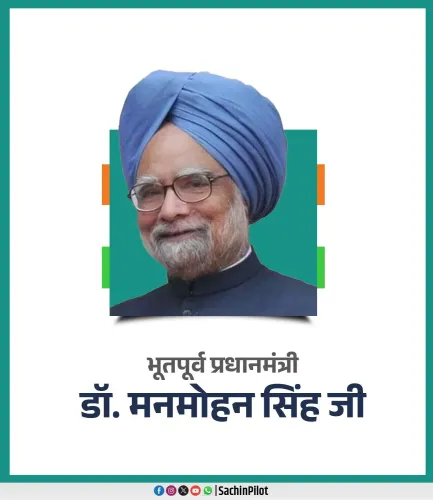
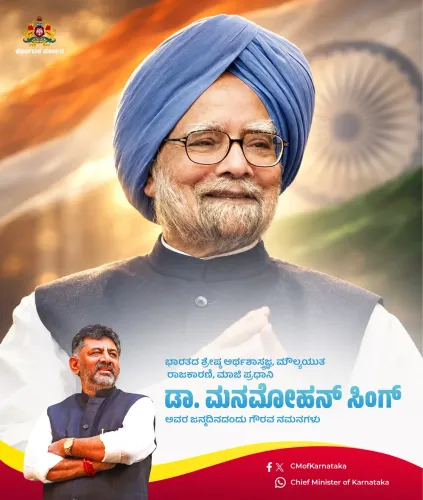
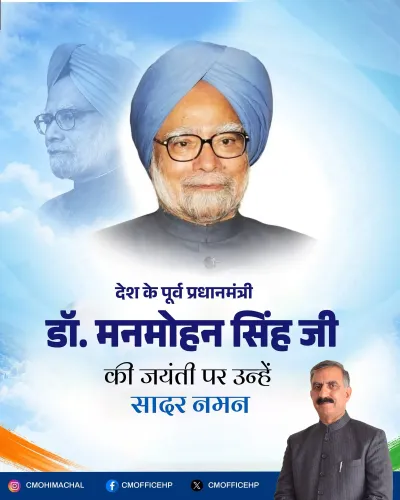
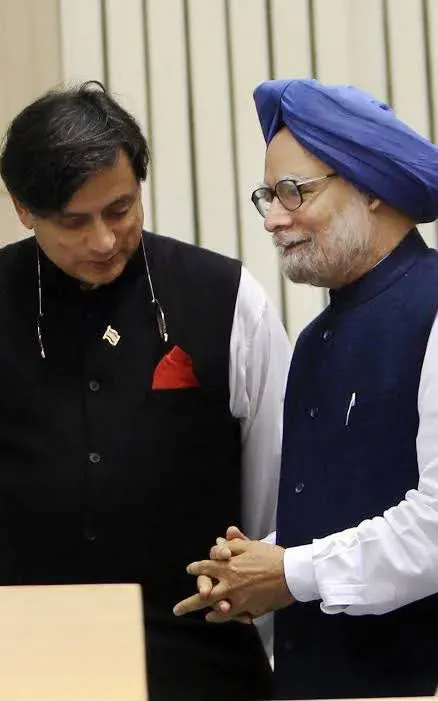
Tharoor wrote that Singh was 'a man whose quiet presence changed India in ways far louder than his manner ever was,' adding that 'few combined scholarship with statecraft so naturally, or carried such responsibility with so little vanity.' The post, accompanied by four images, trails off mid-sentence — hinting at a longer reflection — yet even those opening lines distil a verdict most economists and historians would not dispute.
The 1991 Moment That Rewrote India's Economy
The weight behind Tharoor's tribute is inseparable from a single year: 1991. Then Finance Minister under Prime Minister P.V. Narasimha Rao, Manmohan Singh stood before Parliament and delivered a Union Budget that dismantled the 'License Raj' — the thicket of industrial controls that had governed India since Independence. The rupee was devalued, import barriers fell, and foreign investment found a door that had been sealed for decades.
The reform did not emerge from comfort. India's foreign-exchange reserves in mid-1991 had dropped to barely enough to cover two weeks of imports, a balance-of-payments crisis that forced a pledge of 67 tonnes of gold to the Bank of England and the Reserve Bank of India as collateral for an emergency loan. Singh turned that humiliation into leverage for structural change — arguably the most consequential economic pivot in post-Independence India.
Scholar, Technocrat, Prime Minister
Manmohan Singh came to statecraft via Cambridge and Oxford, his doctoral thesis at the latter tracing India's export competitiveness — an academic preoccupation that would shape his policymaking instincts for the rest of his career. He served as Governor of the Reserve Bank of India, Deputy Chairman of the Planning Commission, and Finance Minister before leading the country as Prime Minister across two terms from 2004 to 2014 — a decade that saw GDP growth surge while landmark social legislation, including the Right to Information Act and the Mahatma Gandhi National Rural Employment Guarantee Act, reached millions.
Tharoor's own vantage point is more than that of an admiring colleague. He served in senior roles at the United Nations before entering Indian politics, and his tenure as a junior minister overlapped with the latter years of Singh's premiership — giving his tribute the texture of direct witness, not retrospective mythology.
A Recurring Anniversary, a Deepening Question
Every 26 September, Congress voices revisit Singh's legacy — partly as institutional memory, partly as implicit commentary on the political style that followed him. Tharoor's framing — 'so little vanity' — lands with deliberate precision in an era of high-decibel politics. The broader pattern of such tributes also keeps alive a live debate: the 1991 reforms lifted hundreds of millions, but critics argue they accelerated inequality alongside growth, a tension that remains unresolved in India's policy conversation today.
What endures, regardless of where one stands on that debate, is the image of an economist thrust into a crisis, who chose reform over retreat — and changed the country's trajectory permanently. That is the man Tharoor paused to remember on a Saturday morning.
Point of View
Annual observances of Singh's birth anniversary also keep the 1991 reforms debate alive, which matters because questions of liberalisation, inequality, and the role of the state remain central to India's economic policy arguments today. For Tharoor specifically, the tribute reinforces his positioning within Congress as a voice linking India's global intellectual tradition to domestic political leadership.
NationPress
26 Sept 2026
Frequently Asked Questions
When is Dr. Manmohan Singh's birth anniversary?
Dr. Manmohan Singh was born on 26 September 1932 , and his birth anniversary is observed each year on that date.
What did Shashi Tharoor say about Manmohan Singh on his birth anniversary in 2026?
Tharoor described Singh as 'a man whose quiet presence changed India in ways far louder than his manner ever was,' praising his rare combination of scholarship and statecraft and noting that Singh carried great responsibility 'with so little vanity.'
What is Manmohan Singh's biggest contribution to India?
As Finance Minister in 1991 , Dr. Manmohan Singh introduced the New Economic Policy that ended the 'License Raj,' devalued the rupee, and opened India's economy to global markets — widely considered the most consequential economic reform in post-Independence India.
How long was Manmohan Singh the Prime Minister of India?
Dr. Manmohan Singh served as Prime Minister of India for two terms, from 2004 to 2014 , a decade during which India's GDP growth surged and landmark social legislation was passed.
What is Shashi Tharoor's connection to Manmohan Singh?
Dr. Shashi Tharoor served as a Union Minister during Singh's premiership and worked alongside him in government, giving him direct experience of Singh's leadership style — which he referenced by calling himself 'privileged to witness' it.