Tharoor Nudges UPSC Aspirants to Read His Full Article

Synopsis
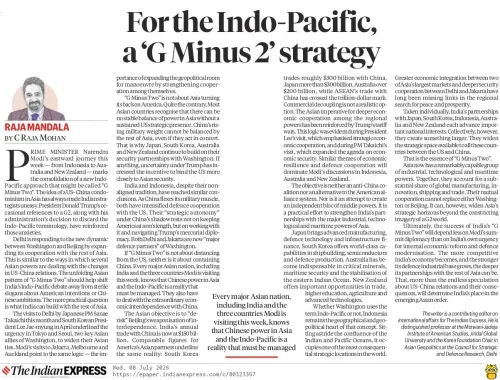
Congress MP Dr. Shashi Tharoor acknowledged an X account's summary of his #TharoorThink column on June 5, 2026, but urged UPSC aspirants to read the complete article, spotlighting the growing ecosystem of exam-prep accounts that condense long-form political writing for civil-services candidates.
Key Takeaways
Shashi Tharoor posted on June 5, 2026 acknowledging a summary of his #TharoorThink article by @UPSCbasics .
He thanked the account for its 'simple clarity' but urged UPSC aspirants to read the full original piece.
The UPSC 2013 pattern revision made analysis of contemporary opinion articles a formal requirement in the exam.
Tharoor's #TharoorThink series covers politics, history, and public policy, making it a recurring reference in civil-services preparation circles.
The exchange highlights a wider ecosystem of summary accounts on X and Telegram that distil long-form writing for exam candidates.
The post may prompt coaching institutes to include the referenced article in their current-affairs modules before the next prelims cycle.
Congress MP Dr. Shashi Tharoor on Friday, June 5, 2026, acknowledged an X account's summary of his #TharoorThink article while gently urging civil-services aspirants to go beyond the digest and engage with the complete piece.
Context
Tharoor's post was a direct reply to @UPSCbasics, an account that had condensed one of his #TharoorThink columns — his regular series of long-form writings on politics, history, and public affairs — into a short, exam-friendly format. While thanking the account for its 'simple clarity of presentation,' he expressed the hope that UPSC aspirants would seek out the original article in full. The post also tagged @Cockroachisback, @CJP_2029, and @CJP_for_India, suggesting the conversation had a wider audience within the civil-services preparation community.
Policy Backdrop
The Union Public Service Commission (UPSC) revised its examination pattern in 2013, explicitly requiring candidates to analyse contemporary opinion pieces and editorials for both the essay paper and the General Studies papers. This change created a direct incentive for aspirants to follow the writings of public intellectuals, politicians, and policy commentators. Tharoor, a prolific author and former UN Under-Secretary-General, has become a frequently cited voice in civil-services reading lists, given his range across constitutional matters, foreign policy, and Indian history.
The broader ecosystem around UPSC preparation — spanning coaching institutes, Telegram channels, and summary accounts on X — has grown significantly, with many accounts specialising in breaking down long-form articles into bullet points and quick-read formats tailored for exam relevance.
Stakeholders and Impact
The primary audience here is the large and growing cohort of UPSC aspirants across India, estimated in the lakhs each year, who rely on curated content to manage the breadth of the syllabus. For this group, a direct nudge from the author of a source article carries weight — it signals that the full argument, not just a summary, may be tested in the analytical depth required by the essay and ethics papers. Accounts like @UPSCbasics occupy a niche but influential space, effectively functioning as informal intermediaries between public intellectuals and exam candidates.
For Tharoor himself, the interaction reinforces the reach of the #TharoorThink series beyond traditional readership, extending into a younger, exam-focused demographic that engages heavily on social media.
What's Next
The immediate question is whether coaching institutes and Telegram channels in the UPSC preparation circuit will incorporate the referenced #TharoorThink piece into their current-affairs modules ahead of the next prelims cycle. Tharoor's public acknowledgement of the summary account is itself likely to drive more aspirants toward the original article, demonstrating how a single social-media exchange can amplify long-form writing within India's highly networked exam-preparation community.
Point of View
He is effectively inserting the full #TharoorThink piece into the UPSC content pipeline without a formal endorsement from any coaching body. This reflects a broader pattern in which Indian public intellectuals use social media not just for political messaging but as a distribution channel for ideas they want embedded in the next generation of administrators. The interaction also signals that the line between political commentary and civic education continues to blur in India's exam-driven public discourse.
NationPress
21 Oct 2026
Frequently Asked Questions
What is Shashi Tharoor's #TharoorThink series?
#TharoorThink is Dr. Shashi Tharoor's regular series of long-form articles and columns covering Indian politics, history, foreign policy, and public affairs, which he shares on social media and various publications.
Why do UPSC aspirants follow Shashi Tharoor's writings?
Since the UPSC revised its exam pattern in 2013, candidates are expected to analyse contemporary opinion articles for the essay and General Studies papers, making writings by public intellectuals like Tharoor directly relevant to preparation.
What did Tharoor say about the @UPSCbasics summary?
Tharoor thanked @UPSCbasics for the 'simple clarity' of its presentation but expressed the hope that UPSC aspirants would read the complete original article rather than relying solely on the summary.
Who are the accounts tagged in Tharoor's post?
Tharoor tagged @UPSCbasics, @Cockroachisback, @CJP_2029, and @CJP_for_India, suggesting the conversation was directed at a community of civil-services aspirants and followers on X.
How does the UPSC exam use opinion articles and editorials?
Under the 2013 pattern, UPSC's essay and General Studies papers require candidates to demonstrate analytical engagement with contemporary issues, for which opinion columns by noted public figures are considered valuable source material.