Thiruvonam 2025: How Kerala unites in Onam's most sacred day
Synopsis
On Thiruvonam 2025, Kerala set aside every division — caste, religion, geography — for a single shared day. From the ceremonial Thiruvonathoni at Aranmula to a 10,000-person prasada oottu at Guruvayur, and from diaspora homecomings to rain-soaked courtyards still bright with pookkalams, the festival delivered its annual reminder that Onam is Kerala's most inclusive institution.
Key Takeaways
Thiruvonam , the most auspicious day of Onam , was observed across Kerala on 26 August 2025 .
The Thiruvonathoni ceremonial boat arrived at the Aranmula temple carrying offerings for Lord Parthasarathy , received by the Palliyoda Seva Sangham .
At Guruvayur , special rituals were held and a prasada oottu was arranged for 10,000 devotees.
Six of Kerala's 14 districts were placed under a yellow alert due to monsoon showers, with restrictions imposed at waterfalls and hilly areas.
Prime Minister Narendra Modi and President Droupadi Murmu extended Onam greetings to Malayalis.
The traditional Thiruvonam sadya — a feast of up to 26 courses — remained the centrepiece of household celebrations.
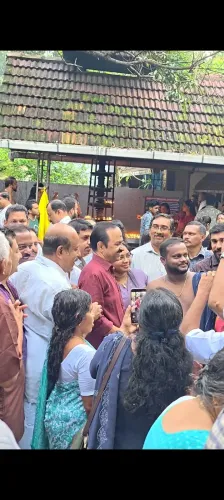
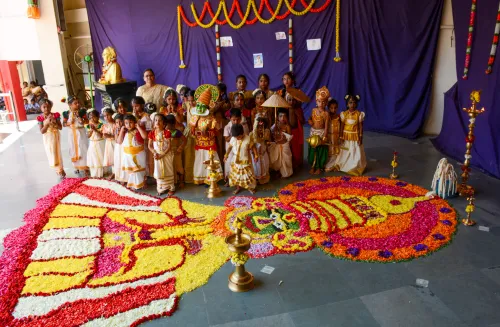
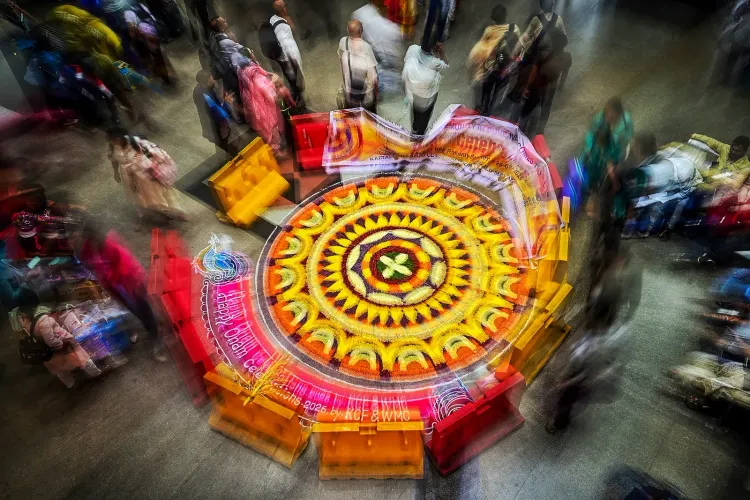
On Thiruvonam, the most auspicious day of the Onam festival, Kerala woke on 26 August to the scent of freshly cooked sadya, courtyards adorned with intricate pookkalams, and families gathering around tables that expand, at least in spirit, to seat everyone who matters. Across towns, cities, and distant countries, Malayalis paused their routines to return — if only for a single day — to a celebration that belongs to all of them equally.
A Festival Beyond Religion and Caste
Onam occupies a singular place in Kerala's cultural calendar. Unlike most major Indian festivals, it is widely regarded as the state's most secular celebration — one in which religion, caste, and community step back to make room for a broader, shared identity. On Thiruvonam, that spirit is not merely spoken about; it is lived.
Malayalis who work in other states and those settled abroad reportedly travelled through the night to reach home in time. Cultural organisations and neighbourhood clubs filled localities with traditional games, while households devoted the morning to preparing the centrepiece of the season: the Thiruvonam sadya, a multi-course feast that, according to tradition, runs to as many as 26 dishes.
Sacred Rituals at Aranmula and Guruvayur
At Aranmula, one of the most evocative rituals of the Onam season unfolded as the Thiruvonathoni — the ceremonial boat carrying offerings for Lord Parthasarathy — arrived at the temple. Members of the Palliyoda Seva Sangham, representatives of various karas, and members of the temple advisory committee received the boat in keeping with centuries-old custom.
At Guruvayur, thousands converged for darshan. The temple observed special rituals, including the early-morning presentation of an Onam garment to Guruvayurappan. A special prasada oottu was arranged for 10,000 devotees, underscoring the scale of observance at one of Kerala's most revered shrines.
Rain and Caution Alongside Celebration
Kerala's monsoon made its familiar presence felt even on Thiruvonam morning. Showers began before dawn in several parts of the state, with northern Kerala receiving particularly strong spells. By morning, six of Kerala's 14 districts were placed under a yellow alert.
The state's Tourism Department directed restrictions at waterfalls, water bodies, and other vulnerable tourist destinations in alerted districts and, where necessary, in neighbouring ones. Hilly areas susceptible to landslides and landslips were also kept restricted until conditions improve. The rain tempered some of the outdoor brightness of the day but, by most accounts, did not diminish the festive spirit indoors.
National Greetings and the Quiet Power of Homecoming
Greetings arrived from the country's highest offices. Prime Minister Narendra Modi wished Malayalis happiness, togetherness, and prosperity on the occasion. President Droupadi Murmu also extended her Onam greetings to the people of Kerala and to Malayalis everywhere.
Yet the most resonant Onam message, observers note, is the one being lived out quietly in Kerala's homes — the relative returning from abroad, the neighbour sharing a plate of sadya, the community gathering for a traditional game, and the family waiting for someone who travelled all night to make it back in time. As Thiruvonam draws to a close, Kerala once again affirms what Onam has come to represent: a celebration in which everyone can belong, everyone can participate, and everyone has a place at the table.
Point of View
Thiruvonam functions as an annual reset — a day when shared cultural memory outweighs every other identity marker. The monsoon disruptions and yellow alerts this year are a reminder that Kerala's festive calendar is increasingly intersecting with climate realities; the Tourism Department's restrictions at waterfalls and landslide-prone zones signal that disaster preparedness can no longer be paused even for the biggest celebration of the year. The deeper story, however, is demographic: the sheer volume of Malayali diaspora — from the Gulf to Europe to North America — that reorganises its life around Thiruvonam speaks to how potent a cultural anchor Onam remains, even as Kerala's population increasingly lives outside its borders.
NationPress
10 Oct 2026
Frequently Asked Questions
What is Thiruvonam and why is it significant?
Thiruvonam is the most auspicious and central day of the Onam festival, celebrated annually by Malayalis in Kerala and across the world. It is marked by the Thiruvonam sadya, pookkalams, traditional games, and temple rituals, and is widely regarded as Kerala's most inclusive secular celebration.
What happened at Aranmula on Thiruvonam 2025?
At Aranmula, the Thiruvonathoni — a ceremonial boat carrying offerings for Lord Parthasarathy — arrived at the temple and was received by members of the Palliyoda Seva Sangham, representatives of various karas, and the temple advisory committee, in keeping with a centuries-old tradition.
What special rituals were held at Guruvayur for Onam?
The Guruvayur temple observed special Onam rituals, including the early-morning presentation of an Onam garment to Guruvayurappan. A prasada oottu was also arranged for 10,000 devotees, drawing large crowds for darshan.
How did the monsoon affect Thiruvonam celebrations in Kerala?
Six of Kerala's 14 districts were placed under a yellow alert on Thiruvonam, with showers beginning before dawn in several areas and northern Kerala receiving strong spells. The Tourism Department imposed restrictions at waterfalls, water bodies, and landslide-prone hilly areas in affected districts.
Who extended Onam greetings on Thiruvonam 2025?
Prime Minister Narendra Modi wished Malayalis happiness, togetherness, and prosperity, while President Droupadi Murmu also extended her Onam greetings to the people of Kerala and to the Malayali community worldwide.