Tamil Nadu lifts ban on Karur inam land sales; CPI-M backs order

Synopsis
Tamil Nadu's HR&CE Department has freed 3,084 acres of Karur inam land from decades-old transfer restrictions, handing a long-awaited ownership win to poor families settled there for over 60 years. The CPI(M) is calling it a model for a statewide fix — while accusing Sangh Parivar groups of trying to block it through legal challenges.
Key Takeaways
Tamil Nadu's HR&CE Department issued an order on 9 July 2025 lifting transfer restrictions on 3,084 acres of inam land in Karur district .
Restrictions had been in place under the Inam Abolition Act despite families occupying the land for more than 60 years .
CPI(M) Tamil Nadu leader P.
Shanmugam welcomed the order and called it 'an important victory' for affected communities.
Shanmugam alleged Sangh Parivar organisations, including BJP , Hindu Munnani , and Hindu Mahasabha , were attempting to politicise and legally stall the order.
The CPI(M) has urged the state government to frame a comprehensive statewide inam land policy modelled on the Karur order.
The Tamil Nadu government's Hindu Religious and Charitable Endowments (HR&CE) Department on 9 July 2025 issued an order lifting long-standing restrictions on the transfer of 3,084 acres of inam lands in Karur district, a move welcomed by the Communist Party of India (Marxist) [CPI(M)] as a landmark step for thousands of poor and marginalised families who have occupied these properties for over six decades.
What the Government Order Changes
The HR&CE Department order removes transfer restrictions that had remained in force under the Inam Abolition Act despite the lands being in continuous occupation by poor families for more than 60 years. Prior to the order, these families could not freely sell, transfer, or legally secure ownership of their holdings, leaving their tenure perpetually uncertain.
CPI(M)'s Reaction and Key Demands
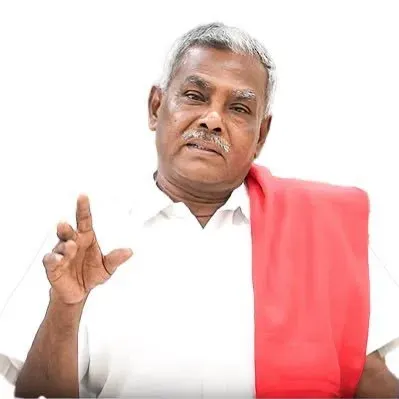
P. Shanmugam, Tamil Nadu State Executive Committee member of the CPI(M) and State President of the Tamil Nadu Farmers' Association, described the order as 'an important victory for people who had been seeking a permanent solution to the issue for several decades.' He called on the state government to treat the Karur decision as a model and frame a comprehensive statewide policy to resolve inam land disputes permanently, ensuring secure land ownership and housing rights for farmers and residents across Tamil Nadu.
Attack on Sangh Parivar Organisations
Shanmugam also launched a sharp critique of Sangh Parivar organisations, alleging they were attempting to politicise the issue. He recalled that during the previous All India Anna Dravida Munnetra Kazhagam (AIADMK) government, the Tamil Nadu administration had reportedly reclaimed several temple lands and properties worth hundreds of crores of rupees allegedly encroached upon by leaders linked to the Bharatiya Janata Party (BJP), Hindu Munnani, and Hindu Mahasabha. He alleged these same forces were now criticising the current government's order because they could not accept measures that strengthened rights of ordinary Hindu devotees and long-time occupants.
Broader Inam Land Issue Across Tamil Nadu
Shanmugam underscored that the Karur order addresses only a fraction of a much larger problem. Thousands of farmers and residents across the state continue to face similar disputes over inam lands, with legal challenges and bureaucratic hurdles blocking secure ownership. He condemned what he termed 'baseless criticism' and legal attempts to stall the rights of affected communities. This comes amid a wider debate in Tamil Nadu over the administration and alienation of temple-linked properties, a politically sensitive issue that cuts across religious, agrarian, and legal fault lines.
What Happens Next
With the Karur order now in place, affected families in the district can proceed with transfers and formalise ownership. However, a statewide resolution remains pending. The CPI(M) has urged the Tamil Nadu government to extend similar relief to all inam land holders in the state, signalling that advocacy on this front is far from over.
Point of View
Decades-old administrative anomaly — but it also arrives in a politically charged environment where temple land governance is a recurring flashpoint in Tamil Nadu. The CPI(M)'s enthusiasm is understandable: inam land reform aligns with agrarian left politics. Yet the more telling question is whether the DMK government will extend this relief statewide or let it remain a district-level gesture. The allegation that Sangh Parivar groups encroached on temple properties under earlier regimes is a serious charge that deserves independent scrutiny — not just political counter-attack. Tamil Nadu's inam land backlog is vast, and a piecemeal approach risks leaving most affected families exactly where they started.
NationPress
13 Oct 2026
Frequently Asked Questions
What is the Tamil Nadu inam land order issued in July 2025?
The Tamil Nadu HR&CE Department issued an order on 9 July 2025 removing transfer restrictions on 3,084 acres of inam land in Karur district. The order frees families who have occupied these lands for over 60 years to sell, transfer, or formally secure ownership — rights previously blocked under the Inam Abolition Act.
Why were these inam lands under a transfer ban?
The transfer restrictions stemmed from provisions of the Inam Abolition Act, which governed temple-linked inam lands. Despite families living on and cultivating these lands for generations, the legal restrictions prevented them from obtaining clear ownership titles or transferring the properties.
What is CPI(M)'s position on the Tamil Nadu government's decision?
The CPI(M) has welcomed the order, calling it a significant victory for poor and marginalised families. Party leader P. Shanmugam urged the government to treat it as a template for a comprehensive statewide inam land policy covering all affected farmers and residents across Tamil Nadu.
Who are the Sangh Parivar organisations accused of opposing the order?
CPI(M) leader Shanmugam alleged that the BJP, Hindu Munnani, and Hindu Mahasabha were attempting to politicise the issue and stall the order through legal challenges. He claimed these groups had previously encroached on temple properties in Tamil Nadu, allegations that have not been independently verified.
How many families are affected by inam land disputes in Tamil Nadu?
The Karur order covers land spread over 3,084 acres in one district, but according to the CPI(M), thousands of farmers and residents across Tamil Nadu face similar inam land disputes. A comprehensive statewide resolution remains pending.