What Measures is the Tamil Nadu Government Taking for Elephant Translocation?
Click to start listening
Synopsis
In light of recent elephant fatalities during translocation efforts, the Tamil Nadu government has formed a specialized committee to develop a comprehensive SOP for wildlife management. This initiative aims to ensure the safety and well-being of elephants while enhancing conservation efforts. Discover the details of this critical move!
Key Takeaways
- Expert committee formed for elephant translocation.
- New SOP aims to ensure wildlife safety.
- Committee to review recent elephant deaths.
- Focus on conflict mitigation and public safety.
- Two-month timeline for report submission.
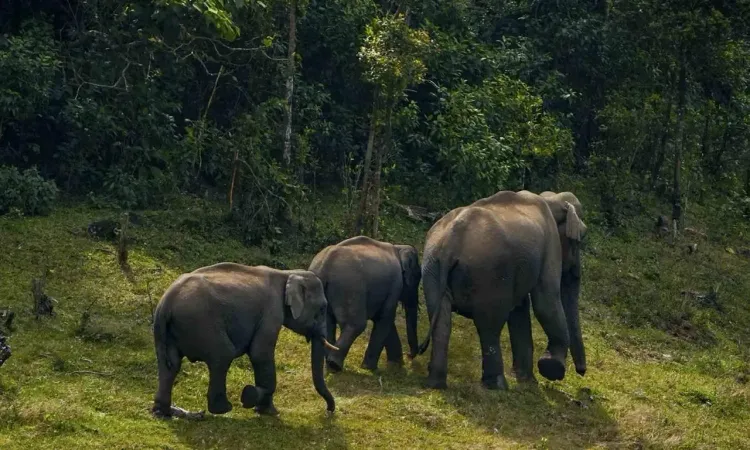
Chennai, December 8 (NationPress) The government of Tamil Nadu has established a high-level expert committee to develop a detailed Standard Operating Procedure (SOP) for the capture, translocation, release, and post-release monitoring of wild elephants and various wildlife species.
The initiative comes in response to rising concerns following the demise of two elephants that were recently translocated, which has sparked doubts regarding the sufficiency of the current procedures.
In an official announcement, the government reiterated its dedication to scientific wildlife conservation, humane management of wild animals, and ensuring public safety. It emphasized that translocation is performed only as a last resort to alleviate human-wildlife conflict or safeguard human lives.
The recent fatalities of elephants, still under scrutiny, prompted a thorough evaluation of existing protocols, leading to the formation of this expert committee.
Chaired by A. Udhayan, Principal Chief Conservator of Forests and Director of the Advanced Institute for Wildlife Conservation, the committee includes Anurag Mishra, Principal Chief Conservator of Forests and Special Secretary; N. Vengatesh Prabhu, District Forest Officer, Gudalur Division; K. Kalaivanan, Forest Veterinary Officer at the Srivilliputhur Megamalai Tiger Reserve; Rajesh, Forest Veterinary Assistant Surgeon at the Mudumalai Tiger Reserve; and N. Baskaran, Assistant Professor at A.V.C. College.
The committee has also been empowered to include additional specialists, such as behavioral ecologists and Geographic Information System (GIS) experts, if necessary.
According to the government, the committee is tasked with reviewing the recent elephant deaths, assessing current translocation protocols against national and international scientific standards, and identifying critical gaps that need immediate strengthening.
The panel is responsible for creating a clear, detailed, and actionable SOP that encompasses every phase of wildlife translocation, particularly focusing on elephants—from sedation and transport to release strategies and long-term post-release follow-up.
This new framework is anticipated to enhance animal survival rates, reduce stress and injury during translocation, and improve outcomes in conflict mitigation.
Significantly, the government mentioned that the SOP could serve as a benchmark for other states and at the national level.
A deadline of two months has been set for the committee to present its report and draft SOP, which will subsequently be reviewed for state-wide implementation.
Point of View
The formation of this expert committee by the Tamil Nadu government reflects a growing commitment to wildlife conservation and public safety. It emphasizes the necessity for robust protocols in managing human-wildlife interactions, ensuring that both animals and communities can coexist harmoniously. As the nation faces increasing conflicts arising from wildlife encroachment, such initiatives are critical for sustainable solutions.
NationPress
09/12/2025
Frequently Asked Questions
What is the purpose of the expert committee?
The expert committee's primary purpose is to develop a comprehensive Standard Operating Procedure for the capture, translocation, and monitoring of wild elephants and other wildlife species.
Why was the committee formed?
The committee was formed following the deaths of two translocated elephants, raising concerns about the effectiveness of existing protocols and the need for a thorough reassessment.
Who leads the committee?
The committee is chaired by A. Udhayan, Principal Chief Conservator of Forests and Director of the Advanced Institute for Wildlife Conservation.
What are the expected outcomes of the new SOP?
The new SOP is expected to improve animal survival rates, reduce stress and injury during translocation, and enhance conflict-mitigation outcomes.
How long does the committee have to submit its report?
The committee has been given a two-month deadline to submit its report and draft SOP.