Is Trump's 'Pak testing n-weapons' claim a dire threat to nations?
Synopsis
In a recent interview, President Trump raised alarms about Pakistan potentially testing nuclear weapons. This claim, if true, could significantly heighten tensions in an already volatile region. The implications of such tests extend beyond borders, threatening global stability and security. Dive into the details of this alarming assertion and its potential consequences.
Key Takeaways
Pakistan testing nuclear weapons could pose a significant threat to regional and global security.
Trump's claims highlight the need for vigilance regarding nuclear activities.
Unverified reports of military actions can escalate tensions.
Pakistan's internal politics may complicate nuclear testing scenarios.
Global diplomatic responses are crucial to maintaining stability.
New Delhi, Nov 3 (NationPress) If Pakistan is genuinely engaged in testing nuclear weapons, it poses a significant threat to multiple nations, including itself. This situation is heightened by the nation’s unstable economy, severe security challenges from armed insurgent groups, and the resurgence of religious extremists within its borders.
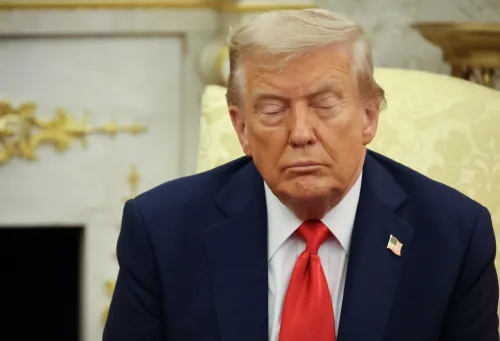
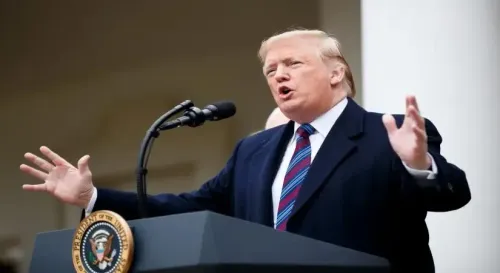
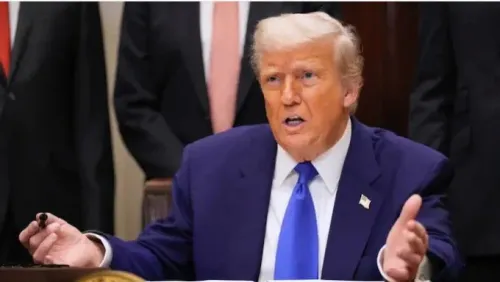
The alarming assertion was made by US President Donald Trump during an interview with CBS News' 60 Minutes on Sunday, where he claimed that Russia, China, North Korea, and Pakistan were all conducting nuclear tests.
"Russia's testing, and China's testing, but they don't talk about it. You know, we're an open society. We're different. We talk about it. We have to talk about it, because otherwise you people are gonna report – they don't have reporters that gonna be writing about it. We do. No, we're gonna test, because they test and others test. And certainly North Korea's been testing. Pakistan's been testing," he stated, according to a transcript from CBS News.
This claim raises alarms, although no public records substantiate it. Trump maintained that "they test way underground where people don't know exactly what's happening with the test,” adding, “You feel a little bit of a vibration.”
Interestingly, during Operation Sindoor, there were unconfirmed reports suggesting that the Indian Air Force (IAF) conducted precision strikes on Pakistan’s Kirana Hills.
The mountainous region near Sargodha Air Base reportedly housed underground bunkers and a missile storage system containing nuclear arms.
Various social media reports and conspiracy theories claimed that the explosions resulted in localized seismic activity akin to a magnitude 4.0 earthquake.
These claims were accompanied by analyses of "satellite and thermal imagery," along with speculation regarding the presence of US and Egyptian aircraft surveying the area for nuclear containment.
However, Indian authorities, including top officials from the IAF, categorically denied any strikes on Kirana Hills, stating they were not even aware of such a nuclear site.
The alleged connection between reported seismic activity and supposed strikes remains unverified, with no confirmation from any official geological or military sources that the earthquake resulted from human actions.
Nonetheless, even a slight possibility, given Pakistan’s internal political struggles and economic pressures, renders a covert test perilous and destabilizing.
Any such action could sharply escalate regional tensions, ignite an arms race, and provoke significant global diplomatic and economic repercussions.
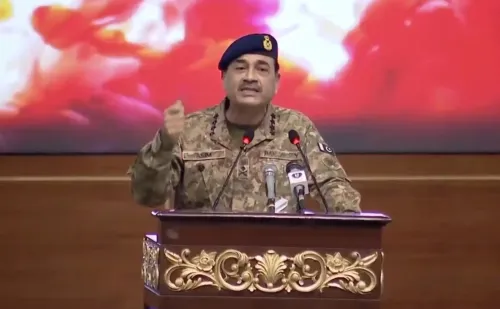
Any moves from an ambitious army general leading Islamabad’s diplomatic efforts, in a country historically marked by military takeovers of civilian governments, could have dire consequences.
Pakistan's last known nuclear tests were conducted in May 1998.
Meanwhile, Moscow reportedly executed a nuclear explosion in 1990, followed by sub-critical or non-yield tests.
However, Russia conducted tests on its nuclear-powered cruise missile, the Burevestnik, last month; some analysts have linked this to Trump’s interest in similar testing.
China's last confirmed nuclear test took place in 1996, and North Korea's most recent full-scale test was in September 2017.
Just before Trump arrived in South Korea during his three-nation Asia tour late last month, Seoul’s military reported detecting multiple short-range ballistic missiles.
These missiles reportedly launched from an area south of Pyongyang, traveling approximately 350 km northeast. This marked North Korea’s first ballistic missile tests in five months.
President Trump expressed his openness to meeting President Kim Jong Un of North Korea during his recent tour, a proposition that was met with silence from Pyongyang.
Point of View
My perspective emphasizes the importance of careful scrutiny regarding such claims. While the assertion made by President Trump raises concerns, it is vital to rely on verified data and credible sources. Journalism must uphold the highest standards of accuracy and impartiality, prioritizing facts over sensationalism.
NationPress
7 Oct 2026
Frequently Asked Questions
What did President Trump claim about Pakistan's nuclear tests?
President Trump claimed that Pakistan, along with Russia, China, and North Korea, is conducting nuclear tests, which raises significant security concerns.
What are the implications of Pakistan testing nuclear weapons?
If Pakistan is testing nuclear weapons, it could escalate regional tensions, trigger an arms race, and lead to severe diplomatic and economic fallout globally.
What was the response from Indian authorities regarding alleged strikes?
Indian authorities, including the Indian Air Force, denied any strikes on Pakistan's Kirana Hills and stated they were unaware of any nuclear facilities in that region.
When were Pakistan's last known nuclear tests conducted?
Pakistan's last known nuclear tests occurred in May 1998.
What recent missile activity was reported in North Korea?
North Korea conducted its first ballistic missile tests in five months shortly before President Trump's visit to South Korea.