Ukai Dam at 54: How Surat's 'Vallabh Sagar' powers South Gujarat's farms and lives

Synopsis
Built in 1972 across the Tapi River, Surat's Ukai Dam has quietly done more for South Gujarat than most headline infrastructure projects — irrigating 3.31 lakh hectares, generating ₹1,000 crore in hydropower over seven years, and holding enough water to supply the entire region for nine years. Fifty-four years on, it remains the region's most indispensable piece of engineering.
Key Takeaways
Ukai Dam (also called Vallabh Sagar ) was established in 1972 across the Tapi River in Surat , completing 54 years of operation.
The dam irrigates over 3.31 lakh hectares of farmland across Surat , Tapi , Navsari , and Valsad districts.
Its water storage capacity of 7,414 million cubic metres can supply drinking water to all of South Gujarat for nine years .
Hydro-power units with 305 MW combined capacity have generated approximately 3,000 million units of electricity worth ₹1,000 crore over the last seven years .
The dam spans 4,900 metres in length and stands 345 feet tall, serving five districts of South Gujarat.
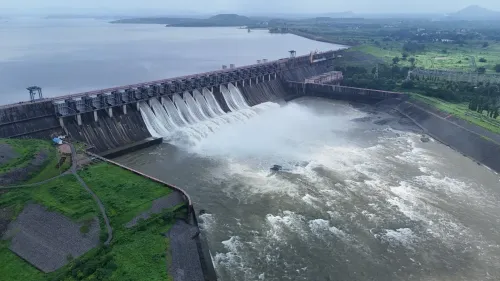
The Ukai Dam, popularly known as the 'lifeline of South Gujarat', has spent 54 years quietly underpinning the region's agriculture, drinking water supply, and electricity generation since its establishment in 1972. Constructed across the Tapi River in Surat, the dam — also called Vallabh Sagar — has irrigated over 3.31 lakh hectares of farmland across four districts and remains one of India's most consequential multipurpose water infrastructure projects.
Scale and Engineering
Spanning 4,900 metres in length and rising to 345 feet in height, the Ukai Dam holds a water storage capacity of 7,414 million cubic metres — enough, according to officials, to supply drinking water to the entirety of South Gujarat for nine years. Its command area covers the districts of Surat, Tapi, Navsari, and Valsad, transforming what was once rain-dependent farmland into a consistently irrigated agricultural belt.
A Lifeline for Farmers
For the farming communities of South Gujarat, the dam's most tangible impact has been drought resilience. Farmer Chandubhai Gamit told NationPress,
Point of View
A 54-year-old dam on the Tapi River continues to do the heavy lifting for millions of farmers, households, and industries across South Gujarat. The more pointed question is one of sustainability: with sedimentation reducing effective storage in ageing reservoirs across India, and climate variability making river flows less predictable, the Centre and Gujarat government need a credible long-term maintenance and modernisation plan for Ukai — before the region's dependence on it becomes its vulnerability.
NationPress
19 Sept 2026
Frequently Asked Questions
What is the Ukai Dam and where is it located?
The Ukai Dam, also known as Vallabh Sagar, is a multipurpose dam constructed across the Tapi River in Surat district, Gujarat. Established in 1972, it is the largest reservoir in Gujarat and is often called the 'lifeline of South Gujarat'.
How much land does the Ukai Dam irrigate?
The Ukai Dam provides irrigation to over 3.31 lakh hectares of agricultural land across the districts of Surat, Tapi, Navsari, and Valsad in South Gujarat. It has transformed the region into a consistently productive farming belt.
How much electricity does the Ukai Dam generate?
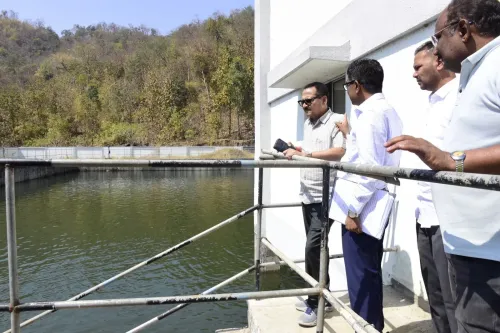
The Ukai Dam has hydro-power units with a combined capacity of 305 megawatts. Over the past seven years, these units have generated approximately 3,000 million units of electricity, valued at around ₹1,000 crore, according to Executive Engineer S.V. Jagirdar.
How many districts does the Ukai Dam supply water to?
The Ukai Dam supplies water to five districts of South Gujarat. Its storage capacity of 7,414 million cubic metres is sufficient to provide drinking water to the entire South Gujarat region for nine years, according to officials.
Why is the Ukai Dam important for farmers in South Gujarat?
The dam provides a reliable source of irrigation even during drought years and lean monsoon periods. Farmer Chandubhai Gamit noted that farming activities continue even in June — typically a dry month — thanks to the dam's assured water supply.