Will 15 Lakh Tutors and Non-Teaching Staff in UP Enjoy Cashless Treatment at Hospitals?
Synopsis
In an impactful move, the UP Cabinet has approved cashless medical treatment for approximately 15 lakh educators and support staff, enhancing healthcare access for teachers and their families. This initiative marks a significant step towards better welfare for those in the education sector.
Key Takeaways
15 lakh educators will receive cashless treatment.
Benefits extend to dependent family members .
Annual financial outlay of Rs 358.61 crore .
Available in both government and private hospitals .
Verification through district-level committees.
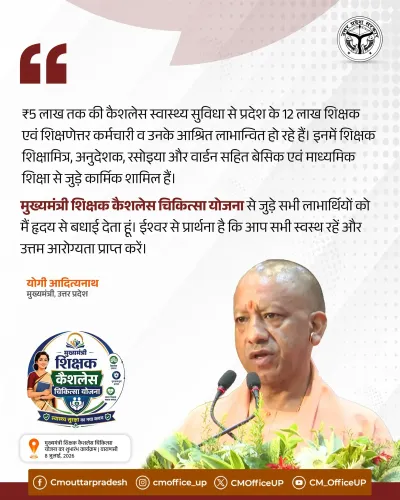
Lucknow, Jan 29 (NationPress) In a pivotal decision aimed at enhancing cashless mediclaim options for educators, the Uttar Pradesh Cabinet has sanctioned this facility for approximately 15 lakh employees within the education sector, encompassing teachers, non-teaching staff, and their dependent family members.
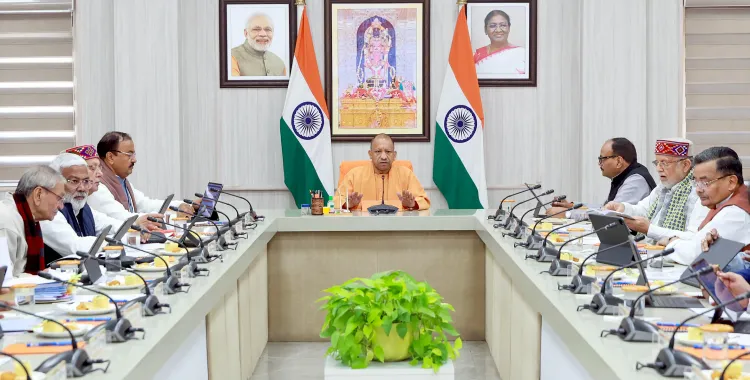
The decision made by the Yogi Adityanath Cabinet is set to benefit teachers, honorary educators, non-teaching personnel, and dependents of government-aided & self-financed schools under the Basic and Secondary Education Council.
During a media briefing, Finance and Parliamentary Affairs Minister Suresh Kumar Khanna revealed that 32 proposals were reviewed by the cabinet, with 30 receiving the green light.
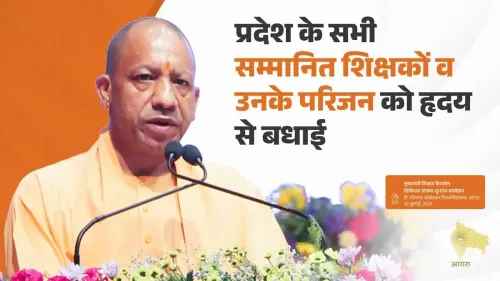
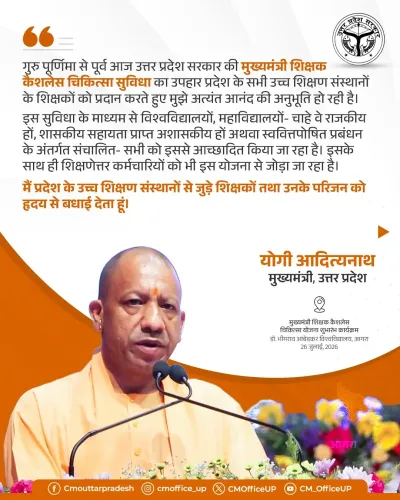
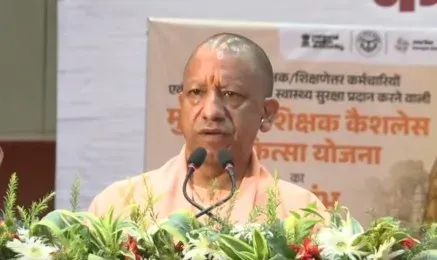
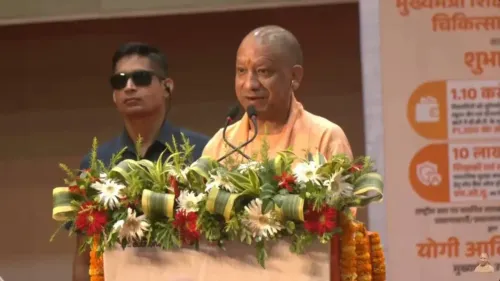
This initiative was officially introduced by Chief Minister Yogi Adityanath on Teachers’ Day last year, with the cabinet’s approval granted on Thursday. The cashless facility will be accessible in both government and private hospitals.
Addressing the media, Secondary Education Minister Gulab Devi noted that over 2.97 lakh beneficiaries will fall under this scheme, with an estimated financial implication of Rs 89.25 crore.
In a similar vein, teachers, Shiksha Mitras, special educators, instructors in schools recognized by the Basic Education Council (including aided and self-financed institutions), wardens, and both full-time and part-time educators of Kasturba Gandhi Balika Vidyalayas, along with cooks engaged under the Pradhan Mantri Poshan Yojana, and their dependents will also be included.
Basic Education Minister Sandeep Singh disclosed that more than 11.95 lakh teachers and staff linked to the Basic Education Council will benefit from this scheme. The annual financial allocation for this initiative is projected at Rs 358.61 crore, with an average annual premium of around Rs 3,000 per employee.
The cashless treatment service will be available in both government and private hospitals via the SACHIS. Treatment costs will align with those set forth under the Pradhan Mantri Jan Arogya Yojana and the norms established by the National Health Authority.
Teachers from self-financed, recognized institutions will be eligible for benefits post verification. To facilitate this, district-level committees will be established under the leadership of the District Inspector of Schools and the Basic Education Officer.
Point of View
This initiative reflects a commendable effort by the Uttar Pradesh government to enhance the welfare of educators, recognizing their vital role in society. By providing cashless healthcare benefits, the state is taking significant steps toward ensuring the well-being of those who educate future generations.
NationPress
1 Oct 2026
Frequently Asked Questions
Who will benefit from the cashless treatment scheme?
Approximately 15 lakh employees in the education sector, including teachers, non-teaching staff, and their families, will benefit from this scheme.
What is the estimated financial outlay for this initiative?
The annual financial outlay for the scheme is estimated at Rs 358.61 crore.
In which hospitals will the cashless treatment be available?
The cashless treatment will be available in both government and private hospitals.
When was this initiative announced?
This initiative was formally announced by Chief Minister Yogi Adityanath on Teachers’ Day last year.
How will verification for benefits be conducted?
Verification will be conducted through district-level committees led by the District Inspector of Schools and the Basic Education Officer.