Are US-India Relations Facing a Political Standstill?
Click to start listening
Synopsis
As tensions rise between the US and India over trade and Pakistan, expert Dhruva Jaishankar warns that decades of strategic progress could be at stake. This compelling analysis highlights the importance of addressing these issues for the future of the partnership.
Key Takeaways
- Political strains threaten US-India relations.
- Trade disputes and engagement with Pakistan are key factors.
- Strategic cooperation is vital for countering China's influence.
- There are significant collaboration opportunities ahead.
- Addressing tariffs is crucial for mutual benefit.
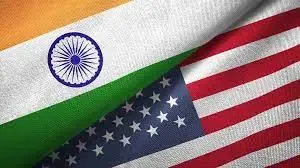
Washington, Dec 9 (NationPress) The relationship between India and the United States is at risk of jeopardizing over two decades of strategic advancements unless immediate political tensions regarding tariffs and Washington's renewed connections with Pakistan are addressed, warned policy expert Dhruva Jaishankar in a statement submitted to the House Foreign Affairs Committee ahead of a significant hearing scheduled for Wednesday.
Jaishankar, who serves as the Executive Director of the Observer Research Foundation America, conveyed to lawmakers that the US-India partnership, cultivated through bipartisan efforts in both nations, now confronts a “political standstill” primarily attributed to trade disputes and the US outreach to Pakistan's military leadership.
He elaborated that the relationship, which has been fortified since 1998 through economic alignment and Indo-Pacific collaboration, is losing traction at a critical time when both countries are challenged by China's growing influence and instability in key regions. The alliance, he emphasized, has been built on “mutually-beneficial economic opportunities in both countries” and “strategic coordination, especially in the Indo-Pacific in light of China's rise and growing assertiveness, as well as recent efforts to stabilize the Middle East.”
However, he cautioned that advancements on multiple fronts are now at risk. “The current situation threatens to undermine mutually beneficial cooperation on (i) the ambitious bilateral agenda outlined by President Trump and Prime Minister Modi in February 2025… and (ii) strategic cooperation between the two nations in the Quad, in the Middle East, and on global issues,” he noted.
The statement, submitted on Monday, provides a comprehensive overview of the progress in US-India ties over nearly three decades — from the lifting of sanctions in 1999 to the 2008 civil nuclear agreement, enhanced defense interoperability, the revival of the Quad, and India's integration into US-led initiatives in space, critical minerals, and artificial intelligence.
Jaishankar identified China's increasingly aggressive military stance as a crucial factor for strategic alignment. He referenced China's incursions along the disputed land boundary with India, the 2020 Galwan clashes, its “largest naval build-up in history,” and a growing network of dual-use ports across the Indo-Pacific. “China's military capabilities are now comparable to those of the United States,” he stated.
Jaishankar also underscored that India is facing maritime pressure from China, noting the expansion of naval patrols since 2017 and increased collaboration with regional allies, including through the Quad's Indo-Pacific Maritime Domain Awareness initiative.
Addressing the recent strains with Washington, he remarked that the bilateral relationship was shaken following India's retaliatory strikes on Pakistan after a deadly terrorist attack in April, coupled with Washington's subsequent high-profile engagement with Pakistan's military leaders.
He recalled Pakistan's long history of supporting terrorist proxies, asserting that “Pakistan's ongoing support for terrorism — and its role in fostering conflict and instability in the broader region — presents a significant political and security challenge.”
Trade also presents another major source of tension. Jaishankar indicated that US tariffs imposed after negotiations on a Bilateral Trade Agreement stalled have become “among the highest on any nation” and now pose a threat to exporters, workers, and investors on both sides. He cautioned that the longer these tariffs persist, the more they will be perceived in India as “an act of political hostility.”
Nevertheless, he acknowledged that collaboration has persisted in various areas this year, including a new 10-year Defense Framework Agreement, significant defense sales, expanded military exercises, NASA-supported human spaceflight, the co-developed NISAR satellite launch, and India's historic $1.3 billion LNG import agreement with the United States.
Jaishankar remarked that the partnership still holds immense potential across four pillars — trade, energy, technology, and defense — highlighting forthcoming opportunities in artificial intelligence, critical minerals, semiconductor supply chains, and defense co-production under the US-India TRUST initiative.
Point of View
The evolving dynamics in US-India relations necessitate careful navigation. Both nations benefit from a strong partnership, particularly in the face of shared challenges posed by China. Balancing trade disputes and regional security concerns will be crucial for sustaining this alliance.
NationPress
09/12/2025
Frequently Asked Questions
What are the main issues affecting US-India relations?
The primary issues include political strains over tariffs and the US's renewed engagement with Pakistan, which could jeopardize the long-standing partnership.
Why is the US-India partnership important?
The partnership is critical for addressing shared challenges, notably China's growing influence and regional instability in the Indo-Pacific.
What opportunities exist for collaboration between the two nations?
There are opportunities in trade, energy, technology, and defense, particularly in areas like artificial intelligence and semiconductor supply chains.