West Bengal Phase-2 Voting 2026: Modi urges record turnout in 142 seats
Synopsis
With 3.21 crore voters and 1,448 candidates across 142 constituencies, West Bengal's Phase-2 vote is the election's decisive round. PM Modi's personal appeal for record turnout — especially from women and youth — and the high-stakes Bhabanipur duel between Mamata Banerjee and Suvendu Adhikari make this a contest with national implications well beyond the state.
Key Takeaways
PM Narendra Modi urged West Bengal voters to turn out in record numbers on 29 April 2026 as Phase-2 polling began.
142 constituencies across seven districts are voting, with results due on 4 May 2026 .
Total registered electorate stands at 3,21,73,837 , including 1,57,37,418 female and 792 third gender voters.
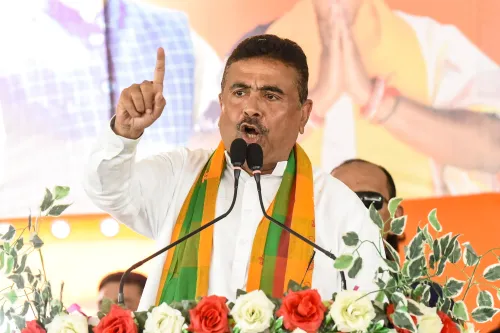
The Bhabanipur seat pits TMC's Mamata Banerjee against BJP's Suvendu Adhikari in the most-watched contest.
In 2021 , TMC had won 123 of these 142 seats; BJP had won 18 and Left one .
A total of 1,448 candidates are contesting, including 220 women candidates.
Prime Minister Narendra Modi on Wednesday, 29 April 2026 urged voters across West Bengal to turn out in record numbers as polling for the second and final phase of the West Bengal Assembly Elections 2026 got underway, covering 142 constituencies across seven districts with 1,448 candidates in the fray.
Modi's Appeal to Voters
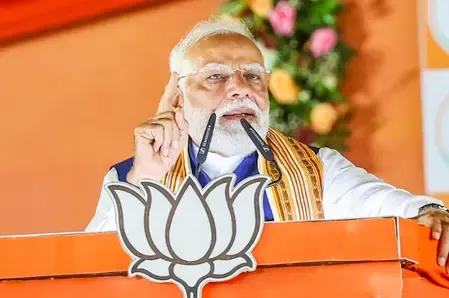
Taking to X (formerly Twitter), Prime Minister Modi wrote: "Today is Phase-2 of the West Bengal Assembly Elections 2026. Urging all those voting today to do so in record numbers and make our democracy more vibrant as well as participative. It is important that the women and youth of West Bengal, in particular, turnout in large numbers and exercise their franchise."
The Prime Minister's message placed particular emphasis on women and youth voters, two demographic groups that have been closely contested by all major parties in this election cycle.
The Bhabanipur Battle at Centre Stage
The most closely watched contest of Phase 2 is the Bhabanipur seat, where All India Trinamool Congress (TMC) chief and incumbent Chief Minister Mamata Banerjee faces a direct challenge from Bharatiya Janata Party (BJP) leader Suvendu Adhikari. The Bhabanipur constituency has been a TMC stronghold since 2011, held continuously by Banerjee herself.
The outcome of this seat is widely seen as a referendum on Banerjee's political standing and could shape the post-result power dynamics in the state regardless of the overall tally.
Voter and Candidate Data at a Glance
According to the Election Commission of India (ECI), the 142 constituencies going to polls on Wednesday have a total of 3,21,73,837 registered electors — nearly 64% of the total population of 5,00,13,786 across those areas. Of the total electorate, 1,64,35,627 are male voters, 1,57,37,418 are female voters, and 792 are third gender voters.
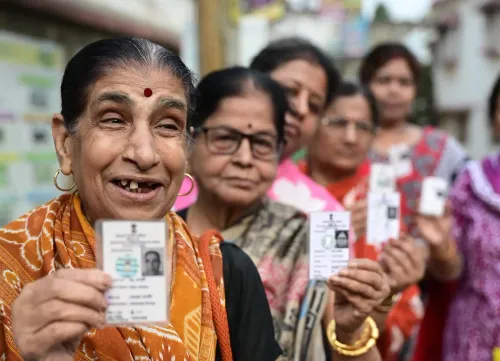
Notably, 3,243 voters are aged 100 years or above, while 1,96,801 are aged 85 or above. There are also 146 Non-Resident Indian (NRI) voters and 39,961 service voters registered in these constituencies. Electors Photo Identity Cards (EPICs) have been issued to all registered electors, according to the office of the West Bengal Chief Electoral Officer (CEO).
Among the 1,448 candidates contesting, 1,228 are male and 220 are female, with no third gender candidates on the ballot. Of the 142 constituencies, 107 fall under the general category, 34 are reserved for Scheduled Castes (SC), and one is reserved for Scheduled Tribes (ST).
2021 Results: The Benchmark
In the 2021 West Bengal Assembly elections, the TMC had won 123 seats out of these 142 constituencies, the BJP had secured 18, and the Left had won one. The 2026 phase-2 results will indicate whether those margins hold, narrow, or reverse — a question that national political observers are watching closely.
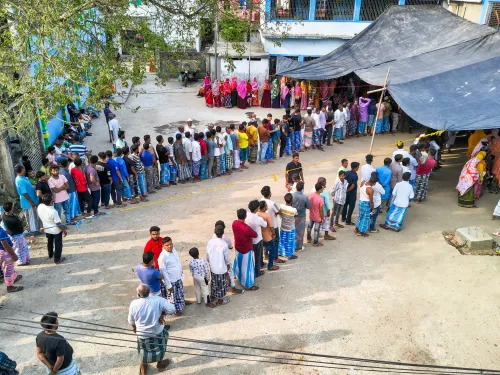
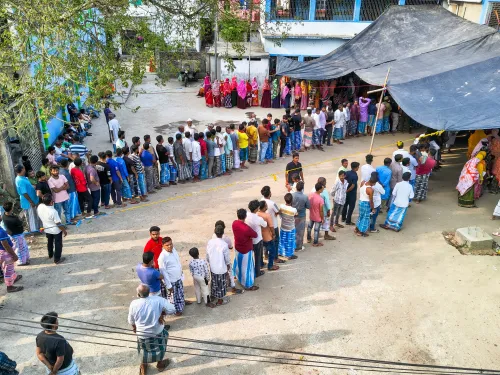
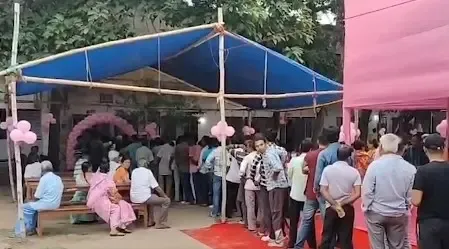
On the ground, voters began arriving early at polling stations, including a specially set up pink polling station at Hiralal Majumdar College in the 112 Kamarhati Assembly constituency.
What Happens Next
Results for the West Bengal Assembly Elections 2026 are scheduled to be declared on 4 May 2026. With the Bhabanipur seat drawing national attention and the TMC's 2021 dominance in these constituencies under scrutiny, the counting day is expected to be closely followed across the country.
Point of View
It validates TMC's ground-level resilience; if the margin narrows significantly, it hands the BJP a moral victory regardless of seat count. The broader question — whether Bengal's women and youth voters shift allegiance in 2026 — will not be answered by Modi's tweet alone, but by the turnout numbers that emerge through the day.
NationPress
15 Sept 2026
Frequently Asked Questions
Which constituencies are voting in West Bengal Phase-2 elections 2026?
A total of 142 constituencies spread across seven districts of West Bengal are voting in Phase 2 on 29 April 2026. Of these, 107 are in the general category, 34 are reserved for Scheduled Castes, and one is reserved for Scheduled Tribes.
What is the significance of the Bhabanipur seat in West Bengal elections 2026?
Bhabanipur is the personal constituency of TMC chief and Chief Minister Mamata Banerjee, who faces BJP's Suvendu Adhikari there. The seat has been a TMC stronghold since 2011 and is the most closely watched contest of Phase 2.
When will West Bengal election 2026 results be declared?
Results for the West Bengal Assembly Elections 2026 are scheduled to be declared on 4 May 2026.
How many voters are registered for West Bengal Phase-2 polling?
According to the Election Commission of India, 3,21,73,837 electors are registered across the 142 Phase-2 constituencies, representing nearly 64% of the total population of those areas.
How did TMC and BJP perform in these constituencies in 2021?
In the 2021 West Bengal Assembly elections, TMC won 123 of the 142 Phase-2 constituencies, the BJP won 18, and the Left won one. The 2026 results will show whether these margins have shifted.