BJP West Bengal govt's 100-day report: BSF land, jute mills, Annapurna Yojana
Synopsis
West Bengal's first BJP government hits 100 days on 19 August with a striking opening act: over 1,100 acres transferred to border forces, 16 shuttered jute mills back in operation, and a welfare payout double that of the TMC's flagship scheme. But the screening controversy around Annapurna Yojana signals that delivery gaps could define the next 100 days as much as the achievements do.
Key Takeaways
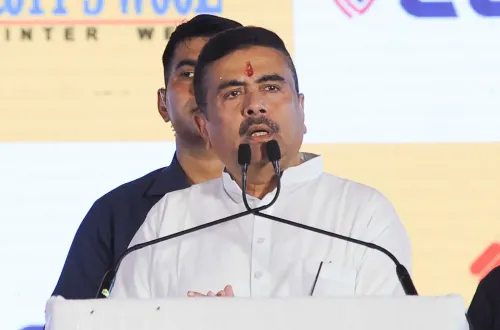
The first BJP -led West Bengal government under CM Suvendu Adhikari completes 100 days in office on 19 August 2026 .
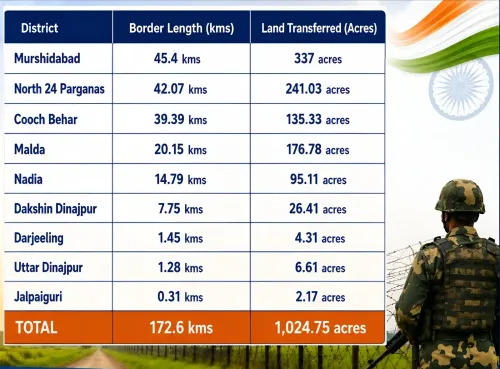
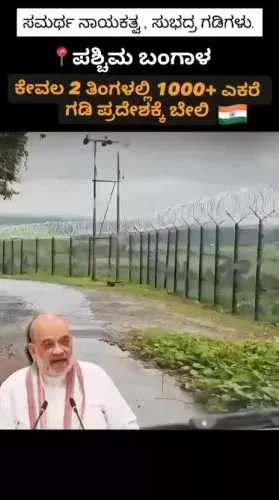
More than 1,100 acres of land transferred to the BSF across nine border districts for Bangladesh border fencing.
16 closed jute mills have been reopened during the first 100 days.
Annapurna Yojana pays women ₹3,000/month — double the ₹1,500 under the previous TMC's Lakshmir Bhandar scheme.
Ayushman Bharat health scheme integrated in West Bengal after being blocked under the previous TMC government.
The West Bengal Public Safety and Control of Anti-Social Activities Bill, 2026 passed to address law and order.
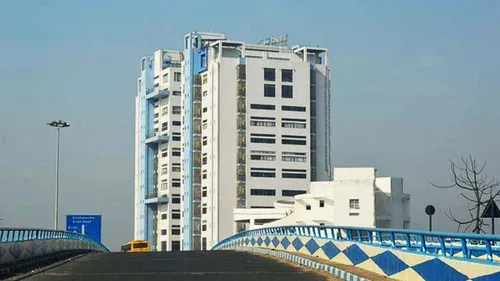
The first Bharatiya Janata Party (BJP)-led West Bengal government, headed by Chief Minister Suvendu Adhikari, is set to mark its 100th day in office on Tuesday, 19 August 2026, with a comprehensive showcase of its early achievements. State administration insiders at the Nabanna secretariat confirm that a detailed accounting of the government's work across border security, infrastructure, welfare, and law and order is being prepared for public release.
Border Security: Over 1,100 Acres Transferred to Central Forces
The most prominent highlight, according to sources within the secretariat, will be the near-completion of land transfers to the Border Security Force (BSF) for erecting barbed-wire fencing along unfenced stretches of the West Bengal–Bangladesh border. According to figures from the state Land and Land Revenue Department — which falls directly under the Chief Minister's purview — more than 767 acres of land has already been handed over to the BSF across nine border districts.
The state Cabinet has additionally approved the transfer of approximately 362 acres, bringing the cumulative land transferred to the BSF past 1,100 acres. Separately, more than 44 acres has been allocated to the Sashastra Seema Bal (SSB) in Darjeeling, Jalpaiguri, and Alipurduar districts, while 110 acres has been handed to the Indo-Tibetan Border Police (ITBP) battalion headquarters in Darjeeling. This marks a significant policy shift from the previous administration, which critics had long accused of stalling central security infrastructure in the state.
Infrastructure and Industrial Revival
The second major talking point will be the expedited land allocation for key infrastructure projects, including the Sevak-Rangpo broad gauge rail project, a 100-bed ESI hospital in West Medinipur district, and land parcels for government warehouses and electricity substations. Officials say these clearances had been pending for years and were fast-tracked within the first three months of the new government taking charge.
Notably, the government will also highlight the reopening of 16 closed jute mills in the state — a politically significant move in a region where the jute industry has historically been a major source of employment. Foundation stones for several new projects, along with their projected investments and estimated employment figures, are also expected to be presented.
Welfare Schemes: Annapurna Yojana and Free Bus Rides
On the welfare front, the government has launched the 'Annapurna Yojana' as promised during the election campaign, under which women beneficiaries receive ₹3,000 per month — double the ₹1,500 paid under the previous All India Trinamool Congress (TMC) government's 'Lakshmir Bhandar' scheme. Free rides for women on state-run buses and an increase in the number of public buses on each route are also among the highlights being prepared.
However, the scheme has drawn criticism. Opponents argue that a stringent screening process to filter out ineligible recipients has inadvertently excluded genuine beneficiaries. The ruling party has acknowledged the concern and assured that legitimate claimants yet to receive benefits will be covered at the earliest.
Health Coverage and Law and Order
The government also plans to spotlight its decision to integrate West Bengal with the centrally-sponsored Ayushman Bharat health scheme — a move that was blocked during the previous TMC regime under Mamata Banerjee, who had opted for a state-run alternative instead. Those not covered under Ayushman Bharat will reportedly be enrolled under the new Chief Minister's Health Insurance scheme.
Rounding out the 100-day report will be the government's law and order initiatives, including the passage of the West Bengal Public Safety and Control of Anti-Social Activities Bill, 2026, which the administration says is aimed at curbing rowdy elements and corruption across the state.
With the 100-day milestone approaching, the BJP government in West Bengal faces the dual challenge of consolidating its early gains while addressing implementation gaps — particularly on welfare delivery — that critics say could undercut its narrative heading into the next political cycle.
Point of View
And the BJP's West Bengal government is clearly leading with border security — a direct rebuttal to years of TMC resistance to central forces in the state. The land transfers to BSF and ITBP are concrete and verifiable, giving the government a defensible headline. The Annapurna Yojana controversy, however, is a self-inflicted wound: doubling the payout while excluding genuine beneficiaries through over-screening is a political paradox that the opposition will exploit. The real test of this government's credibility will not be the 100-day showcase but whether the jute mill revivals translate into sustained employment and whether Ayushman Bharat enrolment in Bengal catches up with national averages.
NationPress
17 Aug 2026
Frequently Asked Questions
What are the key achievements of the BJP West Bengal government in its first 100 days?
The BJP government in West Bengal has highlighted border land transfers of over 1,100 acres to the BSF, reopening of 16 closed jute mills, launch of the Annapurna Yojana welfare scheme at ₹3,000 per month, integration with Ayushman Bharat, and the passage of a new public safety law. The 100-day milestone falls on 19 August 2026.
How much land has West Bengal transferred to the BSF for border fencing?
According to the state Land and Land Revenue Department, more than 767 acres has already been handed over to the BSF across nine border districts, with the Cabinet approving a further 362 acres — taking the total past 1,100 acres. An additional 44 acres has gone to the SSB and 110 acres to the ITBP in Darjeeling.
What is the Annapurna Yojana and how does it differ from Lakshmir Bhandar?
Annapurna Yojana is a welfare scheme launched by the BJP government under which eligible women receive ₹3,000 per month — double the ₹1,500 paid under the TMC government's Lakshmir Bhandar scheme. Critics, however, say a stringent screening process has left some genuine beneficiaries without coverage.
Why was Ayushman Bharat not available in West Bengal earlier?
The previous TMC government under Mamata Banerjee had declined to implement the centrally-sponsored Ayushman Bharat health scheme, opting instead for a state-run alternative. The new BJP government has reversed that decision and is now integrating the state with the national scheme.
What is the West Bengal Public Safety and Control of Anti-Social Activities Bill, 2026?
It is a legislation passed by the BJP-led West Bengal government aimed at curbing rowdy activities and corruption in the state. The bill is one of the law and order measures the government plans to highlight as part of its 100-day achievements.