Do Women Need to Work Harder Than Men to Succeed in Politics?
Synopsis
In a compelling address, Vasundhara Raje highlights the challenges women face in politics, emphasizing that they must work significantly harder than men to secure their positions. With inspiring statistics and examples, she calls for increased representation of women in political spheres. Discover the impact of female leaders in shaping India's political landscape.
Key Takeaways
Women must exert more effort than men in politics.
Statistical progress of women since independence shows significant improvement.
Increased representation in Parliament and Rajya Sabha is still inadequate.
Education is crucial for women's success in politics.
Empowerment of women leaders is essential for societal change.
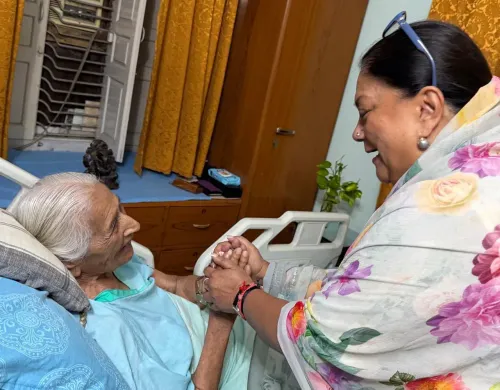
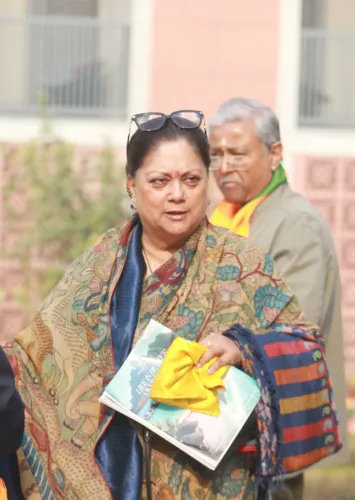
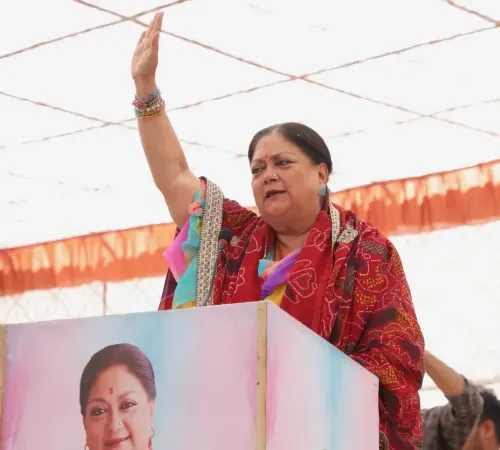
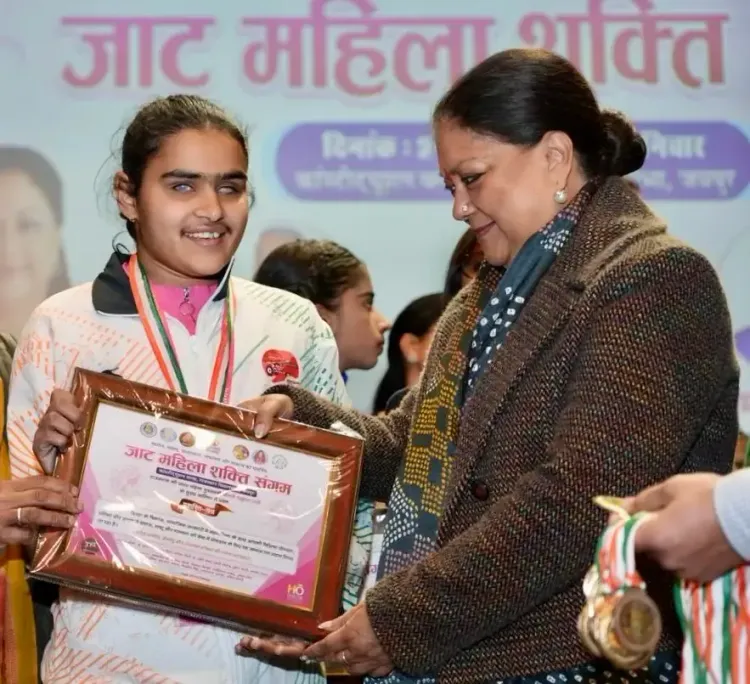
Jaipur, Jan 24 (NationPress) Former Chief Minister of Rajasthan, Vasundhara Raje, asserted on Saturday that women must exert three times the effort compared to men to establish their presence in the realm of politics.
She made these remarks at the Jat Mahila Shakti Sangam event held at the Constitution Club in Jaipur. Raje spoke about the numerous obstacles women encounter in public life and stressed the importance of increasing female representation in politics.
Despite the progress made by women over the years, she noted that there is still a considerable journey ahead to attain equal participation.
During the event, Raja Ram Meel, President of the Jat Mahasabha, commended Raje’s efforts for the Jat community, highlighting her pivotal role in ensuring the Jat reservation in Rajasthan. He mentioned that under her guidance, reservation benefits were extended to Jats in Dholpur and Bharatpur, marking a significant achievement.
Raje presented statistical data illustrating the advancements women in India have made since independence. She revealed that the literacy rate for women was a mere 9% at independence, which has now escalated to 65%.
Furthermore, she pointed out that only 3% of candidates were women in the 1957 general elections, whereas that number has now increased to 10%. Regarding women's representation in Parliament, she noted that there were only 22 female Members of Parliament during the first Lok Sabha, compared to 74 currently.
Similarly, the number of women in the Rajya Sabha has surged from 15 in 1952 to 42 today. However, she emphasized that this progress is still insufficient and that women’s representation should match that of men.
Raje cited the examples of President Draupadi Murmu and former President Pratibha Patil, asserting that their journeys exemplify that education is fundamental to achieving success. She also recognized the contributions of notable women leaders and achievers such as Kamala Beniwal, Hema Malini, Sumitra Singh, Priyanka Chaudhary, Rita Chaudhary, and Shikha Meel.
Other notable figures such as Sushila Barala, Padma Shri awardee Krishna Poonia, Kamala Kanswa, and Divya Maderna were also present, sharing their insights on women’s empowerment and political engagement.
Point of View
The insights presented by Vasundhara Raje underscore the ongoing struggles for gender equality in politics. Her call for increased representation of women is a crucial step towards a more inclusive political landscape. The data shared highlights the progress made, yet also the significant challenges that remain. As we continue to advocate for women's empowerment, it is essential to recognize the contributions of female leaders in shaping our society.
NationPress
25 Sept 2026
Frequently Asked Questions
What did Vasundhara Raje say about women's participation in politics?
Vasundhara Raje stated that women have to work three times harder than men to succeed in politics, highlighting the ongoing challenges they face.
What statistics did Raje share regarding women's literacy and political representation?
She shared that women's literacy has increased from 9% at independence to 65% today, and their representation in general elections has risen from 3% in 1957 to 10% now.
Why is women's representation in politics important?
Greater representation in politics ensures that women's voices and perspectives are included in decision-making processes, leading to more comprehensive and equitable policies.