Can Women Revive the Charm of Handmade Diwali Lamps?
Synopsis
As Diwali nears, rural women in Jaunpur are revitalizing the festival spirit with handmade clay lamps. This initiative not only promotes local craftsmanship but also highlights the importance of supporting Swadeshi products. Read about how these resilient artisans are making a significant impact this festive season.
Key Takeaways
Women artisans in Jaunpur are reviving traditional craftsmanship.
The lamps are eco-friendly and made from natural materials.
Support from the NRLM has enabled economic growth for these women.
Each diya burns for about an hour, making them perfect for Diwali celebrations.
The initiative promotes the Swadeshi movement, encouraging the use of local products.
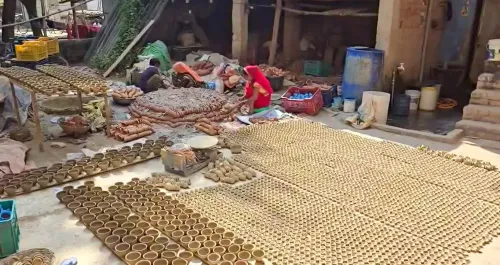
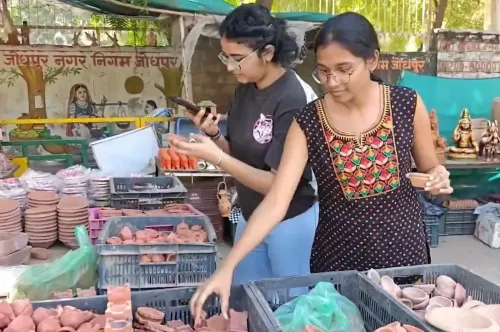
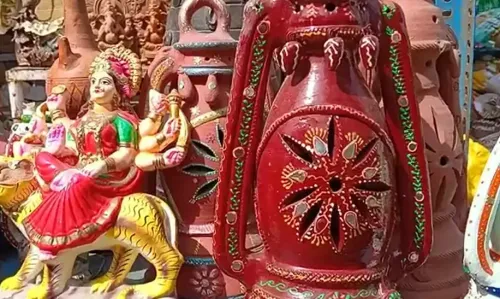
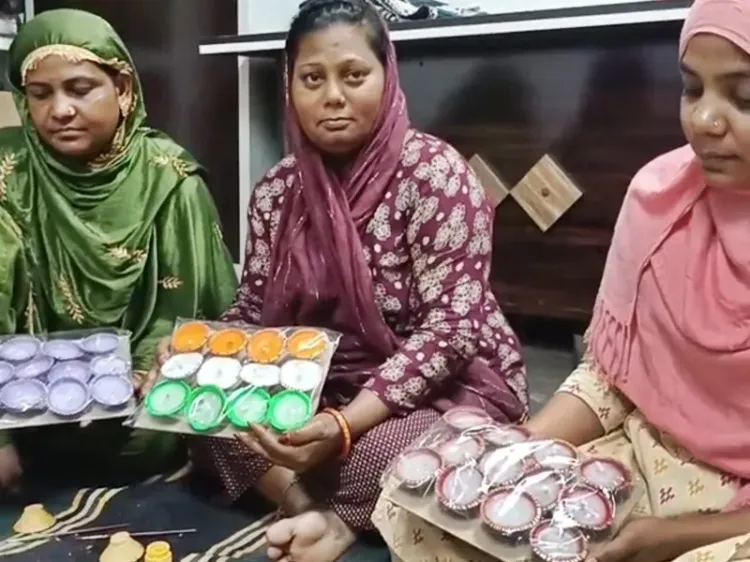
Jaunpur (Uttar Pradesh), Oct 13 (NationPress) As Diwali approaches, women from rural self-help groups (SHGs) in Jaunpur are playing a crucial role in preserving the essence of the festival. They are illuminating homes across the nation and even abroad. Under the centrally-funded National Rural Livelihood Mission (NRLM), these women — including members of the Muslim community — are creating vibrant, eco-friendly lamps crafted from clay and wax, featuring both traditional and tricolour designs.
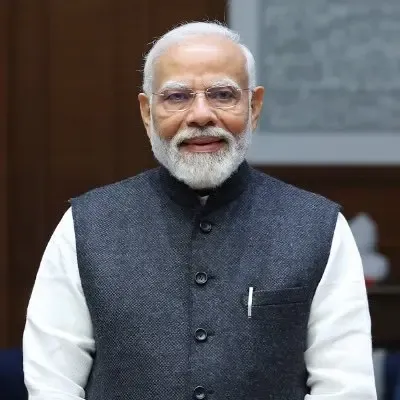
This year's Diwali holds special importance, as Prime Minister Narendra Modi has encouraged citizens to support “Swadeshi” (Made in India) products. The lamps produced by these women not only resonate with this vision but also showcase the resilience, ingenuity, and economic empowerment of rural women.
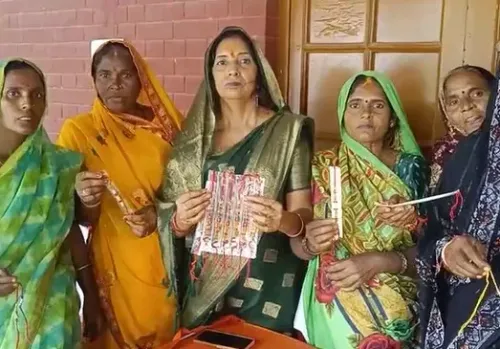
One notable initiative is the “Milki Self-Help Group,” which consists of ten women who collaborate daily from 11 a.m. to 5 p.m.
Most members are from the Muslim community, including Zafrun Ejaz, Rihana, Chand Tara, Najbun, Sofia, Johri, Indu Bala, Bishakha, Subhawati, and Seema. The group leader shares that they have been engaged in this craft for the last three years.
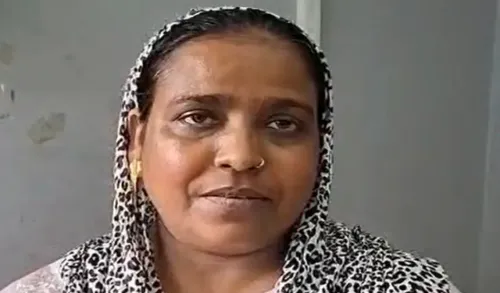
“Initially, we produced just 1,000 lamps in our first year. This year, we’ve secured orders for over 15,000 diyas, including requests from Mumbai and even overseas,” states Zafrun Ejaz, a prominent member of the group.
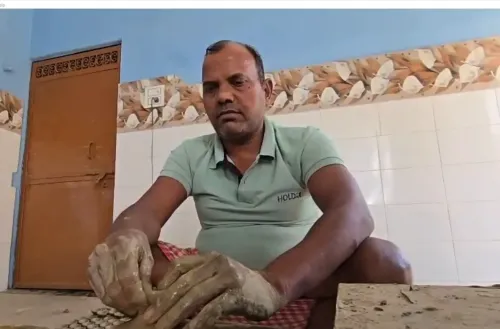
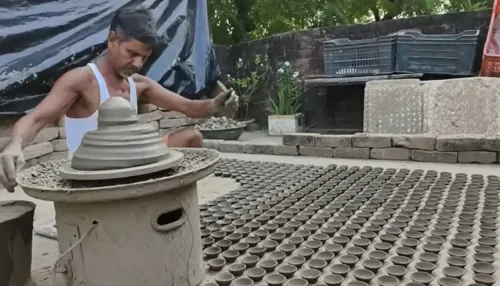
The lamps, crafted entirely by hand without machinery, utilize clay, wax, and natural dyes. The women source raw clay lamps from another local SHG, thereby enhancing the income of fellow artisans within the community.
They began with their personal savings, and subsequently received financial assistance of Rs 1.1 lakh from the government under NRLM, which enabled them to expand their operations. Each woman now earns around Rs 10,000 during the Diwali season, significantly boosting their household incomes.
“These are 100 percent Swadeshi products, crafted by the hands of village women. There’s no factory or machinery involved,” Zafrun proudly states.
The group also shared a memorable experience when a friend of Zafrun’s husband, residing in America, visited them and was so impressed with the diyas that he took 50 lamps back as samples.
“He intends to light them in the US this Diwali,” she noted with a smile.
Each diya has a burn time of about one to one and a half hours, and they are available for sale at Rs 15 each, or as a pack of 12 for Rs 150, with an MRP of Rs 200. The elegant packaging and design make them perfect for homes and as festive gifts.
The women expressed gratitude to Prime Minister Modi for advocating the Swadeshi movement, which has opened new avenues for local products.
“We take pride in contributing to this movement. Let’s support what is made in our own country,” Zafrun concluded.
Point of View
The initiative undertaken by rural women in Jaunpur underscores the significance of local craftsmanship and economic empowerment. It exemplifies how traditional practices can flourish under supportive government schemes, contributing to both cultural preservation and community development. The movement aligns with a broader trend of promoting indigenous products, which fosters national pride and boosts local economies.
NationPress
21 Sept 2026
Frequently Asked Questions
What materials are used in the handmade lamps?
The handmade lamps are crafted using clay, wax, and natural colors, ensuring they are eco-friendly and sustainable.
How many lamps have the women produced this year?
This year, the women have received orders for over 15,000 diyas, reflecting their growing popularity.
What financial support did the group receive?
The group initially started with personal savings and later received financial assistance of Rs 1.1 lakh from the government under the NRLM.
How long do the diyas burn?
Each diya has a burn time of approximately one to one and a half hours.
What is the price of the lamps?
The lamps are sold individually for Rs 15 or in a pack of 12 for Rs 150, with an MRP of Rs 200.