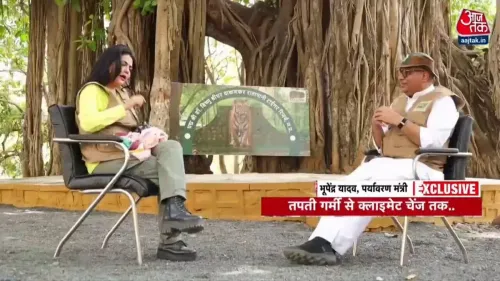
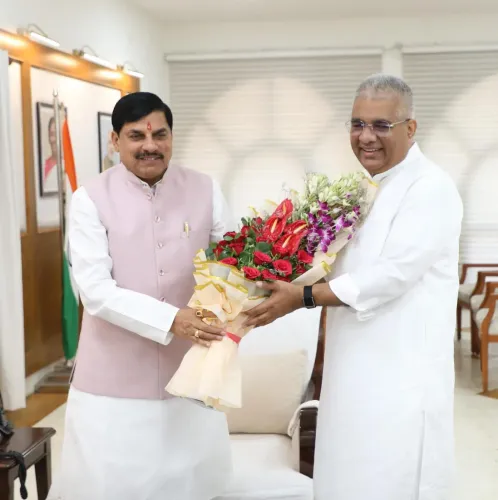
Yadav Highlights India's Growing Green Cover Under Modi
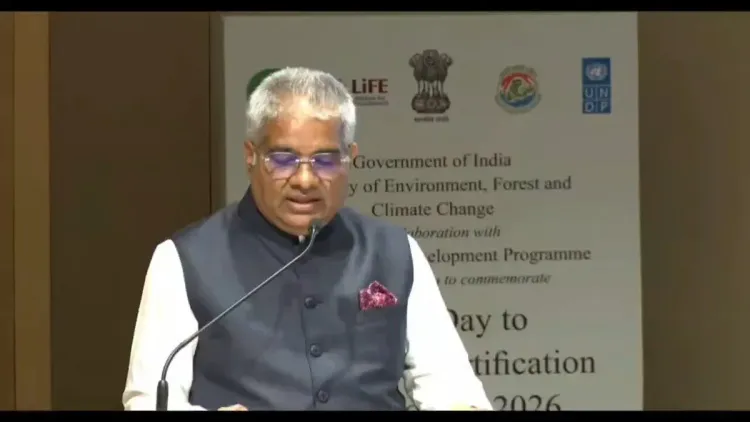
Synopsis
Union Environment Minister Bhupender Yadav has credited Prime Minister Narendra Modi's leadership for India's sustained expansion of green cover, reaffirming the government's commitment to afforestation goals and its 2030 carbon-sink target under the updated NDC.
Key Takeaways
Union Environment Minister Bhupender Yadav posted on June 17, 2026 that India has continuously enhanced its green cover under PM Narendra Modi .
The India State of Forest Report 2021 recorded forest cover at 21.71% of India's geographical area, reflecting an incremental upward trend since 2015.
The Green India Mission targets an increase of 10 million hectares of forest and tree cover under the National Action Plan on Climate Change.
India's updated NDC submitted to UNFCCC in August 2022 commits to an additional carbon sink of 2.5–3 billion tonnes of CO₂ equivalent through forests by 2030.
The CAMPA fund channels compensatory levies from diverted forest land back into afforestation and conservation programmes across states.
The next India State of Forest Report will be a key data point for assessing actual progress against stated green-cover goals.
Union Environment Minister Bhupender Yadav on Wednesday, June 17, 2026, credited Prime Minister Narendra Modi's leadership for India's sustained expansion of green cover, sharing the assertion on X as part of the government's ongoing communication on environmental stewardship.
In his post, the Minister wrote: 'प्रधानमंत्री श्री @narendramodi जी के नेतृत्व में भारत ने ग्रीन कवर का लगातार संवर्धन किया है।' — translating to: 'Under the leadership of Prime Minister Shri Narendra Modi, India has continuously enhanced its green cover.'
Context
The statement comes in the backdrop of India's long-running effort to position itself as a responsible steward of its natural resources. The India State of Forest Report 2021 recorded forest cover at 21.71% of the country's geographical area, continuing an incremental upward trend observed across successive biennial reports since 2015.
Bhupender Yadav has been at the helm of the Ministry of Environment, Forest and Climate Change since 2021, overseeing both domestic forest policy and India's representation at international climate negotiations.
Policy Backdrop
India's afforestation drive draws from multiple institutional pillars. The Green India Mission — formally the National Mission for a Green India — was launched in 2014 under the National Action Plan on Climate Change, with a target to increase forest and tree cover by 10 million hectares. Compensatory afforestation under the CAMPA fund has provided a parallel financial mechanism, channelling levies from forest land diverted for industry and infrastructure back into plantation and conservation work.
In August 2022, India submitted its updated Nationally Determined Contribution (NDC) to the UNFCCC, committing to create an additional carbon sink of 2.5 to 3 billion tonnes of CO₂ equivalent through forest and tree cover by 2030 — a target that makes forest expansion a core pillar of India's climate diplomacy alongside its net-zero by 2070 pledge.
Stakeholders and Impact
The expansion of recorded green cover has direct implications for state forest departments, which are the primary implementing agencies for plantation and conservation drives. Forest-dwelling communities — whose livelihoods are intertwined with the quality and accessibility of forest land — are equally central stakeholders, and advocates have long called for ensuring that afforestation targets do not displace natural ecosystems with monoculture plantations.
At a geopolitical level, consistent gains in green cover strengthen India's negotiating posture at multilateral forums such as COP sessions, where developed nations scrutinise whether large emerging economies are delivering on climate pledges while sustaining rapid economic growth.
What's Next
The next India State of Forest Report — expected to provide fresh, verified data on forest and tree cover — is anticipated to be released and will be closely watched by policymakers, climate researchers, and civil society alike. Any revision of state-level afforestation targets ahead of the 2025-26 Union Budget cycle could signal the government's intent to scale ambitions further.
Minister Yadav's post, while brief, reflects a broader pattern of the government using social media to reinforce its environmental credentials — a narrative likely to intensify as India approaches key international climate review milestones.
Point of View
The government's credibility on this front will be tested against hard numbers.
NationPress
19 Sept 2026
Frequently Asked Questions
Has India's forest cover increased under the Modi government?
Official data from the India State of Forest Report 2021 recorded forest cover at 21.71% of India's geographical area, showing incremental increases across successive biennial reports since 2015, though experts distinguish between dense natural forest and plantation-based tree cover in these figures.
What is the Green India Mission?
The Green India Mission is a national programme launched in 2014 under the National Action Plan on Climate Change, aiming to increase forest and tree cover by 10 million hectares and improve the quality of existing forest cover.
What is India's carbon sink target under its climate commitments?
India's updated Nationally Determined Contribution submitted to the UNFCCC in August 2022 commits to creating an additional carbon sink of 2.5 to 3 billion tonnes of CO₂ equivalent through forest and tree cover by 2030.
What is the CAMPA fund and how does it support afforestation?
The Compensatory Afforestation Fund (CAMPA) collects levies from industries and infrastructure projects that divert forest land, and channels those funds back into afforestation, reforestation, and forest conservation activities across Indian states.
When will the next India State of Forest Report be released?
The next India State of Forest Report, which provides biennial data on forest and tree cover, was anticipated for release around 2025 and will offer the most current verified figures on India's green cover status.