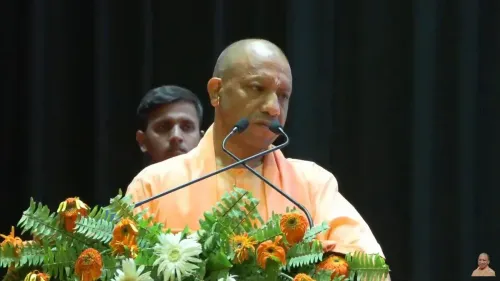
CM Yogi Credits HCL Tech for Empowering UP Village Women
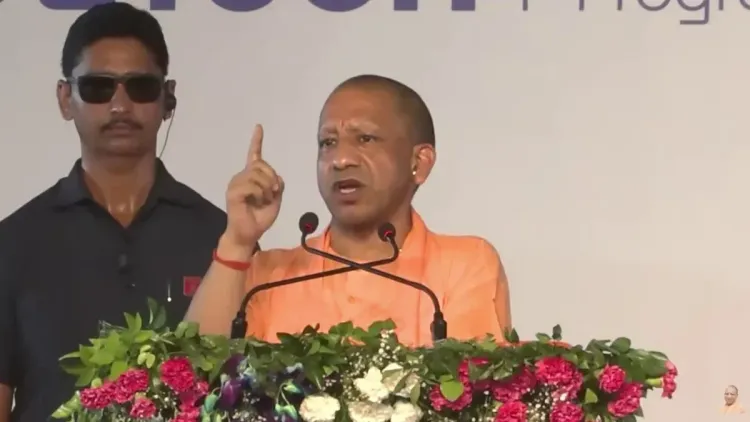
Synopsis
CM Yogi Adityanath praised HCL Technologies on 6 October 2026 for going beyond business in Uttar Pradesh, crediting the company with helping rural women and self-help groups achieve self-reliance — a public signal that UP welcomes tech firms as partners in grassroots uplift.
Key Takeaways
CM Yogi Adityanath publicly credited HCL Technologies for empowering rural women and self-help groups in Uttar Pradesh alongside its commercial operations.
The post uses the word swavlamban (self-reliance), linking HCL's work to the state's broader livelihood and SHG mission.
HCL Technologies is headquartered in Noida, Uttar Pradesh , giving it a deep operational stake in the state.
The public acknowledgement signals the Yogi government's strategy of positioning corporate CSR as a force multiplier for rural women's economic uplift.
The statement doubles as an implicit call to other corporates to invest in UP's rural social ecosystem.
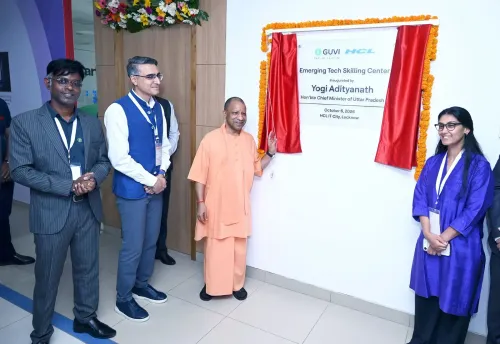
Beyond server farms and software contracts, a tech giant is quietly reshaping lives in rural Uttar Pradesh — and Uttar Pradesh Chief Minister Yogi Adityanath wants the country to notice. In a post on X on Tuesday, 6 October 2026, the Chief Minister singled out HCL Technologies for doing something that goes well past the balance sheet: helping village women and self-help groups move toward self-reliance.
Posting in Hindi, CM Yogi wrote: 'HCL Tech ne Uttar Pradesh mein keval Business hi nahin kiya hai... gaanv ki mahilaon aur swayamsevi samudhon ko bhi swavlamban ki or agrassar karne mein madad ki hai...' — 'HCL Tech has not just done business in Uttar Pradesh... it has also helped rural women and voluntary groups move toward self-reliance.'The 'Swavlamban' Angle — Why the Word Matters
The Chief Minister's choice of the word swavlamban — self-reliance or self-sufficiency — is deliberate. It is the same language the state uses when framing its Self-Help Group (SHG) ecosystem, which has grown substantially under the UP Livelihood Mission and linked central schemes. Positioning a private tech company as a partner in that mission signals that the Yogi government is actively courting corporate social investment as a force multiplier for grassroots economic uplift.
Self-help groups, typically clusters of 10 to 20 women from low-income rural households, pool savings, access micro-credit, and build small enterprises. When companies like HCL Technologies plug into this ecosystem — through digital-literacy drives, livelihood training, or market-linkage programmes under their CSR mandates — the impact can extend far beyond the classroom or the quarterly CSR report.
HCL in UP: Business and Beyond
HCL Technologies, one of India's largest IT services companies headquartered in Noida — itself in Uttar Pradesh — has a long operational footprint in the state. The company's CSR arm, HCL Foundation, has run rural livelihood and women-empowerment programmes across multiple Indian states. The Chief Minister's public acknowledgement functions as both a vote of gratitude and an implicit invitation to other corporates to replicate the model in UP's vast rural hinterland.
For the Yogi administration, which has made improving UP's investor image a signature project, the optic is equally important: tech investment and social impact are being presented as two sides of the same coin, not rival priorities.
When India's most populous state publicly thanks a Fortune-500-scale company not for the jobs it created in glass towers, but for the quiet work done in the village — that is a story worth watching.
Point of View
And publicly crediting a marquee IT company for rural women's empowerment serves both goals simultaneously. It suggests the state is actively curating a narrative where big business and grassroots welfare are complementary, not competing. For HCL, the Chief Minister's endorsement is valuable reputational capital in a state with significant policy influence. Watch for whether this translates into a formal expanded partnership or CSR framework announcement in the months ahead.
NationPress
6 Oct 2026
Frequently Asked Questions
What did CM Yogi Adityanath say about HCL Tech in UP?
On 6 October 2026 , CM Yogi praised HCL Technologies for not just doing business in Uttar Pradesh but also helping rural women and self-help groups move toward self-reliance, using the Hindi term swavlamban .
What is HCL Foundation's work in Uttar Pradesh?
HCL Foundation , the CSR arm of HCL Technologies , has run rural livelihood and women-empowerment programmes across multiple Indian states including Uttar Pradesh, where the company is also headquartered in Noida .
What does swavlamban mean and why did CM Yogi use it?
Swavlamban means self-reliance or self-sufficiency. CM Yogi used it to align HCL's community work with UP's broader policy language around its Self-Help Group (SHG) ecosystem and livelihood missions.
Is HCL Technologies based in Uttar Pradesh?
Yes. HCL Technologies is headquartered in Noida, Uttar Pradesh , making it one of the state's most prominent corporate residents with a long operational and social footprint.
Why is CM Yogi publicly thanking a private company for social work?
The acknowledgement is part of a broader Yogi government strategy to position Uttar Pradesh as welcoming both investment and corporate social responsibility, presenting business and rural uplift as mutually reinforcing goals.