World models: how AI is learning to simulate reality

Synopsis
AI is moving beyond text and image generation into 'world models' — systems that simulate how reality evolves over time. China's ByteDance, Alibaba, SenseTime, Ant Group, and Kuaishou are among the most active developers, but the field lacks consensus on architecture or benchmarks, making it as contested as it is consequential.
Key Takeaways
World models are AI systems designed to simulate how physical or digital environments change over time — a major conceptual leap beyond text and image generation.
The technology is still in its infancy, with no industry consensus on what a world model should look like or how it should be measured.
China has become one of the most active testing grounds, with ByteDance , Alibaba Group Holding , SenseTime , Ant Group , and Kuaishou all pursuing competing approaches.
Global rivals including Nvidia and Google are also investing in simulation-based AI , setting up a US - China contest over a potentially foundational technology.
Applications span robotics, autonomous driving, gaming, and scientific research — sectors where simulation fidelity directly impacts real-world outcomes.
Artificial intelligence is entering a new phase — moving beyond generating text, images, and video toward building systems that can simulate how the physical and digital world changes over time. Dubbed 'world models,' this emerging class of AI technology is rapidly becoming one of the industry's most contested frontiers, with Chinese tech giants including ByteDance, Alibaba Group Holding, SenseTime, Ant Group, and Kuaishou among the most active developers, according to reports.
What are world models?
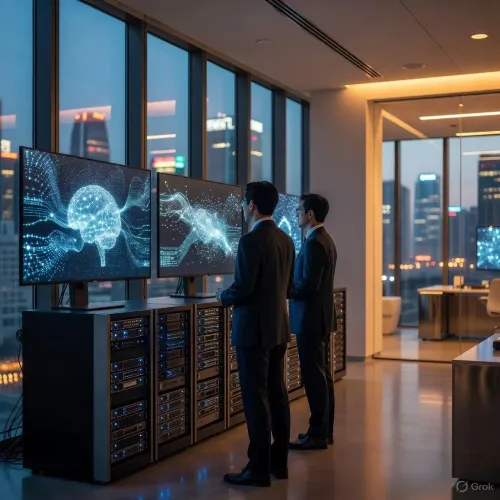
A world model is an AI system designed to learn and predict how environments — real or virtual — evolve over time in response to actions or events. Originally rooted in physics simulations and robotics, the concept has expanded significantly in scope. Unlike ChatGPT-style language models that process and generate text, world models aim to build an internal representation of cause-and-effect dynamics within a given space.
The technology remains in its infancy, and there is currently little consensus across the industry on what a world model should ultimately look like or how it should be evaluated. Researchers and companies are pursuing divergent architectures and use cases, making the field as fragmented as it is fast-moving.
Why China is a key testing ground
China has emerged as one of the most active and competitive arenas for world model development. Companies across the country are applying the concept broadly — spanning autonomous driving, gaming, robotics, and virtual environment simulation — reflecting both the scale of domestic AI investment and the strategic push to establish leadership in next-generation AI systems.
Global players are also in the race. Nvidia, Google, and others have signalled interest in simulation-based AI, with Nvidia particularly active in physical world simulation through its robotics and autonomous systems platforms. The competitive backdrop pits US and Chinese firms against each other in a domain that could prove foundational to future AI capabilities.
Why it matters
World models represent a potential step-change in what AI can do. Rather than pattern-matching on historical data, these systems could enable machines to reason about hypothetical futures — a capability with profound implications for robotics, game development, scientific research, and autonomous systems. The ability to simulate reality cheaply and accurately could compress product development cycles and reduce reliance on costly physical testing.
Industry analysts note that whoever establishes an early lead in world model architecture could gain durable advantages, particularly in sectors where simulation fidelity translates directly into real-world performance.
What's next
The field is still coalescing around foundational definitions, benchmarks, and evaluation frameworks. As investment accelerates from both Chinese and US-based firms, the coming months are likely to see a wave of competing product launches and research publications staking out different visions of what world models should be. Watch for moves by Alibaba, ByteDance, and SenseTime to translate early research into deployable platforms — and for Nvidia and Google to respond with simulation infrastructure of their own.
Point of View
Image, video — is rapidly commoditising, and the industry needs a new capability frontier to justify continued capital expenditure. The fact that China is leading in applied experimentation, while US firms like Nvidia and Google hold advantages in underlying simulation infrastructure, mirrors the broader chip-war dynamic: architectural innovation on one side, hardware leverage on the other. What mainstream coverage underplays is that 'world model' remains a contested term — companies are using it to describe architectures as different as physics engines and video prediction models, which means early claims of leadership may not be directly comparable. The real inflection point will come when a standardised benchmark emerges; until then, the field is as much a marketing race as a technical one.
NationPress
9 Oct 2026
Frequently Asked Questions
What is a world model in AI?
A world model is an AI system designed to simulate how a physical or digital environment changes over time in response to actions or events. Unlike language models such as ChatGPT, world models aim to build an internal representation of cause-and-effect dynamics rather than simply predicting the next word or pixel.
Which companies are developing AI world models?
Chinese companies including ByteDance, Alibaba Group Holding, SenseTime, Ant Group, and Kuaishou are among the most active developers of world models. Global players such as Nvidia and Google are also investing in simulation-based AI systems.
Why are world models considered the next frontier of AI?
World models could enable machines to reason about hypothetical futures rather than just pattern-matching on past data — a capability with major implications for robotics, autonomous driving, game development, and scientific research. The technology could compress product development cycles by replacing costly physical testing with accurate simulations.
Is China ahead in world model AI development?
China has emerged as one of the most active testing grounds for world models, with multiple major tech companies pursuing competing approaches. However, the field lacks standardised benchmarks, making direct comparisons between Chinese and US-based efforts difficult at this stage.
What are the main challenges facing world model AI?
The technology remains in its infancy with little consensus on what a world model should ultimately look like, how it should be evaluated, or which architecture is most promising. Companies are pursuing divergent approaches across robotics, gaming, and autonomous systems, making the field highly fragmented.