Is the Drug-Resistant Fungus Candida auris Becoming More Lethal and Spreading Worldwide?

Synopsis
A groundbreaking study reveals that the drug-resistant fungus Candida auris is not only becoming deadlier but is also spreading globally, affecting millions and posing a serious health threat. Research indicates its capacity to evade treatments and diagnostic challenges, highlighting the urgent need for improved antifungal strategies and awareness.
Key Takeaways
Candida auris is increasingly becoming a global health threat.
It exhibits high mortality rates exceeding 50% even with treatment.
The fungus can evade immune responses and traditional diagnostic methods.
There is a need for new antifungal agents and improved public awareness.
Long-term colonization in patients poses risks of transmission in hospitals.
New Delhi, Dec 30 (NationPress) A recent study spearheaded by Indian scientists reveals that the drug-resistant fungal species Candida auris is becoming increasingly lethal and is also spreading across the globe.
Candida auris is a multidrug-resistant fungal pathogen known for its unique capacity to thrive and persist on human skin.
The research conducted by scientists from the Vallabhbhai Patel Chest Institute at the University of Delhi, in partnership with teams from the National Institutes of Health in the United States, indicates that invasive fungal infections are on the rise worldwide, growing in their virulence and currently affecting approximately 6.5 million individuals annually.
These infections are often linked to alarmingly high mortality rates, frequently surpassing 50 percent, even when antifungal treatments are administered.
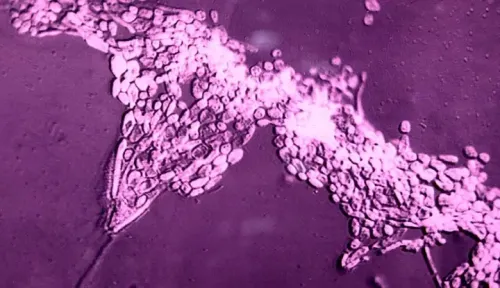
According to the researchers, C. auris has developed cunning cellular strategies for survival, including morphogenesis that enables it to transition from yeast growth to filament-driven spread, as well as forming multicellular aggregates and altering its genetic expression based on environmental changes.
The fungus is particularly adept at colonizing human skin, with molecular evidence suggesting that its cell wall proteins act like a glue, adhering to both mammalian cells and non-living surfaces.
The long-term colonization of patients by C. auris poses a serious medical challenge, as these individuals can facilitate both inter- and intra-hospital transmission of the fungus.
Moreover, patients colonized by C. auris face an increased risk of developing more severe systemic infections, as noted by the research team.
While the host immune system attempts to combat C. auris, current science suggests that the pathogen can develop proactive mechanisms to evade immune responses.
Diagnostic challenges persist, as most traditional laboratory tests often misidentify C. auris as other related yeasts, which complicates and delays appropriate treatment.
However, there is a rising awareness of the burden posed by this relatively new threat, prompting a surge in research to meet clinical needs.
The researchers emphasize, "Collectively, these findings highlight the urgent need to create new antifungal agents with broad-spectrum efficacy against human fungal pathogens, improve diagnostic tests, and explore immune- and vaccine-based adjunct therapies for high-risk patients."
Additionally, the study advocates for heightened awareness regarding fungal diseases, particularly by developing better surveillance systems in resource-limited regions.
Point of View
The findings of this study underscore the critical need for enhanced healthcare measures to tackle the rising threat of Candida auris. As this drug-resistant fungus spreads, it is imperative that we prioritize research, improve diagnostic tools, and raise public awareness to safeguard public health.
NationPress
5 Oct 2026
Frequently Asked Questions
What is Candida auris ?
Candida auris is a multidrug-resistant fungal pathogen that can thrive on human skin and is associated with high mortality rates.
Why is Candida auris a concern?
Candida auris poses a significant health risk due to its ability to resist antifungal treatments and its potential for rapid transmission in healthcare settings.
How many people are affected by Candida auris ?
Approximately 6.5 million individuals are affected by invasive fungal infections caused by Candida auris each year.
What can be done to combat Candida auris ?
The urgent need for novel antifungal agents, improved diagnostic tests, and better public awareness is crucial to combat the spread of Candida auris .
Where was the study conducted?
The study was conducted by researchers at the Vallabhbhai Patel Chest Institute, University of Delhi, in collaboration with the National Institutes of Health in the US.