Is India Among the Leading AI Nations?
Synopsis
India's commitment to becoming a leading player in AI is clear as Union Minister Ashwini Vaishnaw emphasizes the nation's work across all five layers of AI architecture. Key insights from the World Economic Forum discuss India's potential as the top supplier of AI services globally.
Key Takeaways
India is positioned among the top AI nations.
The country is focusing on all five layers of AI architecture.
ROI in AI is driven by enterprise-level implementations.
India is set to be the largest supplier of AI services globally.
Public-private partnerships are key to expanding access to AI resources.
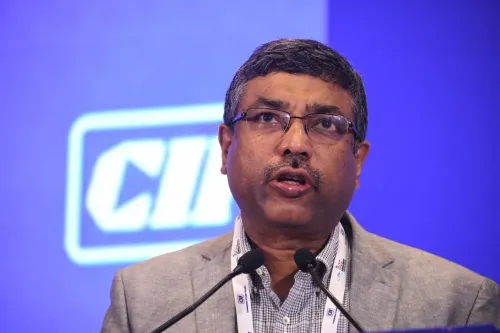
Davos, Jan 21 (NationPress) India is undoubtedly positioned in the top tier of AI nations, according to Union Minister for Electronics and IT, Ashwini Vaishnaw. He stated that the architecture of Artificial Intelligence consists of five essential layers: application, model, chip, infrastructure, and energy, and India is making strides in all these areas.
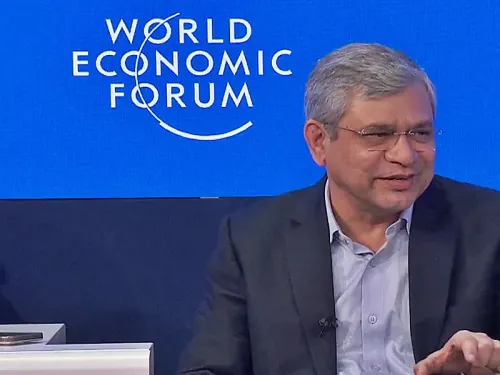
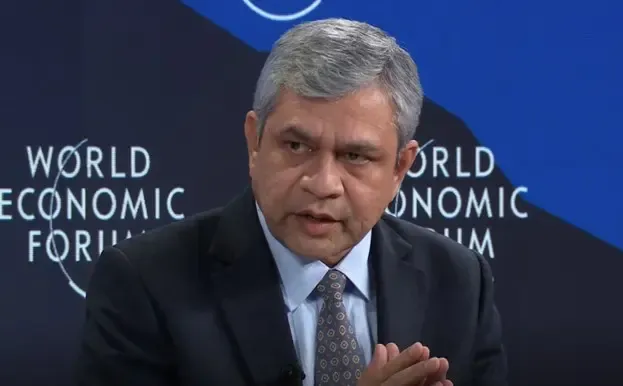
During a panel discussion at the World Economic Forum (WEF) annual meeting in Davos, the minister detailed India's commitment to the wide-scale adoption of AI, focusing on economic sustainability and techno-legal governance.
The session was led by Ian Bremmer, President and Founder of the Eurasia Group, with panelists including Brad Smith from Microsoft, Kristalina Georgieva from the IMF, and Khalid Al-Falih from Saudi Arabia's Ministry of Investment.
“In the application sector, India is set to become the leading supplier of services globally,” he remarked, highlighting that the returns on investment (ROI) in AI stem from enterprise-level implementations and productivity improvements rather than merely from developing large models.
Vaishnaw pointed out that around 95% of AI applications can be managed using models with 20-50 billion parameters, many of which are already operational in India.
He cautioned against confusing geopolitical strength with the ownership of massive AI models, noting that such models can be deactivated and could potentially cause financial strain for their creators.
“The financial advantages of what I term the fifth industrial revolution will arise from ROI — implementing the most cost-effective solutions for maximum returns,” he explained.
The minister stressed that successful AI implementation increasingly depends on CPUs, compact models, and emerging custom silicon, which reduces reliance on any single nation and challenges the idea of AI supremacy through sheer scale.
Identifying the availability of GPUs as a critical limitation, he stated that India has embraced a public-private partnership model, enlisting around 38,000 GPUs as a common national computing resource. This initiative, backed by the government, offers subsidized access to students, researchers, startups, and innovators at approximately one-third of the global pricing.
Point of View
India's advancements in AI represent not only a technological breakthrough but also a strategic move that could enhance economic stability and global competitiveness. The government's focus on public-private partnerships and affordability in AI resources reflects a commitment to fostering innovation and inclusivity, positioning India as a key player on the global stage.
NationPress
22 Sept 2026
Frequently Asked Questions
What are the five layers of AI architecture?
The five layers of AI architecture include application, model, chip, infrastructure, and energy.
How is India contributing to AI on a global scale?
India is actively involved in all five layers of AI architecture and is expected to be the largest supplier of AI services worldwide.
What is the significance of ROI in AI according to Ashwini Vaishnaw?
Ashwini Vaishnaw emphasized that ROI in AI comes from enterprise-level deployment and productivity improvements rather than just developing large models.
What role do GPUs play in India's AI development?
GPUs are essential for AI deployment, and India has established a national computing facility with around 38,000 GPUs to enhance access for students, researchers, and innovators.
How does India plan to reduce dependency on other countries for AI?
India's focus on CPUs and smaller models, along with custom silicon, aims to lessen reliance on any single country and promote a more balanced AI ecosystem.