India-New Zealand FTA elevates Ayush systems to global healthcare stage

Synopsis
New Zealand just became the first country to carve out a dedicated 'Health and Traditional Medicine Annexe' in an FTA with India. The move legitimises Ayush — from Ayurveda to yoga to homoeopathy — not as cultural export but as a regulated, tradeable healthcare service. For an ecosystem long sidelined in global health conversations, this is a structural breakthrough.
Key Takeaways
The India–New Zealand FTA includes a first-of-its-kind 'Health and Traditional Medicine Annexe' dedicated to Ayush systems.
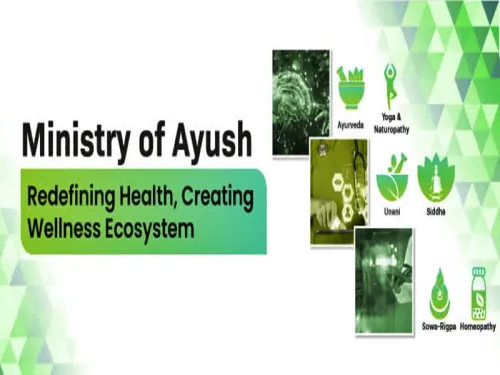
The agreement enables market access for Ayush practitioners, yoga instructors , and wellness institutions across Ayurveda, Yoga, Naturopathy, Unani, Siddha, Sowa-Rigpa, and Homoeopathy .
A dedicated visa quota permits Indian cultural and knowledge professionals extended work durations in New Zealand .
The FTA institutionalises technical cooperation in traditional knowledge systems, including education standards, research collaboration, and certification frameworks.
The agreement is expected to boost medical value travel and accelerate international expansion of India's wellness ecosystem.
The Ayush Ministry on Thursday, 30 April announced that the conclusion of the India–New Zealand Free Trade Agreement (FTA) represents a watershed moment for India's traditional medicine sectors, positioning Ayurveda, yoga, and allied wellness systems as internationally tradeable healthcare offerings. The pact marks the first time New Zealand has agreed to a dedicated 'Health and Traditional Medicine Annexe' within an FTA with India, formally recognising India's wellness heritage alongside indigenous Māori health practices.
What the agreement unlocks
The FTA creates market access for Indian Ayush practitioners, yoga instructors, and wellness institutions across Ayurveda, Yoga, Naturopathy, Unani, Siddha, Sowa-Rigpa and Homoeopathy. A dedicated visa quota will allow Indian cultural and knowledge professionals extended work durations in New Zealand, facilitating direct service delivery and institutional partnerships. The agreement also institutionalises technical cooperation in traditional knowledge systems, laying groundwork for shared education standards, research collaboration, and certification frameworks.
Economic and strategic implications
According to the Ayush Ministry, the framework is expected to boost medical value travel — the practice of overseas patients seeking treatment in India — foster cross-border wellness partnerships, and accelerate international expansion of India's wellness ecosystem. By integrating traditional medicine into a modern trade architecture, the FTA signals that preventive and integrative healthcare models are no longer peripheral but central to global health discourse. This comes as India seeks to position itself as a knowledge economy beyond IT and manufacturing.
Why this matters for Ayush
For two decades, India's traditional medicine systems have operated largely at the margins of global healthcare conversations, often sidelined by Western pharmaceutical frameworks. This agreement legitimises Ayush not as cultural heritage alone but as a tradeable, regulated service sector. The explicit recognition of traditional knowledge systems within a formal trade pact — rather than in standalone cultural exchanges — signals institutional acceptance. Notably, this is the first FTA where New Zealand has created a dedicated health annexe focused on traditional medicine, setting a potential precedent for future bilateral agreements.
Implementation and next steps
The Ayush Ministry statement did not specify a timeline for visa quota implementation or regulatory harmonisation between Indian and New Zealand standards bodies. Industry observers flagged that success will hinge on how quickly the two nations operationalise mutual recognition agreements for Ayush qualifications and practitioner credentials. The FTA is expected to take effect following ratification by both parliaments.
Point of View
India's traditional medicine systems have been treated as cultural curiosities in global health forums, not as regulated service sectors. New Zealand's agreement to a dedicated health annexe — rather than burying Ayush in a generic services chapter — signals that preventive, integrative healthcare is no longer a niche. If India can replicate this template with other developed economies, Ayush moves from heritage preservation to a genuine alternative healthcare export. The real test is implementation: mutual recognition of credentials, regulatory harmonisation, and whether the promised visa quotas actually materialise or remain symbolic.
NationPress
18 Sept 2026
Frequently Asked Questions
What is the India–New Zealand FTA's 'Health and Traditional Medicine Annexe'?
It is a dedicated chapter within the FTA that formally recognises and facilitates trade in India's traditional medicine systems — Ayurveda, Yoga, Naturopathy, Unani, Siddha, Sowa-Rigpa, and Homoeopathy. It is the first such annexe New Zealand has agreed to in an FTA with India, creating market access for Ayush practitioners, yoga instructors, and wellness service providers.
What visa benefits does the FTA provide for Indian Ayush professionals?
The agreement includes a dedicated visa quota enabling Indian Ayush practitioners, yoga instructors, and other cultural and knowledge professionals to work in New Zealand for extended durations, facilitating direct service delivery and institutional partnerships.
How does this FTA differ from previous trade agreements?
Unlike generic trade pacts, this FTA explicitly institutionalises technical cooperation in traditional knowledge systems, including mutual recognition frameworks for education, training, standards development, and wellness services. It is the first time New Zealand has created a dedicated health annexe focused on traditional medicine within an FTA.
What does the agreement mean for Indian wellness businesses?
The FTA opens New Zealand's market to Indian Ayush practitioners, wellness institutions, and service providers, facilitates medical value travel (overseas patients seeking treatment in India), and enables cross-border institutional partnerships and research collaboration.
When will the FTA take effect?
The agreement is expected to take effect following ratification by both the Indian and New Zealand parliaments. The Ayush Ministry has not yet announced specific timelines for visa quota implementation or regulatory harmonisation.