Capital markets depth key to Viksit Bharat 2047: ICRA, Assocham

Synopsis
India's capital markets have widened access through UPI-enabled IPOs and digital onboarding. An ICRA-ASSOCHAM report says the real test for Viksit Bharat 2047 is depth: a stronger corporate bond market and long-term capital for infrastructure. It also warns that West Asia tensions and El Nino could fuel inflation and slow growth.
Key Takeaways
An ICRA-ASSOCHAM report released on 27 November 2026 says capital markets are key to funding Viksit Bharat 2047 .
The report calls for greater market depth , liquidity , inclusiveness and institutional participation .
SEBI and government reforms such as UPI-enabled public issues , digital onboarding, SME listings, REITs and InvITs have boosted investor confidence.
Saurabh Sanyal of ASSOCHAM named deepening the corporate bond market and sustainable finance as priorities.
The report says global yields, domestic interest rates and exchange rate stability will drive FPI flows .
It warns that the West Asian conflict and El Nino could raise inflation and weaken consumption.
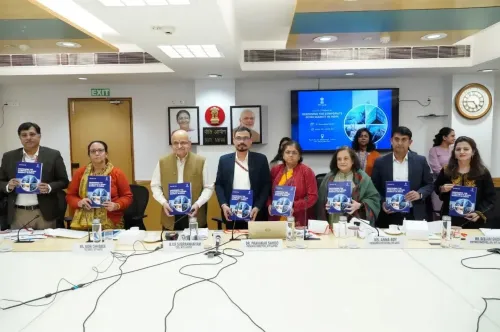
India's capital markets will be central to mobilising the long-term investment needed to achieve the Viksit Bharat 2047 vision, according to a report released by ICRA and ASSOCHAM in New Delhi on Friday, 27 November 2026. The report said the focus must now shift to greater market depth, inclusiveness, liquidity and institutional participation.
It also cautioned that geopolitical and climate-related risks could weigh on India's growth outlook, even as the economy is expected to outperform its G20 peers.
Reforms That Widened Market Access
According to the joint statement, reforms by the government and the Securities and Exchange Board of India (SEBI) have improved market accessibility, transparency and investor confidence. It cited digital onboarding, UPI-enabled public issues, streamlined SME listings and the development of Real Estate Investment Trusts (REITs) and Infrastructure Investment Trusts (InvITs).
These measures have made it easier for retail investors to enter the market. The report argues that the next phase must convert this wider access into deeper, more liquid markets that can fund long-gestation projects.
What ASSOCHAM Said
Saurabh Sanyal, Secretary General of ASSOCHAM, said India's emergence as a leading economic power has been supported by strong macroeconomic fundamentals, structural reforms, digital transformation and a growing entrepreneurial ecosystem.
Sanyal listed several priorities. These include deepening the corporate bond market, strengthening corporate governance, and mobilising long-term capital for infrastructure, manufacturing and innovation. He also named promoting sustainable finance as a priority.
He added that technological advancements, investor education, cybersecurity, robust investor protection and wider retail participation will shape the next phase of market development.
FPI Flows and Regulatory Balance
The report identified the external factors likely to drive foreign capital. “Going forward, the trajectory of global yields, domestic interest rates and exchange rate stability will remain key determinants of FPI flows into India,” it said.
It called for a balanced regulatory framework that encourages innovation while ensuring transparency, market integrity and investor protection. According to the report, such a framework is fundamental to building a resilient and globally integrated financial ecosystem.
The statement added that continued emphasis on market depth, financial literacy, governance and inclusive participation will be essential to unlock the markets' full potential.
Risks to the Growth Outlook
The report was optimistic on India's relative position but flagged clear risks. “Although India is expected to outperform other G20 economies and similarly rated emerging-market sovereigns, persistent geopolitical and climatic risks could weigh on the growth outlook,” the statement said.
It warned that without a durable resolution to the West Asian conflict, elevated energy prices could persist. El Nino-related food price pressures could add to this. Together, these could push up inflation, weaken consumption and moderate economic activity.
The findings come as policymakers seek to channel more domestic savings into productive, long-term assets. Whether India's capital markets can deliver that depth will be closely watched as the country works towards its 2047 development goal.
Point of View
But India's corporate bond market remains the missing link for long-term infrastructure finance. Notably, the same report that celebrates market reforms concedes that FPI flows hinge on global yields and currency stability, factors largely outside New Delhi's control. A 2047 vision built on domestic capital depth must reduce that vulnerability, not just manage it.
NationPress
27 Nov 2026
Frequently Asked Questions
What does the ICRA-ASSOCHAM report say about India's capital markets?
It says India's capital markets will be key to mobilising long-term investment for the Viksit Bharat 2047 vision. The report calls for greater market depth, liquidity, inclusiveness and institutional participation.
Which reforms have improved access to India's capital markets?
The report credits government and SEBI reforms, including digital onboarding, UPI-enabled public issues, streamlined SME listings and the development of REITs and InvITs. These have improved accessibility, transparency and investor confidence.
What priorities did ASSOCHAM's Saurabh Sanyal highlight?
Sanyal highlighted deepening the corporate bond market, strengthening corporate governance and mobilising long-term capital for infrastructure, manufacturing and innovation. He also named sustainable finance, investor education, cybersecurity and wider retail participation.
What will drive FPI flows into India, according to the report?
The report says global yields, domestic interest rates and exchange rate stability will remain key determinants of FPI flows into India.
What risks could affect India's growth outlook?
The report flags persistent geopolitical and climatic risks. Without a durable resolution to the West Asian conflict, high energy prices and El Nino-related food price pressures could raise inflation and weaken consumption.