India's digital transformation market to hit $229.59 bn by 2029 on AI surge

Synopsis
India's digital transformation market is on course to hit $229.59 billion by 2029, with data centre capacity potentially reaching 7.5 GW by 2030 and a $200 billion-plus investment pipeline already in motion. The country's 46.2% share of Asia-Pacific AI activity and 82.3 billion AI transactions in H2 2025 signal that the infrastructure buildout is not aspirational — it is already under way.
Key Takeaways
India's digital transformation market is projected to reach $229.59 billion by 2029 , growing at a CAGR of 20.63–32.1 per cent .
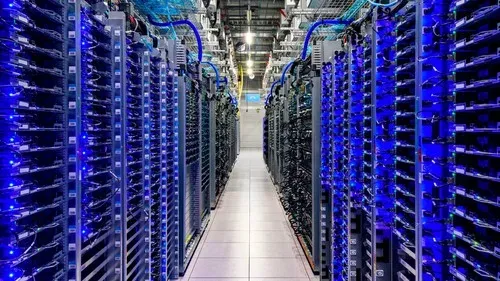
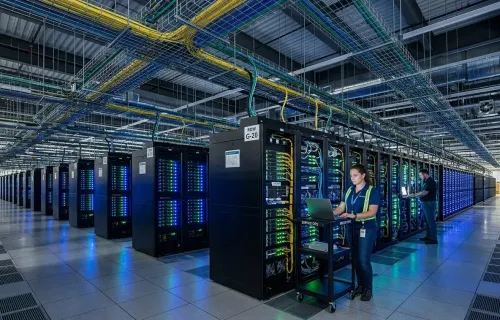
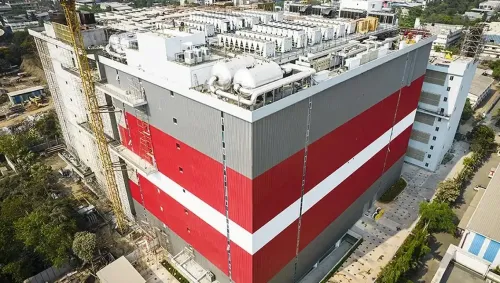
Operational data centre capacity is expected to cross 2 GW by end- 2026 , potentially reaching 4.5–7.5 GW by 2030 .
Total investment in India's data centre ecosystem is projected to exceed $200 billion , with nearly $70 billion already under construction.
India accounted for 46.2 per cent of Asia-Pacific AI activity and recorded over 82.3 billion AI transactions in H2 2025 .
Mumbai leads as India's largest data centre market; Hyderabad is emerging as a major alternative hub.
The sector could generate nearly nine million jobs by 2030 , though talent shortages and regulatory fragmentation remain key risks.
India's digital transformation market is projected to reach $229.59 billion by 2029, driven by rapid adoption of artificial intelligence (AI), cloud computing, enterprise digitisation, and the expansion of digital public infrastructure, according to a report released on Monday, 10 August. The findings position India as a potential global hub for AI-ready data centre infrastructure.
Market Growth and Investment Pipeline
According to the report by smallcase, India's digital transformation market is estimated to grow at a compound annual growth rate (CAGR) of 20.63–32.1 per cent through 2029. The country's operational data centre capacity is expected to cross 2 GW by the end of 2026, up from approximately 1.6 GW currently, backed by more than $30 billion in confirmed capital expenditure and an investment pipeline of nearly $60 billion.
By 2030, operational capacity could expand to 4.5–7 GW, with some industry estimates placing the upper limit at around 7.5 GW as AI and cloud investments accelerate. The Ministry of Electronics and Information Technology (MeitY) has projected total investment in India's data centre ecosystem to exceed $200 billion, with nearly $70 billion already at various stages of construction.
AI as the Primary Demand Driver
The report identifies AI as the single biggest driver of data centre demand in India. The country accounted for 46.2 per cent of AI activity across the Asia-Pacific region and recorded more than 82.3 billion AI transactions in the second half of 2025 — figures that underscore the scale and pace of AI adoption at the enterprise and consumer level.
This comes amid a global race to build AI-ready infrastructure, with India's large engineering talent pool and expanding digital public infrastructure giving it a structural edge over several regional peers.
Key Cities and Infrastructure Outlook
Mumbai remains India's largest data centre market, while Hyderabad is emerging as a significant alternative, owing to lower infrastructure costs, stronger connectivity, and reduced seismic risk. The geographic diversification signals a maturing market moving beyond a single-city concentration.
Notably, the report projects that India's data centre ecosystem could generate nearly nine million jobs by 2030, spanning direct and indirect employment across engineering, manufacturing, logistics, and technology services.
Challenges That Could Slow the Momentum
Despite the bullish outlook, the report flags several structural challenges: fragmented regulatory approvals, shortages of specialised AI infrastructure talent, limited fibre penetration, and the need for advanced cooling technologies. These constraints, if unaddressed, could bottleneck the very capacity expansion the investment pipeline is designed to deliver.
What Industry Leaders Are Saying
Naveen KR, smallcase manager and Senior Director at Windmill Capital, said: 'With an investment pipeline exceeding $200 billion, supportive government policies, a strong engineering talent base and rapidly expanding digital public infrastructure, the country is building the foundation to become a global AI infrastructure hub.' He added that India would need to strengthen power availability, fibre infrastructure, regulatory efficiency, and high-density AI-ready facilities to scale sustainably.
The report's projections arrive at a moment when global hyperscalers and domestic conglomerates alike are committing multi-year capital to Indian data centre capacity — making the next 24 months a defining window for the sector's long-term trajectory.
Point of View
But the more consequential number is the $200 billion investment pipeline — because capital commitments at that scale are harder to walk back than market forecasts. India's 46.2% share of Asia-Pacific AI activity is a genuine structural signal, not a vanity metric, and it explains why hyperscalers are treating India as a primary rather than secondary data centre destination. The real vulnerability lies in the bottlenecks the report itself names: power availability, regulatory fragmentation, and cooling infrastructure. A 7.5 GW capacity target by 2030 is achievable on paper; whether the grid and the approvals machinery can keep pace is the question mainstream coverage is not asking loudly enough.
NationPress
10 Aug 2026
Frequently Asked Questions
What is India's digital transformation market projected to reach by 2029?
India's digital transformation market is projected to reach $229.59 billion by 2029, according to a smallcase report released on 10 August. The market is expected to grow at a CAGR of 20.63–32.1 per cent, driven by AI adoption, cloud computing, and expanding digital public infrastructure.
How large could India's data centre capacity become by 2030?
India's operational data centre capacity could expand to 4.5–7 GW by 2030, with some industry estimates placing the ceiling at around 7.5 GW. Capacity is expected to first cross 2 GW by end-2026, up from approximately 1.6 GW currently.
How significant is India's AI activity in the Asia-Pacific region?
India accounted for 46.2 per cent of AI activity across the Asia-Pacific region and recorded more than 82.3 billion AI transactions in the second half of 2025, according to the smallcase report. This makes India the dominant AI activity hub in the region.
Which Indian cities are leading the data centre market?
Mumbai is currently India's largest data centre market. Hyderabad is emerging as a major alternative due to lower infrastructure costs, better connectivity, and reduced seismic risk, signalling a geographic diversification of the sector.
What are the key challenges facing India's digital infrastructure expansion?
The report identifies fragmented regulatory approvals, shortages of specialised AI infrastructure talent, limited fibre penetration, and the need for advanced cooling technologies as the primary challenges. These structural bottlenecks could slow capacity expansion despite the large investment pipeline.