Nvidia Shares SIGGRAPH 2026 Keynote on Neural Rendering and Robotics
Synopsis
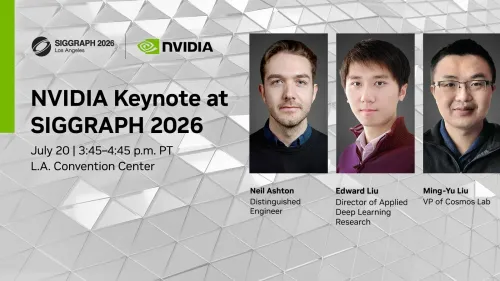
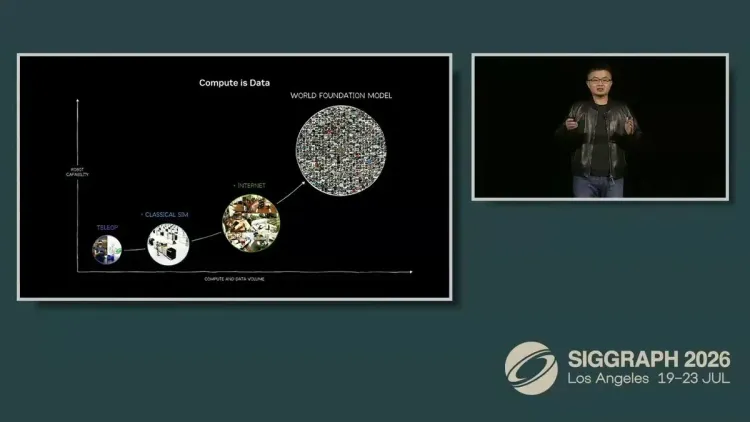
Nvidia has released the on-demand recording of its SIGGRAPH 2026 keynote, spotlighting advances in neural rendering, world models, and robotics simulation presented by senior research and engineering leaders Neil Ashton, Edward Liu, and Ming-Yu Liu.
Key Takeaways
Nvidia shared the on-demand recording of its SIGGRAPH 2026 keynote on 22 July 2026 .
The keynote covered three focus areas: neural rendering , world models , and simulation for robotics .
Presenters included Nvidia leaders Neil Ashton , Edward Liu , and Ming-Yu Liu .
Nvidia has a long history of major disclosures at SIGGRAPH, including the RTX ray-tracing launch in 2018 .
The company's Omniverse and Isaac platforms form the existing infrastructure base for robotics simulation tied to these research advances.
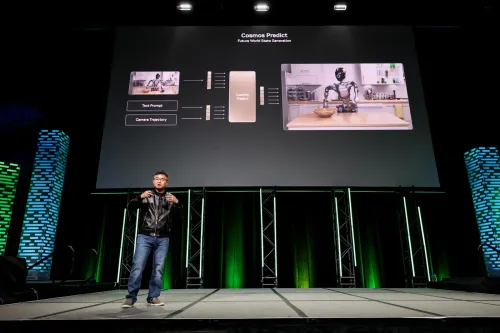
Chip giant Nvidia on Wednesday, 22 July 2026 released the on-demand recording of its keynote address at SIGGRAPH 2026, inviting audiences who missed the live session to watch presentations on neural rendering, world models, and simulation for robotics delivered by Nvidia research and engineering leaders.
The post, shared from Nvidia's official corporate account, directed followers to a video link covering breakthroughs presented by Neil Ashton, Edward Liu, and Ming-Yu Liu — three of the company's senior research and engineering figures. The message underscored Nvidia's practice of making major conference content accessible after the live event concludes.
Context
SIGGRAPH, the annual ACM conference on computer graphics and interactive techniques, is one of the foremost venues where the graphics and AI research communities present advances in rendering, simulation, and visual computing. Nvidia has used the platform as a launchpad for significant technology disclosures for nearly a decade. At SIGGRAPH 2018, the company introduced its RTX platform and real-time ray tracing, marking an early milestone in integrating AI into graphics pipelines.
The three themes highlighted in the 2026 keynote — neural rendering, world models, and robotics simulation — reflect a clear evolution in Nvidia's research agenda, moving well beyond traditional rasterisation and into AI-driven representations of physical environments.
Policy Backdrop
Nvidia launched the Omniverse platform in 2021 to provide physics-accurate simulation environments for robotics and digital-twin applications, establishing an early infrastructure layer for what the industry now calls embodied AI. The Isaac robotics platform extended that foundation, offering developers tools to train and test autonomous systems inside simulated worlds before deploying them in the physical environment.
The company's sustained investment in world models — AI systems capable of predicting how physical environments evolve over time — aligns with a broader industry push to move AI from flat, two-dimensional perception toward actionable, three-dimensional understanding of the real world. Nvidia's compute hardware sits at the centre of that shift, making its research disclosures commercially significant as well as scientifically notable.
Stakeholders and Impact
Graphics researchers, robotics developers, and AI infrastructure customers are the primary audiences for the keynote content. For graphics professionals, advances in neural rendering can translate into faster, more realistic image synthesis without proportional increases in compute cost. For robotics teams, improved simulation fidelity reduces the gap between virtual training environments and real-world deployment — a persistent challenge in the field.
Ming-Yu Liu, one of the three presenters, is a Nvidia research director whose published work focuses on generative models, neural rendering, and computer vision, lending academic credibility to the corporate showcase. The inclusion of engineering leaders alongside researchers signals that at least some of the disclosed techniques are closer to product integration than to pure research.
What's Next
Observers tracking Nvidia's technology roadmap will look for follow-on announcements at events such as Nvidia GTC or the next SIGGRAPH, where techniques previewed in research keynotes have historically been folded into Omniverse, Isaac, or consumer GPU software stacks. The on-demand availability of the SIGGRAPH 2026 keynote extends the reach of these disclosures to developers and researchers in India and globally who could not attend the live session, potentially accelerating adoption of Nvidia's simulation and rendering frameworks in local AI and robotics ecosystems.
Point of View
Not a collection of separate research threads. For India's growing robotics and AI startup ecosystem, on-demand access to such content lowers the barrier to adopting Nvidia's simulation frameworks. The broader implication is that each SIGGRAPH disclosure increasingly functions as a pre-announcement for the next cycle of Omniverse and Isaac product updates.
NationPress
22 Jul 2026
Frequently Asked Questions
What was covered in the Nvidia SIGGRAPH 2026 keynote?
The keynote covered advances in neural rendering, world models, and simulation for robotics, presented by Nvidia research and engineering leaders Neil Ashton, Edward Liu, and Ming-Yu Liu.
Where can I watch the Nvidia SIGGRAPH 2026 keynote on demand?
Nvidia shared a link to the on-demand recording via its official X account on 22 July 2026; the video is accessible through the link posted in that announcement.
Who is Ming-Yu Liu at Nvidia?
Ming-Yu Liu is a research director at Nvidia whose work focuses on generative models, neural rendering, and computer vision; he was one of three presenters at the SIGGRAPH 2026 keynote.
What is SIGGRAPH and why does Nvidia present there?
SIGGRAPH is the annual ACM conference on computer graphics and interactive techniques; Nvidia has used it as a key venue for technology disclosures since at least 2018, when it launched the RTX ray-tracing platform there.
How does Nvidia's SIGGRAPH research connect to its products?
Techniques showcased at SIGGRAPH have historically been integrated into Nvidia's Omniverse and Isaac platforms, making the research keynotes an early indicator of upcoming product and software updates.