Abhishek Sharma's 30-ball century powers India to 127-run win, 3-0 series sweep over Afghanistan
Synopsis
Abhishek Sharma's 30-ball hundred — the fastest T20I century by any batter from a Test-playing nation — wasn't just a record; it was a statement of generational intent. India smashed Afghanistan by 127 runs and swept the series 3-0, with Reddy and Bishnoi finishing the job with the ball. A new era at the top of India's T20I batting order may have just announced itself.
Key Takeaways
Abhishek Sharma hit the fastest T20I century by a batter from a Test-playing nation — 30 balls — and the quickest by an Indian male batter, surpassing Rohit Sharma's 35-ball effort from 2017 .
His innings of 108 off 34 balls included 11 sixes and 9 fours at a strike-rate of 317.65 ; 102 runs came from boundaries alone.
India posted 221/7 and bowled Afghanistan out for 94 in 14.1 overs , winning by 127 runs to seal a 3-0 series sweep .
Nitish Kumar Reddy (3/25) and Ravi Bishnoi (3/26) shared six wickets between them to dismiss Afghanistan in under 15 overs.
The match was played at the Arun Jaitley Stadium, New Delhi , in front of 26,230 fans on 17 September 2026 .
India have now whitewashed back-to-back T20I series — Zimbabwe 3-0 in July and Afghanistan 3-0 in September.
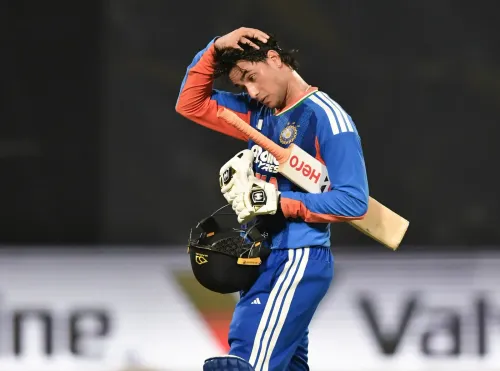
Left-handed opener Abhishek Sharma rewrote the record books at a packed Arun Jaitley Stadium in New Delhi on 17 September 2026, smashing the fastest T20I century by a batter from a Test-playing nation — off just 30 balls — as India demolished Afghanistan by 127 runs in the third T20I to seal a clean 3-0 series sweep. The 26,230 fans in attendance witnessed one of the most breathtaking batting displays in the format's history.
Abhishek's Record-Breaking Blitz
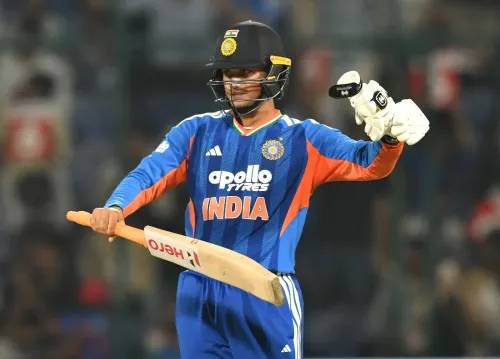
Abhishek's final scorecard read a jaw-dropping 108 off 34 balls, laced with nine fours and eleven sixes at an extraordinary strike-rate of 317.65, with 102 of those runs coming off boundaries alone. He bettered the previous fastest hundred by an Indian male batter — Rohit Sharma's 35-ball ton against Sri Lanka in 2017 — and stands third on the all-time T20I list, behind only Estonia's Sahil Chauhan (27 balls) and Turkey's Muhammad Fahad (29 balls).
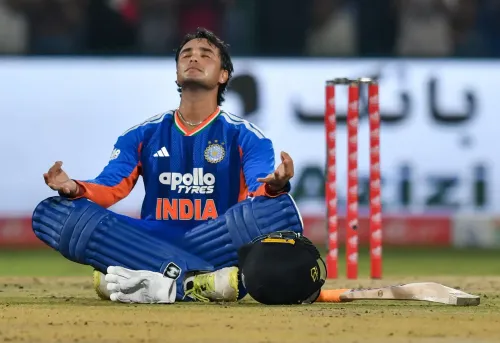
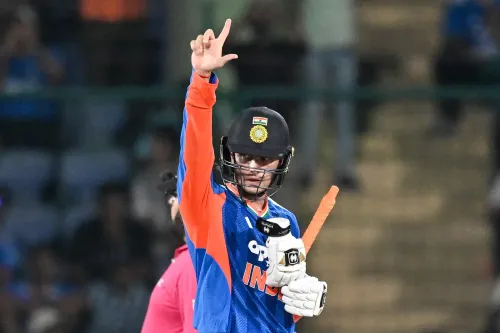
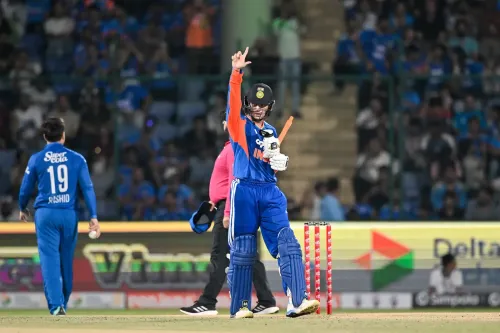
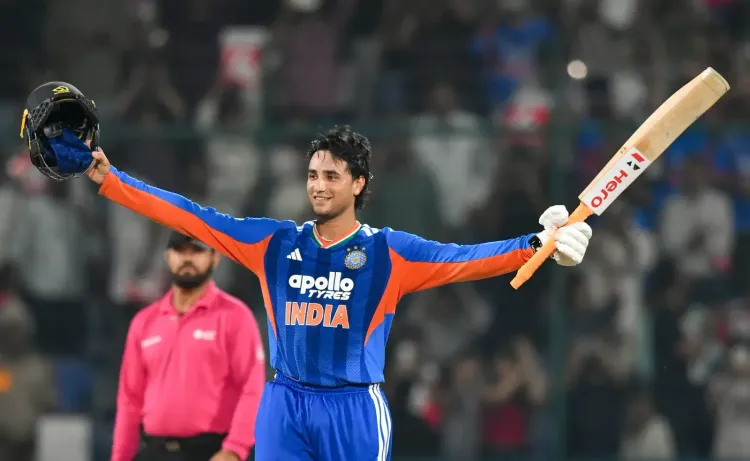
His fifty arrived in a blistering 16 balls — the sixth occasion he has reached a half-century inside 20 deliveries — before he completed his hundred in the ninth over with a drive off Abdullah Ahmadzai. The celebration was unforgettable: he removed his helmet and bandana, and sat down in a meditation pose on the pitch, as his father Rajkumar Sharma looked on from the hospitality stand, clapping with sheer delight.
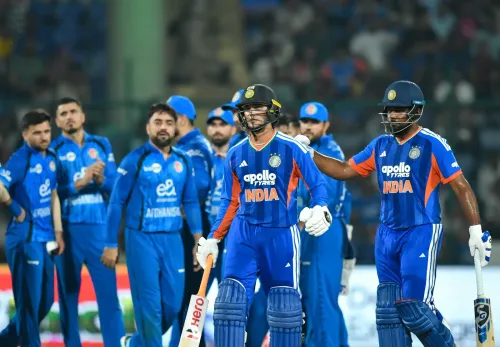
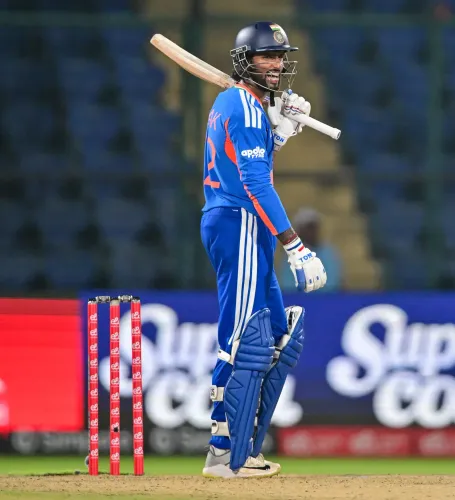
Abhishek shared a 142-run opening stand with Sanju Samson, who contributed a composed 50 off 35 balls — his second successive fifty in the series. India cruised to 100/0 at the end of the power play, the highest T20I power-play score without a wicket falling. Despite a wobble in the back half — conceding four wickets in the final four overs, including a brace of stunning catches and a run-out by Rashid Khan — India finished at 221/7 in 20 overs. Skipper Shreyas Iyer contributed 29 before being run out.
Afghanistan's Collapse Under India's Bowling Attack
Chasing 222, Afghanistan's reply was never in contention. Jasprit Bumrah set the tone with a 140 kmph yorker that cleaned up Darwish Rasooli, and Axar Patel bowled Rahmanullah Gurbaz first ball with a delivery the keeper missed attempting a sweep. Afghanistan were reduced to four wickets down in the power play, with the result a foregone conclusion thereafter.
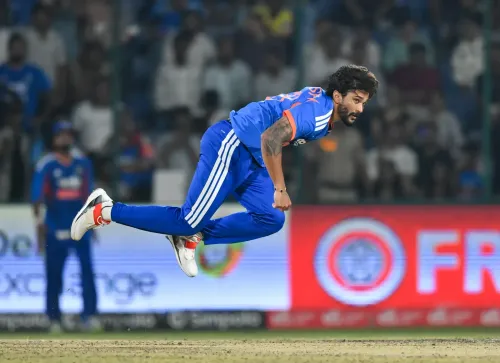
Nitish Kumar Reddy and Ravi Bishnoi then dismantled the middle and lower order, taking 3/25 and 3/26 respectively. Bishnoi sealed the game by castling Rashid Khan and then taking the last wicket as Afghanistan were bundled out for 94 in 14.1 overs. Reddy registered his second three-wicket haul in as many matches, underlining his growing role as a frontline bowling option.
Afghanistan's Brief Resistance and Star Performers
For Afghanistan, Azmatullah Omarzai was the pick of the bowlers with 2/27, while Ahmadzai and Rashid added a wicket each. Rashid was electrifying in the field — effecting a direct-hit run-out, taking two outstanding catches, including a leaping grab at long-off to dismiss Samson and a diving catch to send back Shivam Dube. Ibrahim Zadran top-scored for Afghanistan with 25, while Omarzai made 17.
Notably, this is India's second consecutive T20I series whitewash — having swept Zimbabwe 3-0 in July — underscoring the team's clinical edge at home in the format under the current setup.
What This Means for India's T20I Blueprint
Abhishek's emergence as a bona fide match-winner at the top gives India a left-right combination at the top that can decimate bowling line-ups in the first six overs. With Samson providing consistent support and the bowling unit led by Bumrah sharing wickets across Reddy and Bishnoi, India are signalling a settled core ahead of upcoming bilateral assignments. The series also handed debutant Noor ul Rahman his first T20I cap for Afghanistan, though he managed only 11 off 15 before falling to Bishnoi.
All eyes will now turn to the next assignment in India's T20I calendar, where Abhishek will look to build on a record that has already stamped him as one of the most destructive openers in world cricket.
Brief Scores: India 221/7 in 20 overs (Abhishek Sharma 108, Sanju Samson 50; Azmatullah Omarzai 2/27, Abdullah Ahmadzai 1/38) beat Afghanistan 94 all out in 14.1 overs (Ibrahim Zadran 25, Azmatullah Omarzai 17; Nitish Kumar Reddy 3/25, Ravi Bishnoi 3/26) by 127 runs.
Point of View
But the more significant story is structural: India now have a left-handed power-hitter at the top capable of winning T20Is inside the power play, a void that has existed since the format's early years. What is easy to miss in the spectacle is Reddy's back-to-back three-wicket hauls — a bowling all-rounder contributing with the ball at pace could shift India's middle-over strategy in crunch tournaments. A 3-0 sweep against Afghanistan should not be over-read, but the individual performances are markers that cannot be ignored ahead of the next major multi-team tournament.
NationPress
18 Sept 2026
Frequently Asked Questions
What record did Abhishek Sharma break in the 3rd T20I against Afghanistan?
Abhishek Sharma hit the fastest T20I century by a batter from a Test-playing nation, reaching his hundred off just 30 balls. He also broke the record for the fastest T20I hundred by an Indian male batter, surpassing Rohit Sharma's 35-ball century against Sri Lanka in 2017.
What were Abhishek Sharma's final T20I stats in the match?
Abhishek scored 108 off 34 balls, hitting nine fours and eleven sixes at a strike-rate of 317.65. A remarkable 102 of his runs came directly off boundaries.
How did India bowl out Afghanistan for 94?
Nitish Kumar Reddy (3/25) and Ravi Bishnoi (3/26) led the bowling attack, with Axar Patel and Jasprit Bumrah making early inroads. Afghanistan lost four wickets in the power play and were all out in just 14.1 overs.
What is Abhishek Sharma's standing on the all-time fastest T20I century list?
He stands third on the all-time list, behind Estonia's Sahil Chauhan (27 balls) and Turkey's Muhammad Fahad (29 balls). Among batters from Test-playing nations, his 30-ball hundred is the fastest ever recorded.
How has India performed in T20I series in 2026?
India have won two consecutive T20I series by a 3-0 margin in 2026 — first against Zimbabwe in July, and now against Afghanistan in September, both at home. The results reflect a consistent and settled combination across batting and bowling departments.