Abhishek Sharma's 108 off 34: 'It all depends on the process before every series'

Synopsis
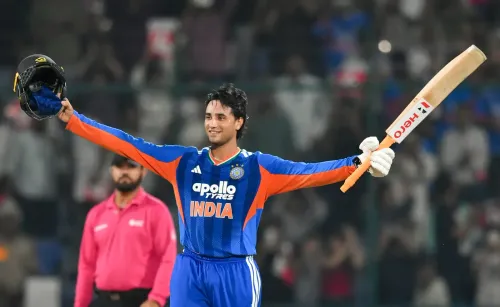
Abhishek Sharma's 108 off 34 balls against Afghanistan isn't just a record — it is a statement of intent. The knock, built on meticulous bowler-specific prep and full backing from team management, sealed a 3-0 series sweep and reinforced India's two-year-old power-play dominance culture ahead of the World Cup.
Key Takeaways
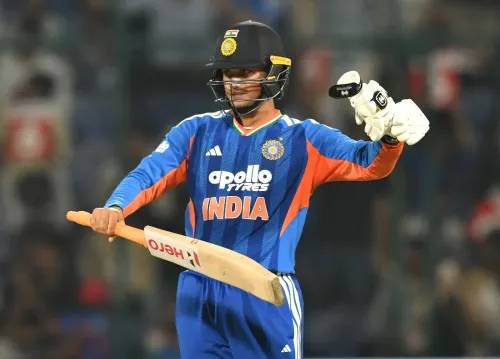
Abhishek Sharma scored 108 off 34 balls in the third T20I against Afghanistan at Arun Jaitley Stadium on 17 September 2026 .
He holds the record for the fastest men's T20I fifty by an Indian batter and the quickest T20I century by a Full Member batter .
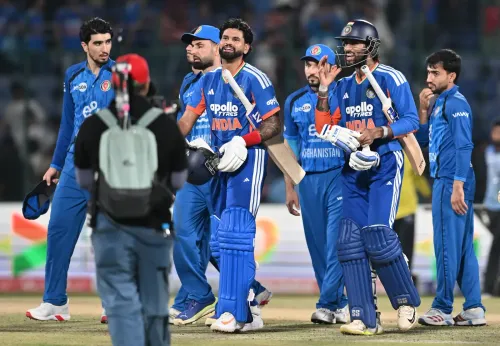
India won the match by 127 runs , completing a 3-0 T20I series sweep over Afghanistan.
Abhishek was named Player of the Match and Player of the Series .
He credited a bowler-specific pre-series process and full support from the captain and coaching staff for his consistent form.
Abhishek Sharma lit up the Arun Jaitley Stadium on 17 September 2026 with a stunning 108 off just 34 balls in the third T20I against Afghanistan, helping India complete a 3-0 series sweep with a 127-run victory. Credited as both Player of the Match and Player of the Series, the dynamic opener attributed his explosive batting form to a meticulous, bowler-specific pre-series routine — and insisted that the team's aggressive template will not buckle under occasional setbacks.
Record-Breaking Knock
Abhishek's century against Afghanistan was no ordinary innings. He now holds the record for the fastest men's T20I fifty by an Indian batter and the quickest T20I hundred by a batter from a Full Member nation. The knock, played at his home ground in New Delhi, underscored his growing reputation as one of India's most explosive openers in the shortest format.
The Process Behind the Power
Speaking at the post-match presentation ceremony, Abhishek credited his preparation for his consistency at the top of the order. 'I feel it all depends on the process I've been doing before every series. It's just, it's very particular for me against whom I'm gonna play and who are gonna be the bowlers. So for personally me as a batter, it's always been about the process: how I'm gonna utilise the power play, who is gonna bowl me the power play, and then the seventh, eighth over. It's very specific for me,' he said.
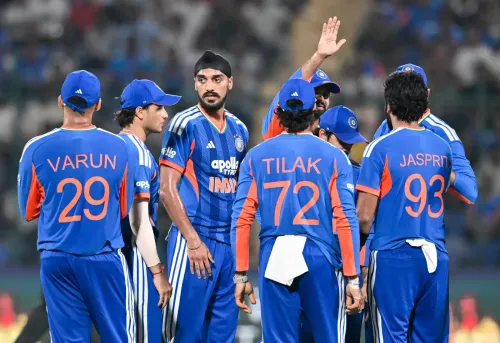
This bowler-by-bowler breakdown reflects a disciplined approach that belies the apparent freedom of his strokeplay. Notably, India have been developing this high-risk, power-play-dominant batting culture for over two years, with a stated goal of dominating opponents across all conditions ahead of the upcoming World Cup.
Team Unity Over Individual Slumps
Dismissing concerns about future lean patches, Abhishek stressed that collective belief within the dressing room is paramount. 'One or two bad series won't define us as a batting department, because we wanted to dominate throughout the whole year before the World Cup, and no matter who, against whom we are playing,' he said. He added that the team's strength lies in staying 'in one unit' and focusing on the next game rather than dwelling on individual form cycles.
Management's Role in Enabling Aggression
Abhishek also acknowledged the role of the Indian team's leadership in sustaining this attacking philosophy. 'Once you want to play in this certain way, it's very important that the captain and the coach has to be on your side... you have to get that surety from the management and from the coaches and from the captain as well,' he noted. This suggests a conscious alignment between the player's instincts and the team management's strategic direction — a dynamic that critics often cite as crucial for high-risk batting to succeed at international level.
What's Next for India
With the Afghanistan series firmly in the bag, India's T20I squad will now look to carry this momentum into their upcoming assignments, particularly as the World Cup approaches. Abhishek's form makes him a near-certainty at the top of the order, and his ability to neutralise powerplay bowlers with ruthless precision will be a key asset in crunch fixtures. For now, the 'see and hit' philosophy is working, and the team's dressing room culture appears firmly set on the accelerator.
Point of View
They are engineering a batting culture that treats the powerplay as a scoring weapon rather than a survival exercise. The emphasis on bowler-specific preparation, paired with explicit backing from the captain and head coach, suggests this is a coached philosophy, not just individual flair. The question mainstream coverage glosses over is whether this template will hold against top-ranked T20I sides with world-class powerplay attacks. Afghanistan's bowling is far from that tier; the World Cup will be the real examination.
NationPress
18 Sept 2026
Frequently Asked Questions
What record did Abhishek Sharma break in the third T20I against Afghanistan?
Abhishek Sharma now holds the record for the fastest men's T20I fifty by an Indian batter and the quickest T20I century by a batter from a Full Member nation, achieved during his 108 off 34 balls at the Arun Jaitley Stadium on 17 September 2026.
What was the result of the India vs Afghanistan T20I series?
India won the T20I series 3-0, with the third match ending in a 127-run victory at the Arun Jaitley Stadium in New Delhi. Abhishek Sharma was named Player of the Series.
How does Abhishek Sharma prepare for T20I series?
Abhishek has described a bowler-specific preparation process, studying who will bowl to him in the powerplay and in the seventh and eighth overs. He says this detailed groundwork — rather than general practice — is the foundation of his explosive batting.
What is India's batting philosophy ahead of the World Cup?
According to Abhishek, India have been building a power-play-dominant, aggressive batting culture for over two years, with the explicit goal of dominating opponents regardless of conditions or opposition. The team's leadership — captain and coaches — are cited as key enablers of this high-risk template.
How did Abhishek Sharma respond to concerns about future form slumps?
Abhishek dismissed such concerns, saying 'one or two bad series won't define us as a batting department.' He emphasised the importance of dressing room unity and focusing on the next game rather than individual up-and-down cycles.