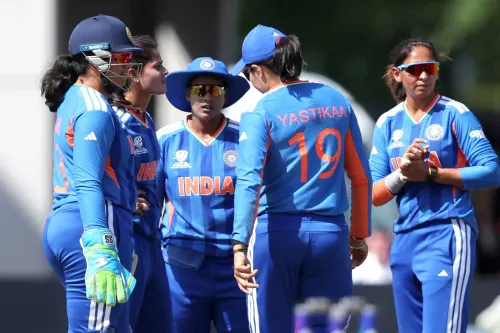
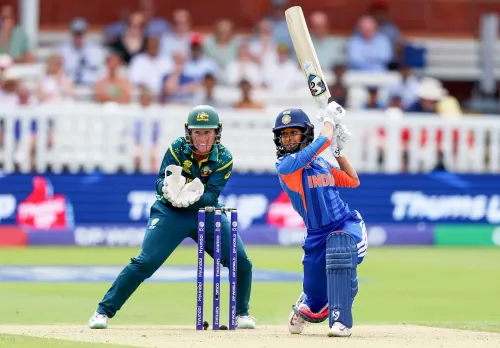
Anjum Chopra: Richa Ghosh should've batted by 17th over in India's T20 WC loss to Australia
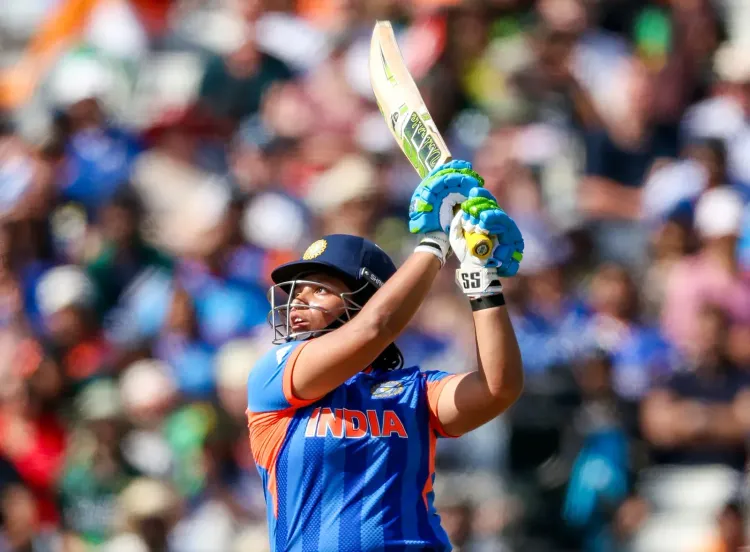
Synopsis
Anjum Chopra's post-mortem of India's Women's T20 World Cup exit is a rare case of a former captain naming the exact over — the 17th — where the match was lost. Her critique goes deeper than one game: India's batting order has been reshuffled so often that players can't settle into roles, and the fearless hitting seen in the WPL vanishes the moment they pull on the national jersey.
Key Takeaways
Former India captain Anjum Chopra criticised India's batting strategy after their Women's T20 World Cup exit against Australia .
Anjum argued that 170 was below par for a knockout against Australia and that the total failed to give bowlers adequate cushion.
Richa Ghosh should have been sent in by the 17th over , according to Anjum — one over later than she arrived cost India crucial finishing runs.
Anjum flagged the inconsistent use of Yastika Bhatia and Jemimah Rodrigues at No.
3 as evidence of an unsettled batting order.
She backed Harmanpreet Kaur to continue as captain but urged India to adopt a more fearless T20 batting identity, targeting at least 180 runs.
Anjum noted a stark contrast between India's aggressive WPL batting and their conservative approach in international cricket.
Former India captain Anjum Chopra has delivered a pointed critique of India's batting strategy in their Women's T20 World Cup clash against Australia, arguing that delayed tactical calls, an unsettled batting order, and excessive caution were the defining factors in the team's tournament exit. Speaking after India's elimination, Anjum also backed Harmanpreet Kaur to retain the captaincy while calling on team management to fundamentally rethink India's approach to the shortest format.
Why India's Total Fell Short
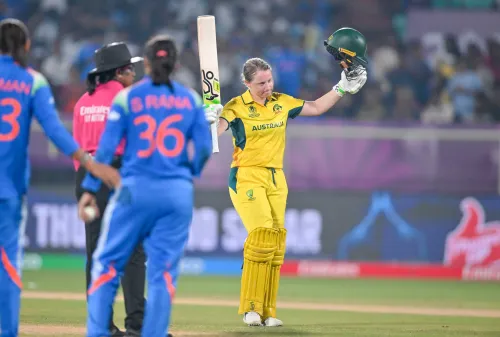
Anjum was direct in her assessment of India's innings, contending that 170 was simply not enough against a side of Australia's calibre in what was effectively a knockout encounter. 'Firstly, the runs on the board were not enough. 170 is a good total, but against Australia, in basically a World Cup knockout, it was slightly below par. Then you have to back it up with early wickets. Against a team like Australia, one or two wickets won't cut it. To choke a team like Australia, you have to score those extra runs so that your bowlers have some cushion,' she said.
The former skipper argued that India's bowling attack — widely regarded as the side's relative weakness — needed a more commanding total to operate with confidence. Without that buffer, the pressure shifted entirely onto the bowlers at the worst possible moment.
The Richa Ghosh Question
One of Anjum's sharpest criticisms was directed at the timing of Richa Ghosh's promotion to the crease. She believed India's most destructive finisher was deployed one over too late, costing the team the acceleration it needed in the closing stages. 'I felt Richa Ghosh should have been sent in by the 17th over. You didn't get the finishing kick by sending Richa in one over too late. And the fifth bowler, as usual, continued to be an issue for the Indian team,' Anjum noted.
This is not the first time India's finishing strategy has come under scrutiny in major tournaments. The recurring inability to maximise the death overs has been a persistent concern for the women's side across multiple ICC events.
An Unsettled Batting Order
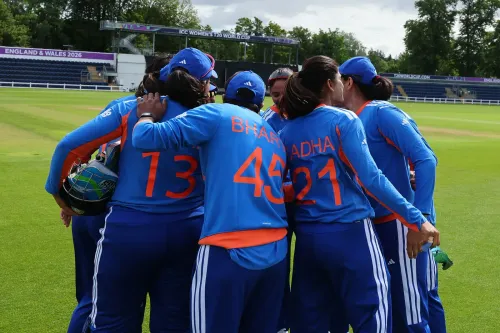
Beyond the immediate tactical missteps, Anjum pointed to a deeper structural problem: India's batting order has lacked consistency throughout the tournament, with players shuffled across positions without clear rationale. 'If Yastika Bhatia was your No. 3 batter, then why didn't she bat at that position in this game? If Jemimah Rodrigues was playing at No. 3 in the England series, then why didn't she do that in the World Cup?' she questioned.
Anjum outlined her preferred batting structure, placing Harmanpreet Kaur at No. 3 and Richa Ghosh at No. 4 — a combination she believes would allow India to leverage their batting depth more effectively. 'Apart from the Bangladesh game, Richa didn't bat at No. 4 throughout the tournament. Bowling is not their greatest strength, everyone knows that, even the opposition knows it. So, if batting is India's strength, then let it create the impact you need and hope that the bowling does the rest. Australia is a well-oiled unit, against them, scoring at seven an over won't win you games, you'll have to go at 9s,' she said.
Harmanpreet Remains the Right Captain, But a Mindset Shift Is Needed
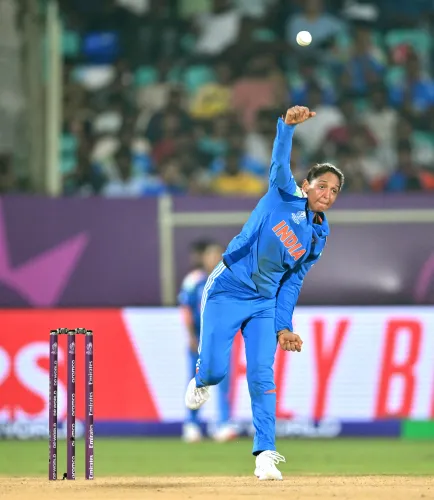
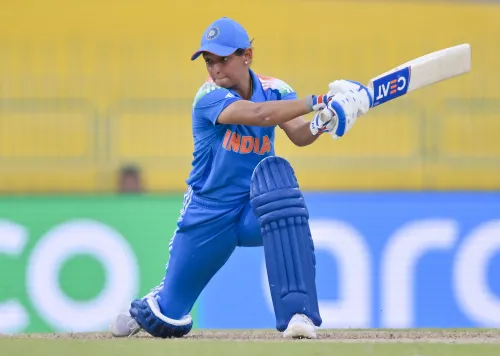
Despite a disappointing campaign, Anjum expressed firm confidence in Harmanpreet Kaur as the team's captain, stating that no other player is currently ready to take on the leadership role. However, she stressed that retaining Harmanpreet alone will not be enough without a wholesale change in India's batting philosophy.
'I still think she is the best captain to lead India. I don't think any other player is ready for captaincy at this point. The most important focus area should be the approach needed for the T20 format. We only see it in its full glory in the WPL. As soon as they come back to the Indian team, they go into their shell again. Go all out. If not 200, at least get to 180. Back yourself to go that distance,' Anjum stated.
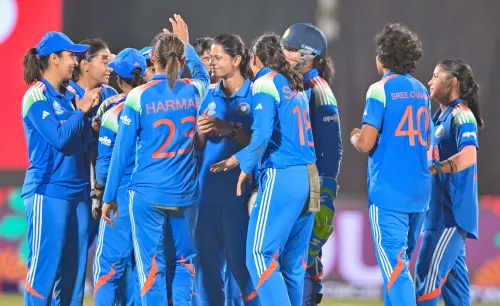
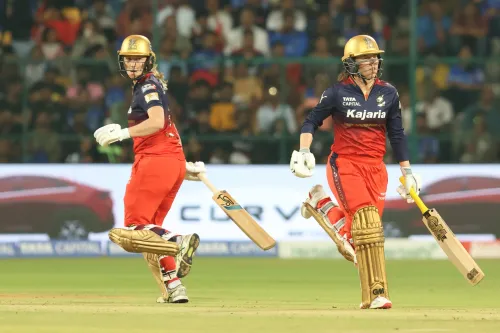
She drew a telling contrast between India's aggressive batting in the Women's Premier League (WPL) and the more conservative approach that resurfaces in international cricket — a gap that, in her view, must be bridged urgently. With the next ICC event on the horizon, India's team management faces hard questions about identity, selection consistency, and the courage to back a fearless approach when the stakes are highest.
Point of View
No individual talent — not Richa, not Harmanpreet — can perform to their ceiling. The fifth-bowler problem, which Anjum flags almost in passing, is arguably the more urgent structural gap: without a reliable sixth bowling option, India's captains are forced into defensive field-setting that compounds every batting shortfall.
NationPress
27 Sept 2026
Frequently Asked Questions
Why did India lose to Australia in the Women's T20 World Cup?
India were eliminated after failing to post a competitive total against Australia in what was effectively a knockout match. Former India captain Anjum Chopra attributed the loss to a below-par score of 170, late deployment of finisher Richa Ghosh, an inconsistent batting order, and the recurring fifth-bowler problem.
What did Anjum Chopra say about Richa Ghosh's batting position?
Anjum Chopra said Richa Ghosh should have been sent in to bat by the 17th over, arguing that deploying her one over too late cost India the finishing acceleration they needed. She also recommended that Richa bat permanently at No. 4 in India's T20I line-up.
Did Anjum Chopra support Harmanpreet Kaur continuing as captain?
Yes. Anjum stated that Harmanpreet Kaur remains India's best captain and that no other player is currently ready for the leadership role. However, she insisted the team must adopt a more fearless batting approach to compete with top sides.
What batting order did Anjum Chopra recommend for India?
Anjum recommended placing Harmanpreet Kaur at No. 3 and Richa Ghosh at No. 4, arguing this combination would allow India to maximise their batting strength and target totals of at least 180 in T20 internationals.
What is the WPL contrast Anjum Chopra highlighted?
Anjum pointed out that Indian players bat aggressively in the Women's Premier League (WPL) but revert to a conservative approach when representing the national team. She argued this mindset gap must be urgently addressed for India to compete consistently against sides like Australia.