Gulveer Singh eyes Asian Games 2026 medals in 1500m, 5000m, 10000m
Synopsis
Gulveer Singh arrives at Asian Games Aichi-Nagoya 2026 as India's most decorated active distance runner — a double Commonwealth Games medallist, national record holder in 5000m and 10,000m, and the first Indian under 60 minutes in the half marathon. Competing in three events, he isn't thinking about his rivals; he's thinking about the podium.
Key Takeaways
Gulveer Singh will compete in the 1500m , 5000m , and 10,000m at the Asian Games Aichi-Nagoya 2026 in Japan .
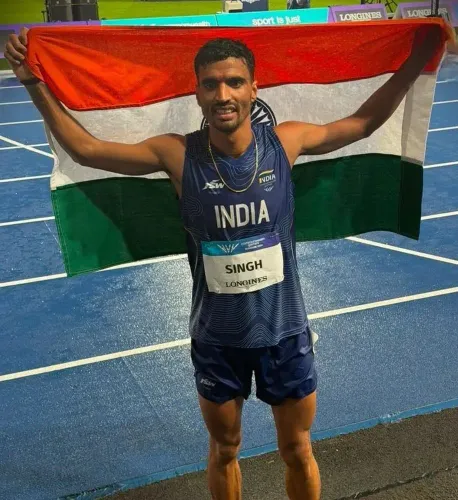
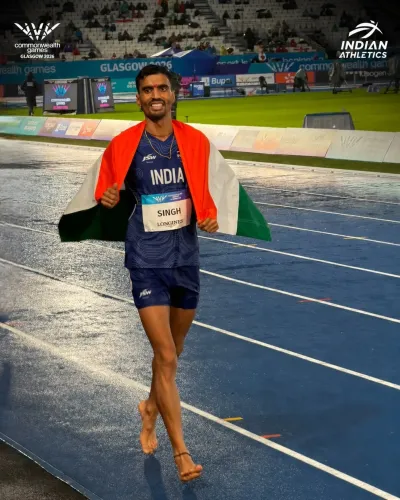
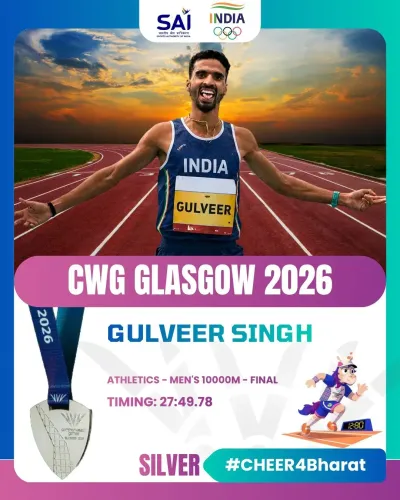
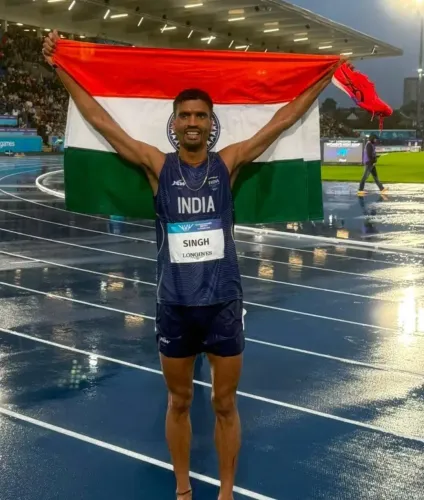
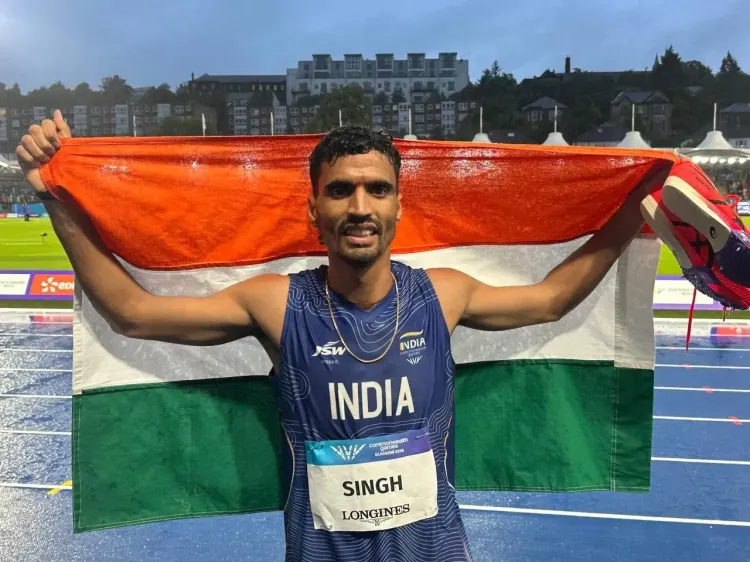
He won silver in the Men's 10,000m ( 27:49.78 ) and bronze in the Men's 5000m ( 13:24.95 ) at the Commonwealth Games 2026 in Glasgow — a historic first for India.
He became the first Indian runner to clock a sub-60-minute half marathon in 2026.
Gulveer trains at Colorado Springs, USA under American coach Scott Simmons since 2024 .
He previously won bronze in the 10,000m at Asian Games 2023 and 5000m bronze at the Asian Athletics Championships in Bangkok .
He signed a sponsorship deal with footwear brand Asics in January 2026 .
India's premier long-distance runner Gulveer Singh has declared that a podium finish — not the identity of his rivals — is the only thought on his mind when he steps onto the starting line at the Asian Games Aichi-Nagoya 2026 in Japan. The 28-year-old national record holder, buoyed by a double-medal haul at the Commonwealth Games 2026 in Glasgow, said the continental competition will be demanding but that past success has replaced anxiety with conviction.
Commonwealth Games Momentum
Gulveer's confidence is grounded in a landmark Glasgow campaign where he clocked 13:24.95 to claim a bronze in the Men's 5000m and a silver in the Men's 10,000m with a timing of 27:49.78 — a historic first for India at the Commonwealth Games. Earlier this year, he also became the first Indian runner to complete a sub-60-minute half marathon, underscoring the sustained improvement in his endurance and pace.
'There will definitely be pressure because high-calibre athletes compete at the Asian Games. But the medals at the Commonwealth Games gave me a lot of confidence, and the continuous support from the government has been a massive driving force,' Gulveer said.
Asian Games 2026 Schedule and Ambitions
At Aichi-Nagoya, Gulveer will compete across three events — the 1500m, 5000m, and 10,000m — making it his most demanding multi-event programme at an Asian Games. He previously won a bronze in the 10,000m at the Asian Games 2023, adding to the 5000m bronze he had secured at the Asian Athletics Championships in Bangkok earlier that year.
'When you stand on the starting line, there is only one thought in your mind; to win a medal for the country. It doesn't matter who is standing next to you. Everyone works equally hard, and on race day, it all boils down to whose body holds up better. All the competitors will come fully prepared, but I am confident I will bring home medals for India,' he said.
Training in the United States Under Scott Simmons
Gulveer has been based at Colorado Springs, USA, under American coach Scott Simmons since 2024, a move he credits with closing the gap on elite global competitors. He noted that training in isolation in India — where a structured elite distance group is largely absent — was a key limitation that the overseas setup has addressed.
'In India, we lack an elite distance training group, forcing you to train in isolation. In the US, there are several top athletes who push and support each other,' he explained. Simmons, he added, tailors each training block by specifically analysing the race strategies of top international runners — a tactical edge Gulveer considers significant.
With the Asian Games approaching, Gulveer said the training emphasis has shifted decisively from endurance to speed. 'After the Commonwealth Games, we primarily focused on endurance training. Now, with very little time left for the Asian Games, the focus has moved to speed building. I am strictly adhering to the regimen set by my coach,' he said.
Mindset Shift on Global Competition
Gulveer acknowledged a broader psychological transformation among Indian distance runners who have tested themselves on the world stage. 'Earlier, we used to think that foreign runners were far superior to us. But after competing alongside them on the big stage, we realised we are right at their level,' he said. This confidence, he noted, is no longer aspirational — it is backed by stopwatch data and podium finishes.
Asics Partnership and the Road Ahead
Off the track, Gulveer inked a sponsorship deal with footwear brand Asics in January 2026, which he credits with contributing to his sub-60-minute half-marathon breakthrough. 'Running in their shoes helped me achieve the sub-60 half-marathon mark, and their support has been vital in this journey,' he said.
With three events on his Aichi-Nagoya programme and a training camp finely tuned for peak performance, Gulveer heads into the Asian Games as India's most credible medal hope in distance running — and as an athlete who has demonstrably narrowed the margin between Indian and global standards.
Point of View
And worth watching at Aichi-Nagoya, is whether competing in three events — 1500m, 5000m, and 10,000m — stretches him too thin across a compressed schedule. His Commonwealth Games silvers and bronzes confirm he can compete at the top; the Asian Games will test whether he can peak across multiple disciplines simultaneously, which is a different and harder demand.
NationPress
13 Sept 2026
Frequently Asked Questions
Which events will Gulveer Singh compete in at Asian Games 2026?
Gulveer Singh will compete in the 1500m, 5000m, and 10,000m at the Asian Games Aichi-Nagoya 2026 in Japan. It will be his most demanding multi-event programme at a continental games.
What did Gulveer Singh win at the Commonwealth Games 2026?
Gulveer Singh won a silver medal in the Men's 10,000m with a timing of 27:49.78 and a bronze medal in the Men's 5000m with a timing of 13:24.95 at the Commonwealth Games 2026 in Glasgow — a historic first for India at the Commonwealth Games.
What is Gulveer Singh's national record achievement in the half marathon?
Gulveer Singh became the first Indian runner to clock a sub-60-minute half marathon in 2026, a landmark that he also credited in part to his footwear partnership with Asics.
Where and with whom does Gulveer Singh train?
Gulveer Singh has been training at Colorado Springs, USA, under American coach Scott Simmons since 2024. He chose the overseas base to access a structured elite distance training group, which he says is largely unavailable in India.
How did Gulveer Singh perform at the Asian Games 2023?
Gulveer Singh won a bronze medal in the 10,000m at the Asian Games 2023. He had also won a 5000m bronze at the Asian Athletics Championships in Bangkok the same year.