Bishop questions Holder catch: 'Sufficient evidence for not out' in Patidar dismissal

Synopsis
Ian Bishop has publicly sided with RCB's grievance over Rajat Patidar's dismissal, arguing that Jason Holder's catch—though initially clean—became ambiguous during the fielder's slide along the ground. The crux: did Holder maintain control of both ball and body as required by law? The third umpire said yes; Bishop says the evidence didn't support it.
Key Takeaways
Ian Bishop disputed the dismissal of RCB captain Rajat Patidar in the IPL clash against Gujarat Titans on 1 May in Ahmedabad .
Jason Holder's catch was controversial because the fielder slid along the ground after taking the ball, raising questions about ball-ground contact.
Bishop argued there was "sufficient evidence" for a not-out verdict based on Holder's body position and hand orientation during the slide.
MCC law requires "complete control over the ball and their own movement before the ball touches the ground." RCB lost three more wickets within four overs after Patidar's dismissal, signalling the call's impact on the innings.
Former West Indies cricketer Ian Bishop has disputed the controversial dismissal of RCB captain Rajat Patidar during the IPL clash against Gujarat Titans, arguing that available visual evidence supported a not-out verdict rather than the on-field umpire's decision to uphold Jason Holder's catch.
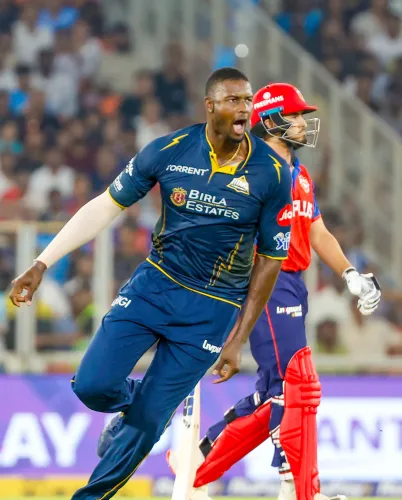
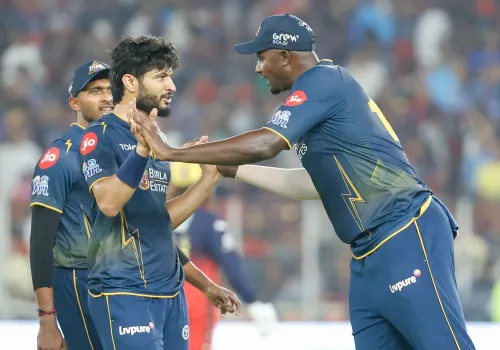
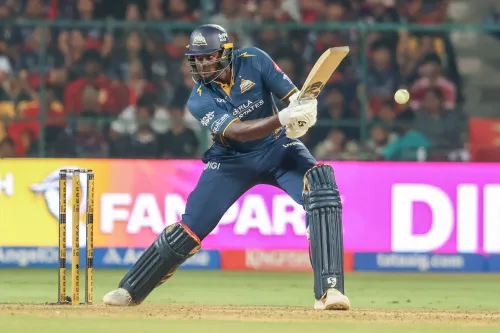
During RCB's first innings in Ahmedabad on 1 May, Patidar, then on 19, attempted a pull shot off Holder stationed at deep backward square leg. Holder charged to his right and completed what appeared to be a low catch, though RCB players immediately contested it, claiming the ball had made contact with the ground during the fielder's slide.
The catch in question
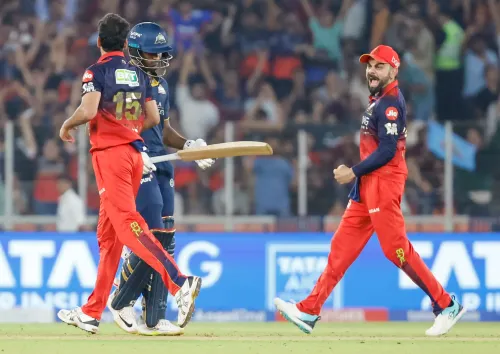
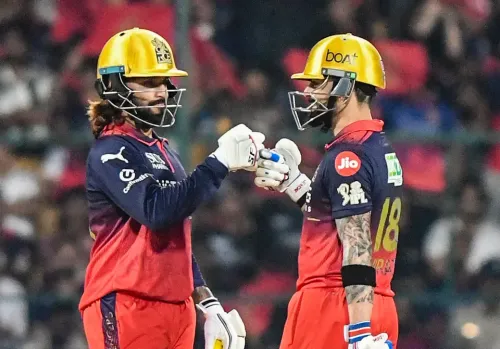
Replays proved inconclusive on whether the ball had touched the turf. Despite the ambiguity, the third umpire cleared the catch following a review, and Patidar was adjudged out. Virat Kohli, who had scored 28 off 13 balls, was visibly agitated and later engaged the umpire in an extended boundary-line discussion.
Bishop's technical analysis
Bishop, speaking on ESPncricinfo, dissected the mechanics of the dismissal. He acknowledged that Holder initially caught the ball cleanly but flagged the subsequent sliding motion as problematic. "When you're looking to get yourself up having slid along the ground, are they determining that his fingers was under the ball," Bishop said. "Because the back of the hand was to the sky, which means the ball was facing the grass. And so there was to me doubt there about ball and ground, because you're not in control of your body until you stop sliding and you stand up."
MCC law and control requirements
Under MCC laws, a catch is fair only if the fielder has "complete control over the ball and their own movement before the ball touches the ground." Bishop's argument hinged on whether Holder maintained such control while sliding—a distinction the third umpire's review did not clearly establish.
Impact on RCB's innings
Patidar's dismissal proved a turning point. RCB lost three more wickets within the next four overs, a collapse that underscored the significance of the controversial call. The loss of a settled batter in the middle order during a critical phase of the innings shifted momentum decisively.
The incident adds to a growing list of IPL dismissals hinging on marginal calls where camera angles and frame rates have left room for interpretation, reigniting debate over the threshold for overturning on-field decisions.
Point of View
Despite visual ambiguity, suggests a bias toward upholding rather than overturning. In a tournament where margins decide playoff spots, that bias has teeth.
NationPress
19 Sept 2026
Frequently Asked Questions
What was the controversial catch involving Jason Holder and Rajat Patidar?
During RCB's first innings against Gujarat Titans on 1 May in Ahmedabad, Jason Holder took a low catch at deep backward square leg off Rajat Patidar's pull shot when Patidar was on 19. RCB disputed the catch, claiming the ball had touched the ground during Holder's slide, but the third umpire upheld it after review.
Why did Ian Bishop say the catch should have been not out?
Bishop argued that Holder's hand orientation and body position during the slide created doubt about whether the ball had made ground contact. He noted that the back of Holder's hand faced the sky (meaning the ball faced the grass) and questioned whether the fielder maintained complete control of both ball and body while sliding—a requirement under MCC law.
What does MCC law say about catches?
Under MCC law, a catch is fair only if the fielder has 'complete control over the ball and their own movement before the ball touches the ground.' This dual requirement—control of both object and body—is central to the Patidar dismissal debate.
How did Patidar's dismissal affect RCB's innings?
Patidar's wicket proved a turning point; RCB lost three more wickets within the next four overs, suggesting the dismissal disrupted the team's batting momentum and middle-order stability.