Cricket Australia tells pitch curators: favour batters in Sheffield Shield
Synopsis
Cricket Australia is reversing a decade of bowler-friendly pitch policy, telling curators to favour batters 'when in doubt' ahead of the Sheffield Shield season. With a new Kookaburra ball generating more movement and Steve Smith calling the last three years the hardest of his batting career, CA's intervention is as much about batter development as it is about saving Test cricket's spectacle.
Key Takeaways
Cricket Australia has directed pitch curators to favour batters over bowlers when uncertain about conditions ahead of the Sheffield Shield season.
CA operations head Peter Roach confirmed the shift after meetings with curators and state coaches, reversing roughly a decade of 'when in doubt, lean towards the bowler' guidance.
A two-day finish at Mackay was among the recent incidents that prompted scrutiny of Australian domestic surfaces.
The new Kookaburra ball, introduced in late 2019 , has reportedly stayed harder longer and generated more movement, compounding the challenge for batters.
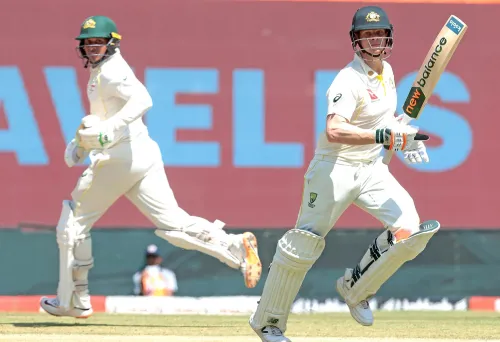
Steve Smith described the 2024-25 period as the hardest three years of his batting career, citing increased movement and greener wickets.
The directive is also driven by concerns over how bowler-heavy surfaces affect the long-term development of Australian Test batters.
Cricket Australia (CA) has directed pitch curators to tilt conditions in favour of batters during the upcoming Sheffield Shield season, marking a deliberate shift in the country's domestic pitch philosophy after years of surfaces that have increasingly aided bowlers. The directive, confirmed by CA's operations and scheduling head Peter Roach, comes amid mounting scrutiny of Australian pitches, including a two-day finish at Mackay that drew widespread criticism.
The New Directive
Roach recently convened discussions with pitch curators across Australia's red-ball venues, while state coaches held separate meetings with CA high-performance staff — with home Test surfaces emerging as the central concern. The guidance being passed on is straightforward: where curators are uncertain about conditions, they should now err on the side of the batter rather than the bowler.
'Our previous language, probably for the best part of a decade, has been that we do want to see a balance between bat and ball,' Roach said. 'Our curators share that view that they want to see the same, and hopefully, I think our teams do as well. But over the last decade, that's probably been a "when in doubt, lean towards the bowler."'
Why the Balance Has Shifted
Roach was clear that the goal is not to produce flat, lifeless tracks or inconclusive draws. 'We still want to see results in our games. We don't want long, laborious draws. That's not good for cricket. We want to see results late in games. That's ideal,' he said. The new language, however, resets the default: 'if in doubt, favour the batter.'
He described the recalibration as being embedded in the hundreds of small decisions curators make during pitch preparation — decisions shaped by weather, ground usage, and lead-in conditions. 'That's in response to the way the game's being played,' he added.
The Kookaburra Factor and Steve Smith's Warning
The shift also responds to a structural change in Australian conditions: the introduction of a new Kookaburra ball in late 2019, which has reportedly stayed harder for longer and generated more movement than its predecessor. Australia batting icon Steve Smith flagged the issue directly during the Border-Gavaskar series in 2024-25.
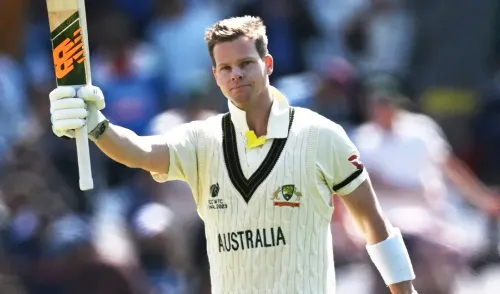
'Wickets have got greener, so it's kind of like the perfect storm coming together,' Smith said. 'The ball's definitely staying harder, so I think the last three years have probably been the hardest that I've experienced in my career batting-wise, in terms of the amount of movement that's being generated.'
Smith also noted the statistical shift in first-innings scores: 'If you look back five years ago, you're seeing consistent 400-500s being scored in the first innings. If you put a three in front of [the score] these days, you're usually in a pretty strong position.'
Broader Context: WTC and Batter Development
The debate over Australian pitches sits within a wider global conversation about pitch preparation during the World Test Championship (WTC) cycle, where result-oriented surfaces have become increasingly common. For CA, the concern extends beyond individual matches — the quality of surfaces in the Sheffield Shield directly shapes how the next generation of Australian Test batters develop. A persistent tilt towards bowlers risks producing technically limited batters ill-equipped for varied international conditions.
With the Sheffield Shield season approaching, the coming months will reveal whether curator behaviour actually shifts — and whether the change produces the batting depth CA is seeking at the highest level.
Point of View
Or whether curators — operating under weather uncertainty and ground constraints — revert to what they know. A policy shift without a monitoring framework is just language.
NationPress
10 Oct 2026
Frequently Asked Questions
What has Cricket Australia told pitch curators ahead of the Sheffield Shield?
Cricket Australia has instructed pitch curators to favour batters over bowlers when uncertain about pitch conditions, reversing roughly a decade of guidance that leaned the other way. The directive was confirmed by CA operations head Peter Roach following meetings with curators and state coaches.
Why is Cricket Australia changing its pitch policy now?
The change follows growing criticism of bowler-friendly surfaces in Australian domestic cricket, including a two-day finish at Mackay. CA is also concerned about the long-term impact of such pitches on developing Test-quality batters. The introduction of a new Kookaburra ball in late 2019, which reportedly stays harder and generates more movement, has compounded the problem.
What did Steve Smith say about batting conditions in Australia?
Steve Smith said the last three years have been the hardest of his batting career, citing greener wickets and a harder Kookaburra ball that generates more movement. He noted that first-innings scores of 400-500, common five years ago, are now rare, with scores in the 300s often considered strong.
Does Cricket Australia still want results in Sheffield Shield matches?
Yes. Peter Roach emphasised that CA does not want 'long, laborious draws' and still wants results in games. The new policy is specifically about resetting the default when curators are uncertain — not about producing flat, lifeless pitches.
How does Sheffield Shield pitch quality affect the Australian Test team?
Sheffield Shield serves as the primary preparation ground for Australian Test cricketers. Persistently bowler-friendly surfaces can hinder the development of batters who need to learn to construct long innings under varied conditions — a skill essential at Test level.