Delhi Capitals' throwdown trio: Meet Aniket, Darshan, Sai who sharpen batters at 155 kph
Synopsis
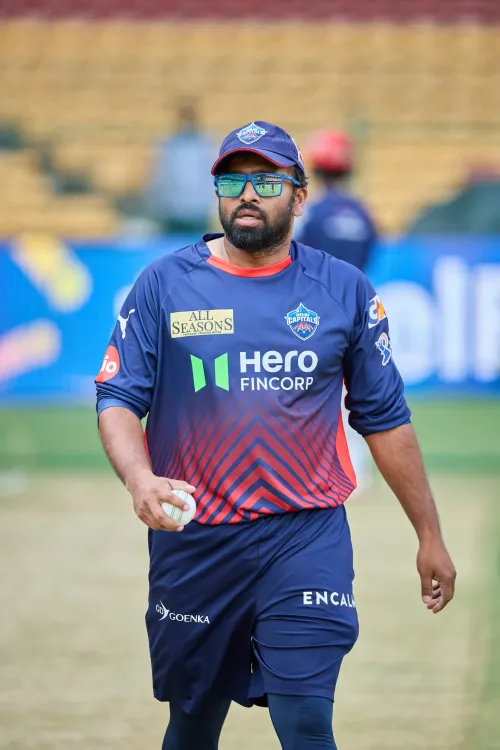
Three men arrive before dawn at Delhi Capitals' nets, armed with sidearm throwers and an ability to replicate any bowling variation at 155 kph. Aniket Berde, Darshan Singh, and Sai Pendum are the unsung architects of DC's batting prowess—invisible in broadcasts but indispensable in the hyper-specialised world of IPL franchise cricket.
Key Takeaways
Delhi Capitals employ three throwdown specialists— Aniket Berde , Darshan Singh , and Sai Pendum —who deliver at 150–155 kph in IPL 2026 practice.
Aniket , trained by Raghavendra Dvgi (Raghu) since 2015–16 , is ambidextrous, throwing with both right and left hands—a rare asset in T20 franchise cricket.
Darshan Singh , from Ramban, Jammu and Kashmir , shifted to throwdown work after a stress fracture ended his playing career in 2014 ; he has been with DC since 2018 .
Sai Pendum , from rural Mahabubnagar, Telangana , discovered sidearm work in 2018 and was spotted by DC during Legends League Cricket with India Capitals .
Throwdown practice is bespoke: openers face new-ball swing; middle-order batters encounter death-bowling yorkers and old-ball reverse.
All three remain invisible in broadcasts and team promotional material, yet their labour shapes batting fortunes across every match.
Before Delhi Capitals batters take the field in IPL 2026, three men arrive at the stadium before dawn to set up practice nets armed not with bats but with sidearm throwers. Aniket Berde, Darshan Singh, and Sai Pendum hurl cricket balls at velocities—150 kph to 155 kph—that rival first-class bowlers, replicating swing, reverse, yorkers, and left-armer angles until each batter signals they are done. These throwdown specialists are the invisible architects of DC's batting preparation, entering before anyone else and departing only after their work is complete.
The craft of bespoke simulation
Throwdown work is not generic batting practice; it is tailored to each batter's role and tactical problem. Nissanka and Rahul, as openers, face good-length deliveries with new-ball swing, while Tristan Stubbs, batting in the middle order, encounters old-ball yorkers replicated from death-bowling scenarios. Darshan Singh explained the precision involved: "They tell us what they need, and we deliver balls as per their requirement." The sidearm can generate height angles, scrambled-seam reverse swing, and angles from wide of the crease—variables that Aniket, Darshan, and Sai modulate with the expertise of craftsmen who have spent years mastering their trade.
From Raghu's pioneering work to DC's trio
The throwdown specialist role remained largely invisible in Indian cricket until Raghavendra Dvgi (widely known as Raghu) made the craft visible. Now the Indian team's most celebrated throwdown specialist, Raghu's sharp deliveries earned acknowledgement from every Indian batter, from Virat Kohli to Suryakumar Yadav. Aniket, who worked as an assistant coach under Pravin Amre at DC in 2013, witnessed Raghu's sidearm work firsthand and pivoted his career. "I saw Raghu give throwdowns to Ajinkya sir, and after that, I asked him how he did it," Aniket recalled. Since 2015–16, when the sidearm trend accelerated, Aniket mastered both right-hand and left-hand throws—a rare ambidextrous ability that has become a valuable asset in T20 franchise cricket.
Darshan's second innings after injury
Darshan Singh, the senior-most throwdown specialist at DC, arrived at this role through adversity. Growing up in Ramban district, Jammu and Kashmir, he harboured dreams of playing for India as a pacer until a stress fracture in 2014 ended his playing career. While watching a throwdown specialist during a Ranji Trophy practice session in 2013, something clicked. His first significant break came in 2016 when he delivered throwdowns to then-India opener and current head coach Gautam Gambhir at Roshanara Club, New Delhi. After four years with DDCA, a two-year stint with the J&K team, and joining DC in 2018, Darshan has remained with the franchise through subsequent ILT20 stints with Dubai Capitals. "I do think about when our time to be in the Indian team as a sidearm specialist will come," Darshan said quietly, hinting at aspirations beyond franchise cricket.
Sai's improbable rise from rural Telangana
Sai Pendum carries perhaps the most improbable trajectory. Born in Mahabubnagar district, Telangana, where his father worked in forests and his mother in agricultural fields, Sai played district-level cricket as an off-spinner before recognising that conventional routes in Hyderabad cricket were politically barred. After years of odd jobs—painting, construction—his first encounter with a sidearm came in 2018 through a friend named Ganesh. A pivotal Instagram message to coach Adnan Bafana in 2021 altered everything. "He observed me for a week and told me, 'You have a lot of talent, and you will reach great heights.' Because of that trust, I am here," Sai recalled. The early months were physically brutal—shoulder pain nearly broke him—but persistence saw him spotted by DC strategist Ruchir Grandhi, head coach Hemang Badani, director of cricket Venugopal Rao, and former India wicketkeeper Wriddhiman Saha during his stint with India Capitals in the Legends League Cricket. Now managing a mild shoulder tear through injections and targeted strengthening, Sai said: "I feel very happy when players perform well. It gives me great satisfaction knowing that I helped them practice with specific speeds and variations."
The cost of invisibility
In cricket's ecosystem, throwdown specialists arrive before everyone and depart after all are done—no weekends, no holidays, no option to skip optional sessions. Their names do not appear in team promotional reels or match-day graphics; broadcast cameras never catch them. Yet when DC batters stride out, sharpened by 155 kph throwdowns, the invisible labour of Aniket, Darshan, and Sai echoes in every run. Aniket balances family demands—a wife and six-year-old daughter who adjust to his schedule—with his passion. Darshan noted that financial scales vary by experience and geography; state associations offer monthly salaries while franchise T20 contracts differ widely. For Sai, the arithmetic is emotional: parents who once discouraged his cricket dreams now take quiet pride in his work with elite cricketers. All three remain committed to a craft that, in franchise cricket's hyper-specialised world, has become indispensable yet remains unnamed in the public eye.
Point of View
The infrastructure that sharpens those stars—Aniket's ambidextrous throws, Darshan's injury-forged resilience, Sai's unlikely rise from rural poverty—remains invisible. Raghu's visibility changed that for the Indian team; DC's trio deserves the same recognition. In T20's hyper-specialised world, these craftsmen are no longer support staff—they are architects of batting form.
NationPress
19 Sept 2026
Frequently Asked Questions
Who are Delhi Capitals' throwdown specialists in IPL 2026?
Delhi Capitals employ three throwdown specialists: Aniket Berde, Darshan Singh, and Sai Pendum. They deliver sidearm throws at 150–155 kph, replicating all bowling variations—swing, reverse, yorkers, and left-armer angles—to tailor each batter's practice to their role and tactical needs.
How did Aniket Berde become a throwdown specialist?
Aniket, an assistant coach under Pravin Amre at DC in 2013, witnessed Raghavendra Dvgi's (Raghu's) sidearm work and pivoted his career. Since 2015–16, he mastered both right-hand and left-hand throws. His ambidextrous ability—a rare asset—came from his background as an ambidextrous cricketer. He spent three years with Dubai Capitals in the ILT20 before joining DC.
What is Darshan Singh's background?
Darshan Singh grew up in Ramban district, Jammu and Kashmir, and played age-group cricket as a pacer until a stress fracture in 2014 ended his playing career. He discovered throwdown work in 2013 and made his breakthrough delivering to Gautam Gambhir at Roshanara Club, New Delhi, in 2016. He has been with DC since 2018.
How did Sai Pendum enter throwdown work?
Sai Pendum, from rural Mahabubnagar, Telangana, played district-level cricket as an off-spinner before recognising that conventional routes were blocked. After years of odd jobs, he encountered sidearm work in 2018. A pivotal Instagram message to coach Adnan Bafana in 2021 led to mentorship. He was spotted by DC during his stint with India Capitals in Legends League Cricket.
Is throwdown work only for franchise cricket?
No. Throwdown specialists work across state associations, Ranji Trophy teams, and international squads. Pay scales vary by experience and geography—state associations offer monthly salaries or tournament-specific deals, while franchise T20 contracts differ widely. The Indian team also employs celebrated throwdown specialists like Raghavendra Dvgi.