India beat Germany, Netherlands in FIH Pro League: Fulton eyes World Cup, Asiad

Synopsis
India's men's hockey team went from losing to Belgium and Argentina at home to beating world champions Germany and Olympic gold medallists the Netherlands on the road. Coach Craig Fulton calls it a stepping stone — but the spread of goalscorers and a tightened defence suggest this may be more than just a confidence boost ahead of the World Cup and Asian Games.
Key Takeaways
India defeated Germany 3-1 and the Netherlands 3-2 in Rotterdam during the FIH Pro League .
India scored 13 goals in the London leg — seven from field play , five from penalty corners , and one from a penalty stroke .
Dilpreet Singh and Jugraj Singh were joint-highest scorers in the European leg with four goals each .
India conceded just six goals across four London matches, with only one from open play.
Coach Craig Fulton described the results as a 'solid stepping stone' for the FIH World Cup and Asian Games .
Captain Harmanpreet Singh returned after missing the Hobart leg and highlighted the team's all-round improvement.
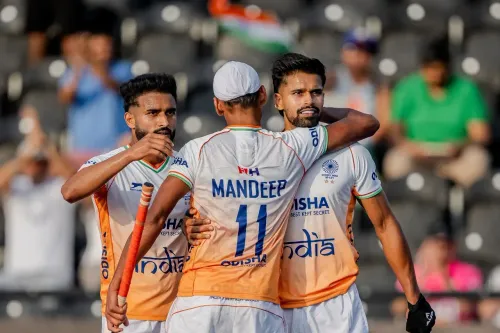
The Indian men's hockey team capped a resurgent FIH Pro League campaign with back-to-back victories over reigning world champions Germany (3-1) and 2024 Paris Olympics gold medallists the Netherlands (3-2) in Rotterdam, with head coach Craig Fulton describing the results as a 'solid stepping stone' ahead of the FIH World Cup and Asian Games. The wins marked a sharp turnaround for a side that had struggled during the home leg in Rourkela.
From Rourkela to Rotterdam: How India's Form Turned
India's Pro League journey began on a difficult note at the home leg in Rourkela, where they suffered defeats against Belgium and Argentina. The Hobart leg offered modest improvement — a 2-2 draw against hosts Australia and a 1-1 draw against Spain — though shootout losses in both matches denied India bonus points. The squad recovered in the final Hobart fixture, winning a shootout 3-1 after another 1-1 draw against Australia.
Rotterdam proved to be the turning point. Against two of the strongest defensive units in international hockey, India scored nine goals across four matches — five from field play and four from penalty corners — signalling a meaningful shift in attacking approach beyond the team's traditional reliance on set-pieces.
London Leg: Defence Tightens, Goals Flow
The momentum carried into London, where India remained unbeaten in regulation time across all four matches against Pakistan and England. A commanding 7-1 win over Pakistan headlined the leg, while two draws against England yielded one shootout victory. India's defence conceded just six goals across the four matches, with only one from open play.
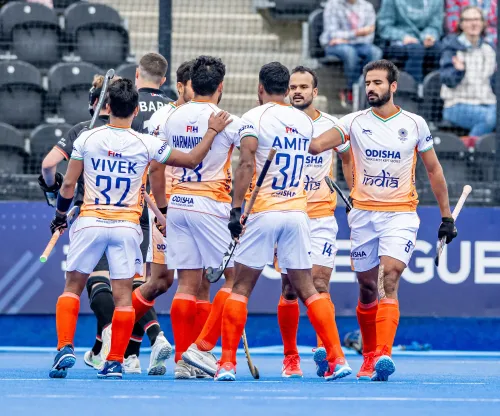
The goals column from London told its own story: 13 strikes in total — seven from field play, five from penalty corners, and one from a penalty stroke — underlining a growing versatility in front of goal.
Goalscorers Spread Across the Squad
Dilpreet Singh and Jugraj Singh finished as India's joint-highest scorers in the European campaign with four goals each. Abhishek, Sukhjeet Singh, and Nilakanta Sharma contributed three goals apiece. The spread across the squad pointed to a more balanced attacking unit, with multiple players stepping up in crucial moments rather than dependence on one or two individuals.
What Fulton and Harmanpreet Said
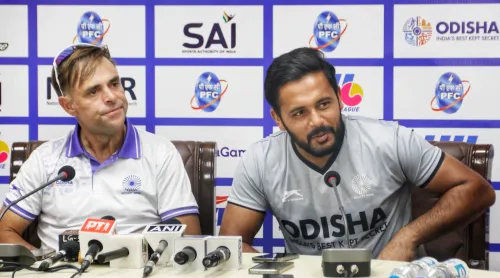
'One of the biggest takeaways from this Pro League run has been watching the team's confidence grow,' said India's chief coach Craig Fulton. 'Wins over Germany and the Netherlands, plus a strong showing against England, prove that when we stick to our game plan, we're capable of matching and beating anyone in the world. It's a solid stepping stone heading into the World Cup and Asian Games, but we are still focused on tightening up our performance and staying consistent from quarter to quarter.'
Fulton added: 'We've stayed calm under pressure, adjusted to different playing styles and pulled out wins in tight games. That kind of experience is exactly what we'll need. The World Cup and Asian Games will test our resilience and belief, and I think we're building the right foundation for it.'
India captain Harmanpreet Singh, who returned to lead the side after missing the Hobart leg for personal reasons, said the campaign demonstrated the team has all bases covered. 'Beating top-ranked sides is always special, but more importantly, it shows that the hard work we're putting in as a team is paying off,' he said. 'Our defence has stayed compact, the midfield has controlled the game well and our forwards have created good opportunities inside the circle and scored many field goals. Having all bases covered gives us confidence, but we also know there are areas where we can continue to improve before the World Cup and the Asian Games.'
What Comes Next
With the FIH World Cup and Asian Games on the horizon, India's Pro League run provides a credible confidence base — though Fulton's own caveat about quarter-to-quarter consistency signals the coaching staff is not yet satisfied. The next major test will reveal whether Rotterdam and London were a genuine inflection point or a high-water mark.
Frequently Asked Questions
How did India perform in the FIH Pro League 2024 campaign?
India had a mixed campaign, suffering early losses to Belgium and Argentina at home in Rourkela before improving steadily. They beat Germany 3-1 and the Netherlands 3-2 in Rotterdam and remained unbeaten in regulation time across four matches in London against Pakistan and England.
What did coach Craig Fulton say about India's FIH Pro League results?
Fulton said the wins over Germany and the Netherlands proved India can match and beat anyone when they stick to their game plan. He called the campaign a 'solid stepping stone' for the FIH World Cup and Asian Games, while noting the team still needs to improve quarter-to-quarter consistency.
Who were India's top scorers in the European leg of the Pro League?
Dilpreet Singh and Jugraj Singh were India's joint-highest scorers with four goals each. Abhishek, Sukhjeet Singh, and Nilakanta Sharma each contributed three goals, reflecting a well-spread attacking unit.
Why did Harmanpreet Singh miss the Hobart leg of the Pro League?
India captain Harmanpreet Singh skipped the Hobart leg due to personal reasons. He returned to lead the side for the European matches in Rotterdam and London.
How does India's Pro League form set up their World Cup and Asian Games preparation?
The campaign gave India wins over the world's top-ranked sides and demonstrated improved depth in both attack and defence. Coach Fulton and captain Harmanpreet Singh both cited the experience of competing in tight, high-pressure matches as directly relevant to the demands of the World Cup and Asian Games.