India end South Korea's 44-year reign, win recurve women's team gold at Asian Games 2026
Synopsis
India ended South Korea's 44-year stranglehold on women's recurve team archery at the Asian Games — not with luck, but with clinical composure. Kirti Sharma, Ankita Bhakat, and Kumkum Mohod stayed process-focused through a nerve-shredding 5-3 final, building on a sweep of compound golds earlier in the week. It is the kind of result that does not just win a medal; it announces a shift in the sport's continental order.
Key Takeaways
India defeated South Korea 5-3 in the women's recurve archery team final at the Asian Games 2026 in Nagoya on 3 October .
The win ended South Korea's 44-year dominance in the event at the Asian Games.
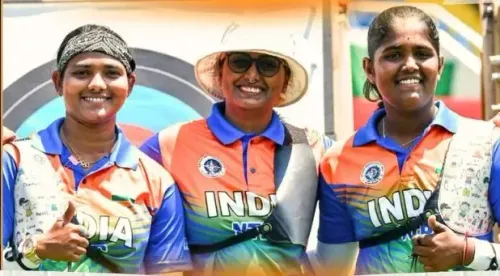
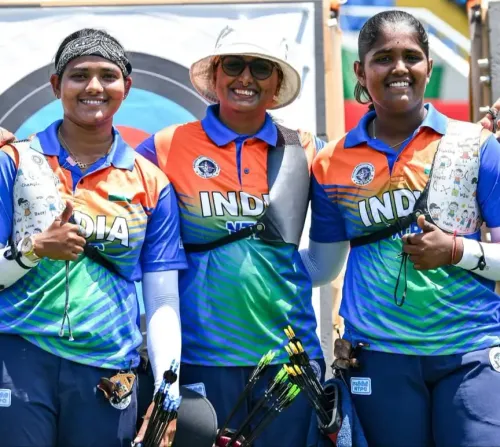
The gold-winning trio was Kirti Sharma , Ankita Bhakat , and Kumkum Mohod .
India earlier defeated China 5-1 in the semifinals.
India's compound archers had already won men's, women's, and mixed team golds at the same Games, providing extra motivation to the recurve squad.
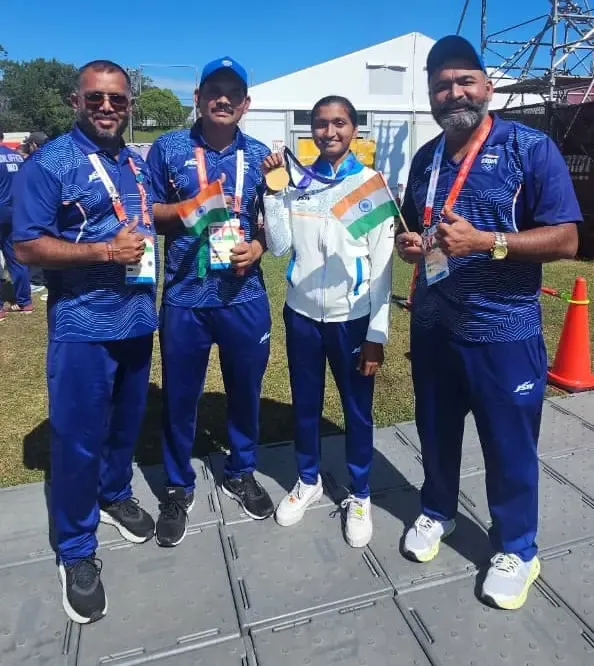
Kirti Sharma trains under coach Udham Singh at the SAI training centre in Hazaribagh .
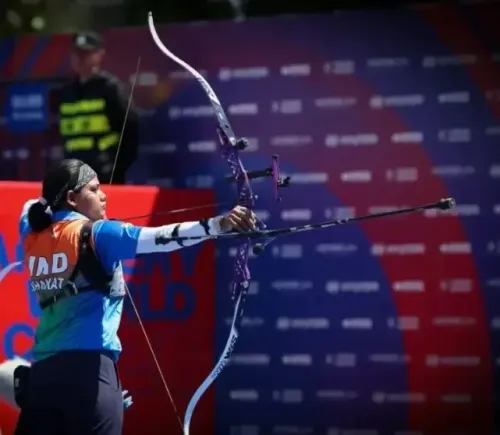
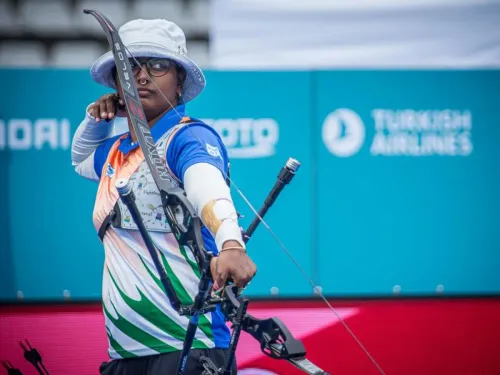
India's women's recurve archery team scripted a stunning upset at the Asian Games 2026 in Nagoya, defeating perennial champions South Korea 5-3 in the final on 3 October to snap the Korean powerhouse's 44-year grip on the event. The gold-winning trio of Kirti Sharma, Ankita Bhakat, and Kumkum Mohod held their nerve through a high-pressure decider to deliver one of Indian archery's most celebrated moments.
How India Won the Final
Speaking to sports media in Japan after the victory, Kirti Sharma credited a process-driven mindset for seeing the team through. "We were not thinking about our opponents. We were just focused on our own performance and following the process we went through during training," she said.
The team had set up the final in emphatic fashion, dispatching China 5-1 in the semifinals — another statement win that underscored India's rising pedigree in recurve archery. Against South Korea in the gold-medal match, the margin was tighter, but the composure never wavered.
Mental Fortitude Was the Difference
Kirti, who hails from Haryana and trains under coach Udham Singh at the SAI training centre in Hazaribagh, said the trio were acutely aware that the smallest lapse could prove costly against such formidable opponents. "We knew that our opponents can take the game away if we commit even a small mistake. But we stood strong and maintained the same intensity from the first arrow that we fired to the last one," she said.
All three archers consciously managed their emotions throughout. "All three of us had to control our emotions and believed in each other. We didn't think about the results and just gave our 100 percent," Kirti added.
Compound Team Golds Provided the Spark
India's compound archers had already made a massive mark earlier at the Okazaki Chuo Sogo Park, winning the men's, women's, and mixed team gold medals — three golds in a single day. Kirti acknowledged that unprecedented sweep had supercharged the recurve squad's belief heading into their own competition.
"Our confidence took a big boost after the compound events. The day we won three consecutive gold medals was a lucky day for India. It motivated us a lot. We wanted to emulate their feat," she said. "We were raring to go and could hardly wait for our event to start."
A Landmark Moment for Indian Archery
South Korea's 44-year dominance in women's recurve team archery at the Asian Games was one of the most formidable records in continental sport. India's ability to dismantle it — with consistency, composure, and conviction — signals a genuine shift in the global power balance of the discipline. For Kirti, Ankita, and Kumkum, the gold adds to what has already become a landmark Games for Indian archery as a whole.
With the recurve and compound squads collectively rewriting records in Nagoya, Indian archery's standing as one of the country's strongest medal-winning disciplines at the Asian Games has never looked more secure. Further recurve events remain in progress, and the Indian contingent will be eager to build on the momentum.
Point of View
Anchored by dedicated SAI training centres and a generation of athletes who have learned to compete under pressure rather than just participate. What stands out is the sequencing: the compound sweep earlier in the week was not just medals, it was live confidence fuel for the recurve squad. Indian archery has historically peaked and plateaued; the question now is whether the federation and the Sports Authority can institutionalise these results into a sustained programme rather than treating them as one-cycle highs.
NationPress
3 Oct 2026
Frequently Asked Questions
How did India win the women's recurve archery gold at Asian Games 2026?
India defeated South Korea 5-3 in the final on 3 October at the Asian Games 2026 in Nagoya, with the trio of Kirti Sharma, Ankita Bhakat, and Kumkum Mohod staying focused on their process and composure throughout. They had also beaten China 5-1 in the semifinals en route to the final.
How long had South Korea dominated women's recurve archery at the Asian Games?
South Korea had maintained dominance in the women's recurve team archery event at the Asian Games for 44 years before India ended the streak at the 2026 edition in Nagoya.
Who are the three Indian archers who won the gold medal?
The gold-winning Indian women's recurve team comprised Kirti Sharma, Ankita Bhakat, and Kumkum Mohod. Kirti Sharma is from Haryana and trains under coach Udham Singh at the SAI training centre in Hazaribagh.
What did India's compound archers achieve at the same Games?
India's compound archers won three gold medals in a single day at the Okazaki Chuo Sogo Park — in the men's, women's, and mixed team events — before the recurve squad competed. Kirti Sharma credited that sweep with significantly boosting the recurve team's confidence and motivation.
What did Kirti Sharma say about the team's approach in the final?
Kirti Sharma said the team focused entirely on their own process rather than their opponents. She noted that all three archers controlled their emotions, believed in each other, and maintained the same intensity from the first arrow to the last, knowing that even a small mistake could shift the match.