IOC provisionally lifts Russian Olympic Committee suspension after 2023 ban
Synopsis
The IOC has provisionally ended the ROC's suspension — but this is not a clean slate. Russian athletes face ITA-managed anti-doping oversight, flag and anthem status remains unresolved, and the IOC still bars Russian officials from its events. The move is driven as much by LA28 qualification timelines as by any resolution of the underlying geopolitical conflict.
Key Takeaways
The IOC provisionally lifted the Russian Olympic Committee (ROC) suspension on 7 July , ending a ban in place since October 2023 .
Russian athletes must participate in an anti-doping programme delegated to the International Testing Agency (ITA) , covering risk assessment, testing, and results management.
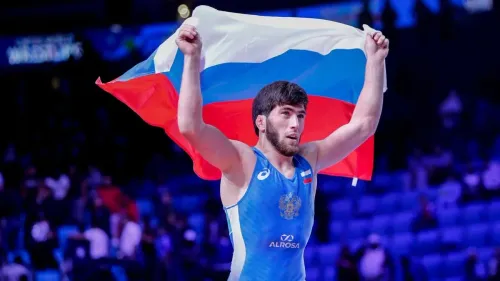
The Russian flag, anthem, and national colours at Olympic events remain undecided — the IOC will rule 'at the appropriate time.' The IOC will continue to not hold events in Russia or invite Russian government officials to its events.
The decision was triggered partly by the start of qualification for LA28 Olympics and the Dolomiti Valtellina 2028 Winter Youth Olympic Games .
Athlete selection must factor in each competitor's ability to serve as a role model for a peaceful society , per the Olympic Charter.
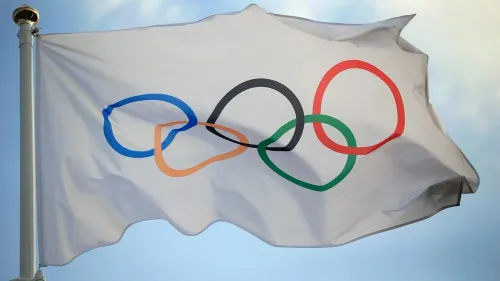
The International Olympic Committee (IOC) has provisionally lifted the suspension of the Russian Olympic Committee (ROC) that had been in place since October 2023, the IOC announced on Tuesday, 7 July. The decision comes with significant conditions attached, particularly around anti-doping oversight, and stops short of a full reinstatement of Russian sporting identity at Olympic events.
Key Conditions for Russian Athletes
Russian athletes returning to international competition must be enrolled in a national anti-doping programme — administered jointly by RUSADA and the ROC — that is delegated to the International Testing Agency (ITA). This programme must include a risk assessment, test distribution plan, and results management framework. The IOC clarified that athletes must meet all relevant anti-doping requirements set out by the IOC, International Federations (IFs), and best practices established by the World Anti-Doping Agency (WADA).
Why the Suspension Was Lifted
The IOC's Legal Affairs Commission conducted a thorough review before recommending the provisional lift. The body determined that the ROC 'no longer includes as its members any regional sports organisations in territories falling under the jurisdiction of the National Olympic Committee of Ukraine,' according to the official IOC statement. This territorial membership condition had been a central sticking point since the suspension was imposed following Russia's military actions in Ukraine.
What Remains Restricted
The IOC was explicit that several restrictions remain in force. The organisation will 'not organise IOC events in Russia or invite Russian government or state officials to its events.' Crucially, the IOC stated it will take a decision regarding 'the display of the Russian flag, anthem, colours or any identifications for the Olympic Games at the appropriate time' — meaning Russian athletes are not yet cleared to compete under full national identity. This mirrors the framework seen during recent Games, where Russian competitors participated as neutrals.
Impact on LA28 and 2028 Winter Youth Olympics
The timing of the decision is directly linked to qualification cycles. With the qualification period for both the LA28 Olympic Games and the Dolomiti Valtellina 2028 Winter Youth Olympic Games already underway, the IOC Executive Board determined that its earlier recommendations to International Federations — first issued on 28 February 2022 and reaffirmed on 28 March 2023 — restricting Russian and Belarusian athlete participation are no longer applicable. The IOC cited the need to offer equal access to qualifying competitions to all eligible athletes.
Athlete Selection and Role Model Criteria
In accordance with the Olympic Charter, the ROC must ensure that athlete selection for the Olympic Games is based not only on sports performance but also on each athlete's 'ability to serve as role models who respect, uphold and promote a peaceful society through sport.' This requirement, drawn from Bye-law 2.1 to Rules 27 and 28 of the Olympic Charter, applies to all National Olympic Committees but carries particular weight in the Russian context given ongoing geopolitical tensions. Pending confirmation that reinstatement conditions concerning the World Anti-Doping Code have been met — and amid recent allegations regarding RUSADA's governance — the ITA-delegated oversight mechanism is designed to provide an independent check on compliance.
Point of View
Not celebratory — the IOC is threading a needle between universality principles and the geopolitical reality of an ongoing war in Ukraine. By delegating anti-doping oversight to the ITA rather than trusting RUSADA, the IOC is signalling it does not yet trust Russia's own institutions. The unresolved flag-and-anthem question is also telling: Russian athletes may compete, but not as Russians in any symbolic sense. The real pressure here is the LA28 qualification clock — the IOC could not indefinitely bar a large athletics bloc from qualifying without legal and charter exposure. Whether this provisional lift holds through to Los Angeles will depend entirely on RUSADA's conduct and the state of the conflict.
NationPress
8 Jul 2026
Frequently Asked Questions
Why has the IOC provisionally lifted the Russian Olympic Committee suspension?
The IOC lifted the ROC suspension after its Legal Affairs Commission determined that the ROC no longer includes regional sports organisations in territories under the jurisdiction of Ukraine's National Olympic Committee. The decision also accounts for the ongoing LA28 Olympic qualification period, which requires equal access for all eligible athletes.
What conditions must Russian athletes meet to compete internationally?
Russian athletes must be part of a national anti-doping programme — run under RUSADA and the ROC — that is fully delegated to the International Testing Agency (ITA). This includes a risk assessment, test distribution plan, and results management, alongside compliance with IOC, International Federation, and WADA anti-doping rules.
Will Russian athletes compete under their national flag at the Olympics?
Not necessarily. The IOC stated it will take a decision on the display of the Russian flag, anthem, colours, and national identifications 'at the appropriate time.' As of the suspension lift, no clearance has been given for Russian national symbols at Olympic events.
Does this mean Russia is fully reinstated in the Olympic movement?
No. The reinstatement is provisional and conditional. The IOC will continue to bar IOC events from being held in Russia and will not invite Russian government or state officials to its events. Full reinstatement would require confirmation that World Anti-Doping Code conditions have been met.
How does this affect the LA28 Olympics and the 2028 Winter Youth Games?
With qualification for both the LA28 Olympic Games and the Dolomiti Valtellina 2028 Winter Youth Olympic Games already underway, the IOC's earlier recommendations restricting Russian athlete participation — issued in February 2022 and March 2023 — are no longer applicable. Russian athletes can now access qualifying competitions on equal terms with others, subject to anti-doping conditions.