IPC bans Iranian para-athlete Javanmardi 3 years for doping, strips New Delhi gold
Synopsis
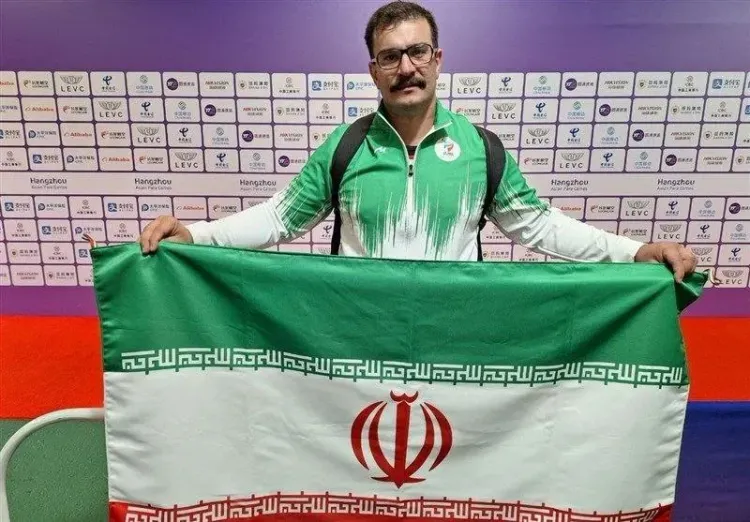
Iranian para-athlete Seyed Aliasghar Javanmardi, who took gold in the Men's Shot Put F35 at the 2025 World Para Athletics Championships in New Delhi, has been handed a three-year IPC ban after testing positive for oxandrolone. His gold medal is forfeited — a sharp fall for an athlete who also held a Paris 2024 Paralympic bronze.
Key Takeaways
The IPC has banned Iranian para-athlete Seyed Aliasghar Javanmardi for three years , effective 28 October 2025 to 27 October 2028 .
He tested positive for oxandrolone , a WADA-prohibited anabolic androgenic steroid, across two out-of-competition urine samples collected on 22 September and 24 September 2025 .
Javanmardi's gold medal in the Men's Shot Put F35 at the 2025 World Para Athletics Championships, New Delhi has been stripped.
All results from 22 September 2025 until the start of his provisional suspension are disqualified.
The athlete had previously won a bronze medal at the Paris 2024 Paralympics .
Javanmardi accepted the ADRV and the IPC's proposed consequences.
The International Paralympic Committee (IPC) has handed Iranian para-athlete Seyed Aliasghar Javanmardi a three-year ban for doping, stripping him of the gold medal he won in the Men's Shot Put F35 event at the 2025 World Para Athletics Championships in New Delhi. The ban runs from 28 October 2025 to 27 October 2028.
What the Samples Found
Javanmardi returned adverse analytical findings (AAF) for oxandrolone, an anabolic androgenic steroid listed under class S.1.1 of the World Anti-Doping Agency (WADA) 2025 Prohibited List. The substance was detected in two separate urine samples collected out of competition.
The first sample was collected on 22 September 2025 by Iran's National Anti-Doping Agency (Iran NADO), and the second was collected by the IPC on 24 September 2025 at the New Delhi championships. Both findings were treated as a single anti-doping rule violation (ADRV) under the Code.
Provisional Suspension and Acceptance
The IPC provisionally suspended Javanmardi on 28 October 2025, pending resolution of his case. The athlete subsequently accepted both the commission of the ADRV and the consequences proposed by the IPC, leading to the confirmed three-year period of ineligibility.
During the ban, Javanmardi is barred from competition and all other sporting activities, with the exception of authorised anti-doping education or rehabilitation programmes.
Results Disqualified, Gold Medal Forfeited
All results obtained from 22 September 2025 — the date of the first sample collection — through to the commencement of the provisional suspension are disqualified, with all medals, points, and prizes forfeited. This explicitly includes his gold medal from the Men's Shot Put F35 competition at the New Delhi 2025 World Para Athletics Championships.
Notably, Javanmardi had also won a bronze medal at the Paris 2024 Paralympics, underlining his standing as one of Iran's prominent para-athletes before the violation came to light.
IPC's Anti-Doping Stance
The IPC reiterated that under the World Anti-Doping Code (WADC), each athlete bears strict liability for substances found in their samples. An ADRV is established whenever a prohibited substance — or its metabolites or markers — is detected in a bodily sample, regardless of whether the use was intentional, unintentional, or the result of negligence.
As a signatory to the WADC, the IPC maintains that its Anti-Doping Code is designed to uphold a doping-free environment for para-athletes at all levels. The case will now set a precedent reminder for the global para-athletics community ahead of the next major championship cycle.
Point of View
One by the IPC itself — both returning positive findings for an anabolic steroid removes any ambiguity about the violation. What merits scrutiny is the role of Iran NADO: the first sample was collected by the national body on 22 September, yet the athlete competed at New Delhi two days later. The timeline raises questions about how quickly national agencies escalate adverse findings to the IPC. Strengthening the notification protocol between national anti-doping organisations and the IPC could be the more consequential outcome of this case than the ban itself.
NationPress
17 Oct 2026
Frequently Asked Questions
Why has the IPC banned Seyed Aliasghar Javanmardi?
The IPC banned Javanmardi for three years after he tested positive for oxandrolone, a prohibited anabolic androgenic steroid, in two out-of-competition urine samples collected in September 2025. Both findings were treated as a single anti-doping rule violation under the World Anti-Doping Code.
Which medal did Javanmardi lose due to the doping ban?
Javanmardi forfeited his gold medal in the Men's Shot Put F35 event at the 2025 World Para Athletics Championships held in New Delhi. All results from 22 September 2025 until his provisional suspension was imposed are also disqualified.
How long is Javanmardi's ban and when does it end?
His ban runs for three years, from 28 October 2025 to 27 October 2028. During this period he is ineligible for competition and all sporting activities except authorised anti-doping education or rehabilitation programmes.
What is oxandrolone and why is it banned?
Oxandrolone is an anabolic androgenic steroid (AAS) classified under S.1.1 of the WADA 2025 Prohibited List. It is banned in sport because it artificially enhances muscle mass and physical performance, giving users an unfair competitive advantage.
Did Javanmardi contest the doping charge?
No. Javanmardi accepted both the commission of the anti-doping rule violation and the consequences proposed by the IPC, which led to the confirmed three-year ban without a contested hearing.