India's T20I series loss: Iyer cites fielding failures, poor adaptation
Synopsis
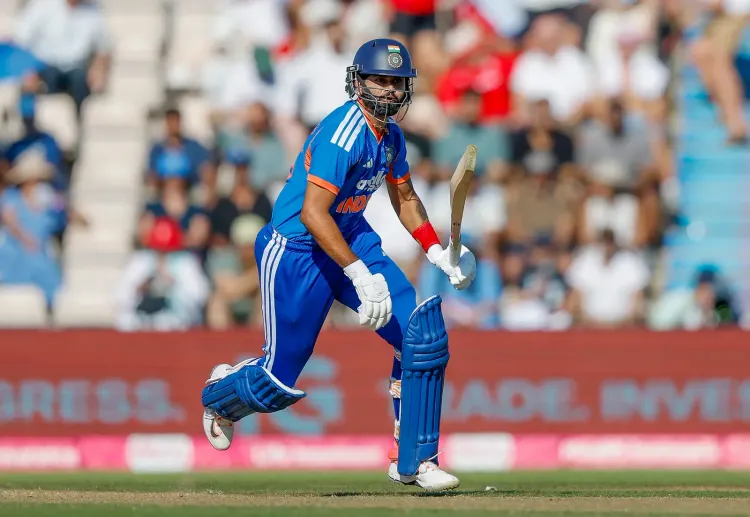
India's T20I tour of England ended in a 4-0 series sweep — and a fall from the top of the ICC rankings. Captain Shreyas Iyer's admission that dropped catches turned a chaseable target into an unreachable one tells the real story: England's 257/3 was partly India's own making.
Key Takeaways
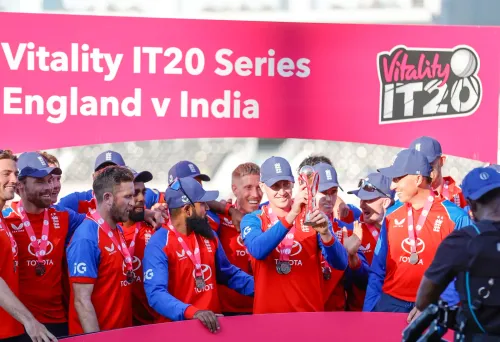
England completed a 4-0 series sweep , winning the 5th T20I by 56 runs at The Rose Bowl, Southampton on 11 July .
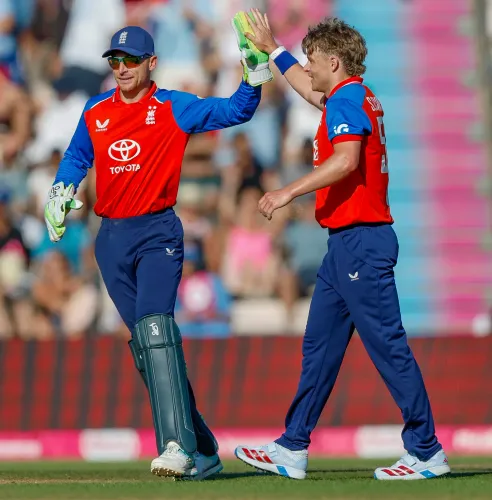
Jos Buttler (131) and Harry Brook (95 not out) shared a 233-run second-wicket stand , powering England to 257/3 .
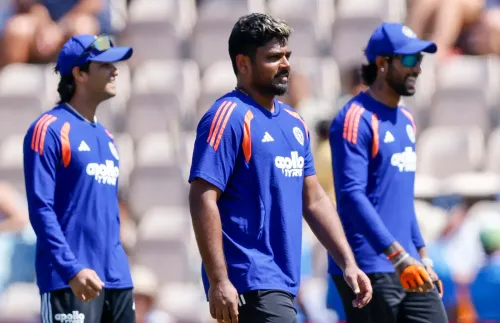
India replied with 201/8 , with fifties from Ishan Kishan (56) and Tilak Varma (53) proving insufficient.
Captain Shreyas Iyer cited dropped catches and failure to adapt to changing conditions as the key reasons for the series loss.
India were dethroned from the top of the ICC Men's T20I rankings by England following the sweep.
India's next assignment is a three-match ODI series starting 14 July in Birmingham .
India captain Shreyas Iyer admitted on Saturday, 11 July that an inability to adapt to shifting English conditions, compounded by costly dropped catches, ultimately handed England a commanding 4-0 series sweep in the fifth and final T20I at The Rose Bowl, Southampton. The 56-run defeat completed a winless T20I tour for the reigning world champions and saw India stripped of their top ranking in the ICC Men's T20I standings, with England claiming the number-one spot.
What Went Wrong for India
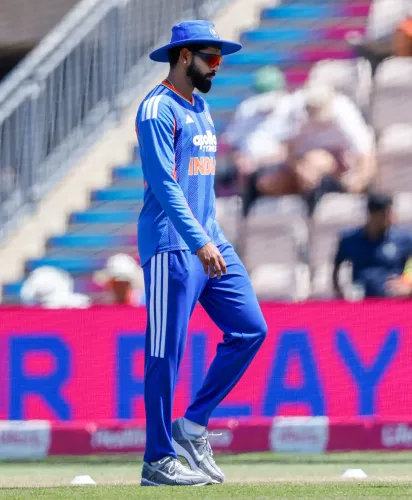
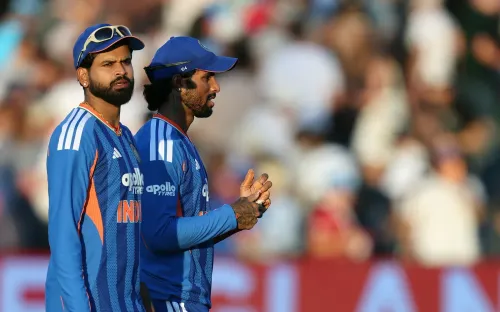
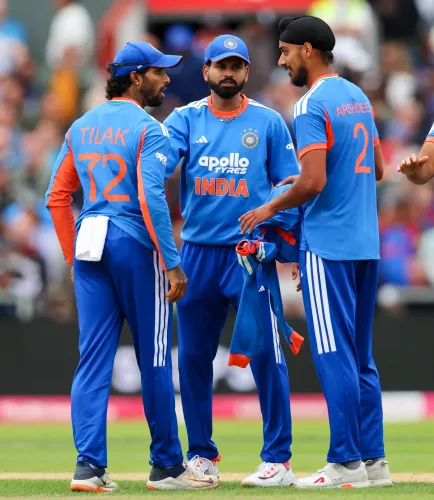
Iyer was candid in his post-match assessment, pointing to two interlinked failures: the team's inability to read and respond to conditions that shifted from match to match, and a breakdown in the fielding unit at critical moments. 'There's a lot to take. Especially the conditions, the awareness. It's all about adaptation, I feel. Conditions kept changing from match to match. As professionals, we need to learn,' the captain said at the post-match presentation.
He was equally direct on the fielding lapses: 'Fielding plays a key role in winning matches. This is one aspect we need to work on.'
How England Built Their Match-Winning Total
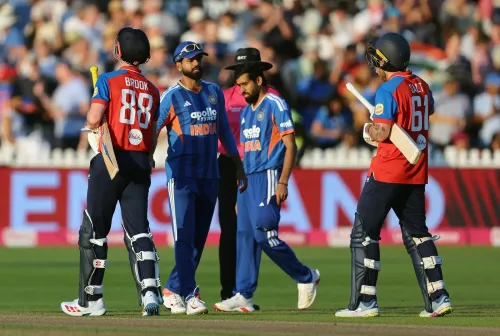
The dropped catches proved decisive. England captain Jos Buttler and Harry Brook exploited every reprieve to construct a match-winning 233-run second-wicket partnership — Buttler finishing on a commanding 131 and Brook on an unbeaten 95. The stand propelled England to a mammoth 257/3, a total that always looked beyond India's reach.
Iyer acknowledged the cost directly: 'Especially on the track, which was a belter, we could've probably bluffed. But we also dropped a couple of catches. Could've been chasing 220-225. Unfortunately, we couldn't get that opportunity. We lost wickets in clusters.'
India's Batting Response Falls Short
In reply, India managed 201/8, a total that underlined the gulf between the two sides across the series. Half-centuries from Ishan Kishan (56) and Tilak Varma (53) provided brief resistance but could not sustain a credible chase against an England bowling attack that Iyer described as 'spot on' in execution.
Notably, the collapse in clusters — a recurring pattern through the series — exposed India's inability to build and anchor a run-chase under pressure in English conditions.
Rankings Impact and the Road Ahead
The series defeat carries consequences beyond the scoreline. India's demotion from the top of the ICC Men's T20I rankings marks a significant setback for a side that had held that position as reigning world champions. This is the first time in recent memory that India have been swept in a bilateral T20I series of this length.
The squad will now shift focus to the three-match ODI series against England, beginning on 14 July in Birmingham. How quickly they recalibrate — particularly in the field — will be the first test of their response to a chastening tour.
Point of View
Yet the lapses at Southampton, where dropped catches directly converted a chaseable 220 into an insurmountable 257, suggest the problem is neither new nor being fixed fast enough. Losing the ICC T20I top ranking as reigning world champions sharpens the accountability question: are the same players being picked into the same conditions with the same results? The ODI series beginning on 14 July will reveal whether this squad can course-correct mid-tour, or whether the adaptation failure Iyer described is deeper than a single series.
NationPress
10 Oct 2026
Frequently Asked Questions
What was the result of the 5th T20I between India and England?
England beat India by 56 runs in the 5th T20I at The Rose Bowl, Southampton on 11 July, completing a 4-0 series sweep. India were bowled out for 201/8 chasing England's 257/3.
What did Shreyas Iyer say after India's T20I series loss?
Captain Shreyas Iyer admitted that India failed to adapt to changing conditions across the series and that costly dropped catches allowed England to post a much larger total than was necessary. He specifically flagged fielding as an area the team must improve.
How did England reach 257/3 in the final T20I?
England captain Jos Buttler (131) and Harry Brook (95 not out) put on a 233-run second-wicket partnership after India dropped crucial catches. Iyer acknowledged India could have restricted England to around 220-225 had the catches been held.
What is the impact of the series loss on India's ICC T20I ranking?
India were dethroned from the top of the ICC Men's T20I rankings following the 4-0 series defeat, with England taking the number-one position. It is a significant blow for the reigning T20 World Champions.
What comes next for India after the T20I series loss?
India will play a three-match ODI series against England, beginning on 14 July in Birmingham. The series offers an immediate opportunity to respond, though the format shift means a different set of conditions and challenges.