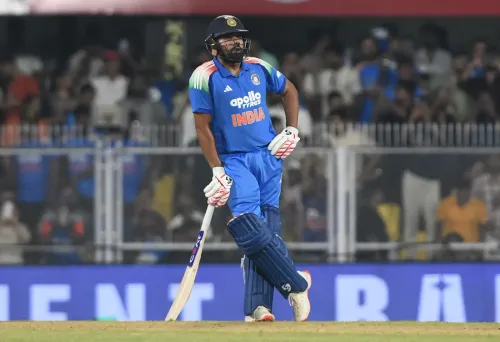
Guwahati pitch offered bowlers nothing, says India batting coach Kotak
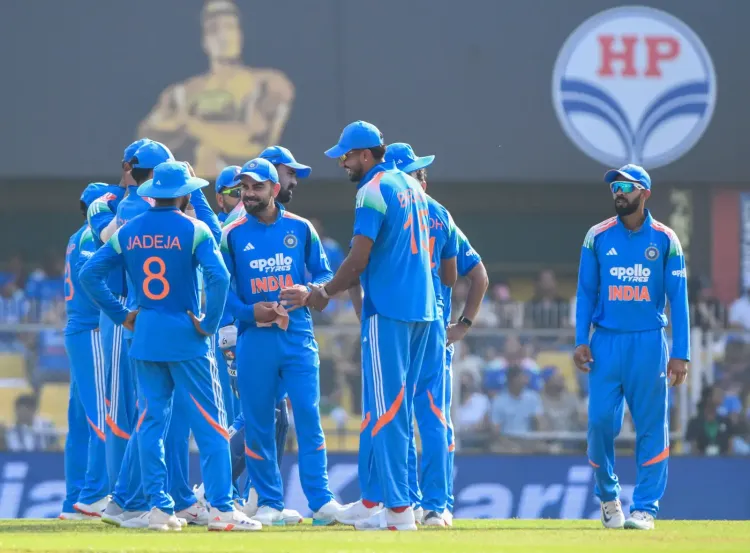
Synopsis
India's record 406-run ODI chase in Guwahati produced spectacular numbers — 811 total runs, five centuries, one double hundred — but left both coaches questioning the pitch itself. Batting coach Kotak and head coach Gambhir openly declared it was 'not cricket', raising pointed questions about surface standards and 2027 World Cup readiness on South African tracks.
Key Takeaways
India chased down 406 against the West Indies with 39 balls to spare in the second ODI in Guwahati on 1 October .
The match produced 811 total runs and five centuries , including a double century from skipper Shubman Gill .
Batting coach Sitanshu Kotak said the pitch offered 'not a lot for the bowlers' and called for better balance between bat and ball.
Head coach Gautam Gambhir was more emphatic, stating 'this is not cricket, this is only batting.' West Indies bowling coach Ravi Rampaul described flat pitches as a widespread global problem, leaving bowlers with nothing to work with.
India's upcoming tour of New Zealand and the 2027 ODI World Cup in South Africa, Zimbabwe and Namibia have added urgency to the debate over pitch preparation.
India batting coach Sitanshu Kotak expressed disappointment over the extreme bat-friendly conditions at the ACA Stadium in Guwahati after India completed a record-breaking chase of 406 against the West Indies in the second ODI on Wednesday, 1 October. Kotak acknowledged that the pitch offered virtually no assistance to bowlers on either side, even as the match produced a staggering 811 runs in total, including a historic double century from skipper Shubman Gill and five centuries across both teams.
Kotak on the Pitch Imbalance
'There was not a lot for the bowlers. We wish that it is equally balanced. Maybe on a 300 runs wicket, other team had to fight hard to get that 300, 320 (is ideal). The outfield was quick and 20, 30, 40 runs go from there. Particularly in this game, yes, you do feel for the bowlers,' Kotak said at the post-match interaction.
He stopped short of blaming the pitch curators directly, instead contextualising the challenge they face. 'No one can make a wicket and say that it will have only 250 or 300 runs. It is possible that the curator tries to make a match with 250 or 300 runs and the wicket spins or seams more and the team gets out for 150 runs. So, he will get criticism in that too,' he said.
Kotak also drew a broader historical comparison, noting that 180 runs in 60 overs was considered a formidable total during the 1983 World Cup, while 400 now appears barely sufficient — prompting him to question whether batting standards have simply risen, or whether pitches alone deserve the scrutiny.
West Indies Bowling Coach Echoes the Concern
West Indies bowling coach Ravi Rampaul offered a similar assessment, pointing to a wider trend of flat pitches across global venues. 'Flat pitches are everywhere now. This is flatter, more for batting, because it allows nothing for the spinners, nothing for the fast bowlers. Obviously whoever scores more runs wins the game, and it's tough for bowlers coming into these conditions and coming out without any set of wickets,' he said.
Rampaul's remarks underline a growing concern in the cricketing community: that heavily batting-loaded conditions distort team preparation and may skew selection strategies heading into major tournaments.
Gambhir: 'This Is Not Cricket, This Is Only Batting'
India head coach Gautam Gambhir was more blunt in his assessment while speaking to broadcasters. 'Look, if I have to be absolutely honest, I feel I think there has to be a bit of more contest between bat and ball, because I think you talk about cricket — but this is not cricket, this is only batting,' Gambhir said.
'Because imagine a young bowler bowling on this wicket, and the opposition getting 400 and then we go on to chase 400. Obviously, for the records it's outstanding, for the crowd it's outstanding, and for the broadcaster it's outstanding. But if you ask me as a genuine cricket fan and as a coach, because I have to have sympathy for the bowlers as well. When you bowl on this kind of a wicket, it's not fair for the bowlers,' he added.
Notably, Gambhir's remarks carry institutional weight: as head coach, his public critique of pitch standards could prompt the Board of Control for Cricket in India (BCCI) to revisit guidelines for surface preparation at domestic venues.
World Cup Preparation in the Spotlight
With India scheduled to tour New Zealand shortly before hosting Sri Lanka and Zimbabwe in home ODIs, concerns have emerged over whether performing on such high-scoring tracks could breed overconfidence ahead of the 2027 ODI World Cup in South Africa, Zimbabwe, and Namibia — surfaces that are expected to offer far more to pace bowlers.
Kotak, however, projected confidence in the squad's adaptability. 'We will be playing five games in New Zealand. I have been to South Africa. Some wickets will be similar to our conditions. They also want to play on decent wickets because if you give uneven wickets in white-ball cricket, and if it is a low scoring one-day game, nobody wants that. So, wickets may not be like 350, 400. It could be 300, 300+. But it depends. So, we should be preparing for whichever conditions are present,' he said.
India's next assignment and their performance on more balanced tracks will be the real test of whether this batting-heavy template translates into World Cup readiness.
Point of View
The question is no longer whether something is wrong — it is whether anyone in authority is listening. The BCCI's reluctance to enforce surface standards at home venues has long prioritised crowd entertainment over competitive cricket, and this Guwahati track is the starkest recent example. With the 2027 World Cup to be played on South African and Zimbabwean surfaces that will challenge India's bowlers, the team's structural over-reliance on batting-heavy home conditions is a strategic liability, not a confidence-builder. Gambhir's candour is welcome; what follows it will matter more.
NationPress
1 Oct 2026
Frequently Asked Questions
What happened in the India vs West Indies 2nd ODI in Guwahati?
India chased down 406 against the West Indies with 39 balls to spare at the ACA Stadium in Guwahati on 1 October 2026, completing a record run chase. The match produced 811 total runs and five centuries, including a double century from India captain Shubman Gill.
Why did India's batting coach criticise the Guwahati pitch?
Batting coach Sitanshu Kotak said the pitch offered 'not a lot for the bowlers' and expressed a desire for more balanced conditions where both batting and bowling sides can compete fairly. He cited the quick outfield and the absence of spin or seam as factors that inflated scores.
What did head coach Gautam Gambhir say about the pitch?
Gautam Gambhir told broadcasters that the extreme batting conditions were 'not cricket', expressing sympathy for bowlers on both sides. He called for pitches that offer at least something to bowlers, describing the match as 'only batting' rather than a genuine contest.
How does this pitch debate affect India's 2027 World Cup preparation?
The 2027 ODI World Cup will be hosted across South Africa, Zimbabwe, and Namibia — surfaces that typically aid pace bowlers and offer far more movement than the flat Guwahati track. Critics argue that playing on batting-friendly home pitches could give India a false sense of security ahead of that tournament.
What did West Indies bowling coach Ravi Rampaul say about the conditions?
Ravi Rampaul described flat pitches as a global trend, saying this particular surface offered nothing to spinners or fast bowlers. He said it was 'tough for bowlers coming into these conditions and coming out without any set of wickets.'