India vs New Zealand Test: Latham backs Gill on soft ball

Synopsis
Tom Latham backed Shubman Gill's concern that the ball softened too quickly in Wellington, but said teams must find a way under the current saliva ban. New Zealand saved the first Test as Daryl Mitchell and Glenn Phillips batted out 258 balls.
Key Takeaways
New Zealand captain Tom Latham agreed with India captain Shubman Gill that the ball softened quickly in the drawn first Test .
Gill said the ball lost hardness within 25–30 overs and questioned the continuing saliva ban.
Latham said the Basin Reserve pitch did not retain its usual pace and bounce from day two .
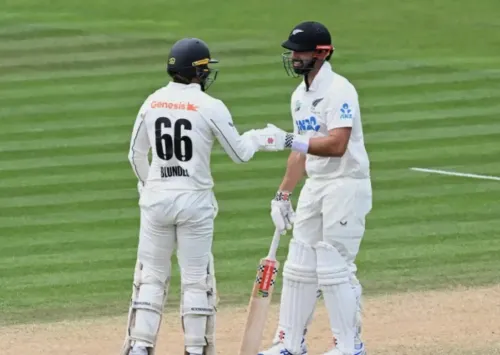
Daryl Mitchell and Glenn Phillips batted out 258 balls to help New Zealand draw the match.
The second Test begins on Friday at Hagley Oval in Christchurch .
The India vs New Zealand first Test ended in a draw at the Basin Reserve in Wellington, with New Zealand captain Tom Latham agreeing with India captain Shubman Gill that the ball became soft too quickly. Speaking after the match on 23 November, Latham said teams would have to work within existing rules on the use of saliva.
The hosts secured the draw on the final day as Daryl Mitchell and Glenn Phillips batted out 258 balls. The teams now head to Christchurch for the second Test, starting on Friday.
Latham agrees with Gill on ball condition
Gill had told his post-match press conference that the ball lost its hardness within 25–30 overs. He also questioned why the ban on using saliva remained in place years after the COVID-19 pandemic.
Latham said Gill was “spot on” about the ball, adding that it tended to soften during the match. He contrasted that with the usual characteristics of grounds in New Zealand, where, he said, the ball tends to stay harder, carry more and swing for longer.
The New Zealand captain suggested the opening 10 overs with a new ball offered a different picture from what followed. He said the pitch had probably offered more on the opening day than it did later in the contest.
Saliva ban and managing swing
The saliva ban was imposed during the COVID-19 pandemic. While Gill questioned its continuation, Latham was non-committal about whether the rule should change and said that decision was not his to make.
“Certainly from a saliva point of view, I'm not sure that will change, obviously, what the world's been through. But, again, you've got to find a way,” Latham said.
He said teams worked hard under the current rules to keep the ball in the best possible condition for swing. In this match, he felt the conditions did not allow that to be sustained for long periods.
Basin Reserve pitch lost pace and bounce
Latham also said the surface differed from the Basin Reserve pitches his side had encountered in recent years. A more traditional surface at the ground, he said, retained its pace and bounce, but that was not necessarily evident from day two onwards.
He credited his players for adapting in the first innings to reach what they considered a par total at the time. Despite the changing surface, he said he could not fault the bowlers' effort.
The captains' comments highlighted both the condition of the ball and the behaviour of the pitch as factors in the contest. Latham did not attribute the draw solely to either issue.
Second Test shifts to Hagley Oval
Mitchell and Phillips helped New Zealand avoid defeat by batting through 258 balls on the final day. Their resistance left the opening Test drawn before the series moved to Hagley Oval.
Latham said the traditional Christchurch surface tended to be closer to what his side had encountered in the past, but the team would assess the pitch and conditions after arriving. That assessment will inform its thinking on balance for the second Test.
Point of View
But a soft ball and a slowing pitch are separate issues. A fair assessment needs evidence from more than one match and must distinguish ball durability from surface conditions. Any discussion of the saliva ban should also account for why it was introduced, rather than treating a rule change as a guaranteed solution.
NationPress
23 Nov 2026
Frequently Asked Questions
What did Tom Latham say about the ball in Wellington?
Tom Latham agreed with Shubman Gill that the ball became soft too quickly during the drawn first Test. He said balls at New Zealand grounds normally tended to stay harder and swing for longer.
Why did Shubman Gill question the saliva ban?
Gill questioned why the saliva ban remained in place years after the COVID-19 pandemic. He had also said the ball lost its hardness within 25–30 overs.
How did New Zealand draw the first Test against India?
Daryl Mitchell and Glenn Phillips batted out 258 balls on the final day to help New Zealand save the match.
What did Latham say about the Basin Reserve pitch?
Latham said the pitch did not retain the pace and bounce associated with recent Basin Reserve surfaces from day two onwards. He said his side had to adapt to the conditions.
When and where is the second India vs New Zealand Test?
The second Test starts on Friday at Hagley Oval in Christchurch. Latham said New Zealand would assess the pitch and conditions after arriving.