IPL 2026: The Coach Who Foretold Mukul Choudhary's Heroic Performance
Synopsis
In a thrilling IPL 2026 match, Lucknow Super Giants were down to their last breaths, needing 54 runs in 24 balls. However, coach Nikhil Doru believed in Mukul Choudhary's potential to turn the tides, leading to an unforgettable victory that showcased Choudhary's extraordinary talent.
Key Takeaways
Mukul Choudhary's performance exemplifies resilience in dire situations.
Nikhil Doru's faith in his players is a testament to effective coaching.
Choudhary's journey reflects the importance of dedication and hard work .
His unique batting style showcases a blend of power and technique .
Team dynamics and mental strength play crucial roles in achieving success.
New Delhi, April 12 (NationPress) As the Lucknow Super Giants faced a daunting task, requiring 54 runs from 24 balls against the Kolkata Knight Riders at Eden Gardens, many had dismissed their chances of victory. However, at a restaurant in Udaipur, Rajasthan's batting coach, Nikhil Doru, remained hopeful.
Dining with friends outside the cricket world, they laughed off LSG's prospects. Yet, Doru had a different outlook, confidently asserting that Mukul Choudhary would be the one to secure the win for LSG.
“I told them, ‘Mukul match jita dega (Mukul will win the match from here)’. They responded, ‘Given the current scenario, victory seems impossible. How can they win?’ I insisted, ‘I’ve seen him play before, and he will definitely clinch the match from this position.’ Almost immediately after, he began to hit boundaries with remarkable consistency,” Doru recounted in an exclusive interview with IANS, just before LSG's matchup against the Gujarat Titans.
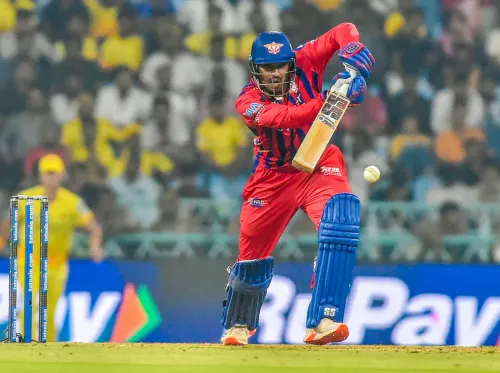
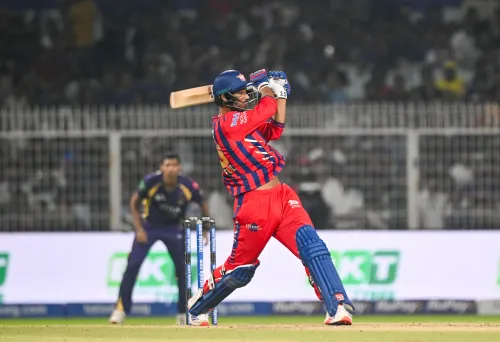
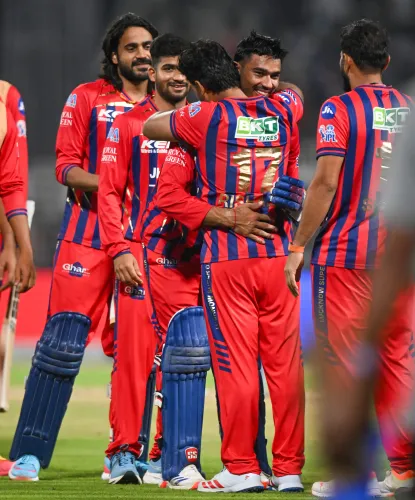
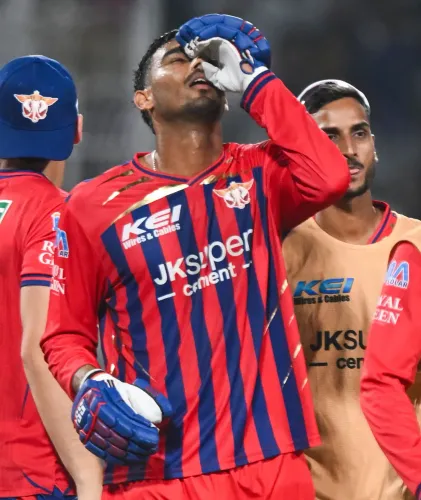
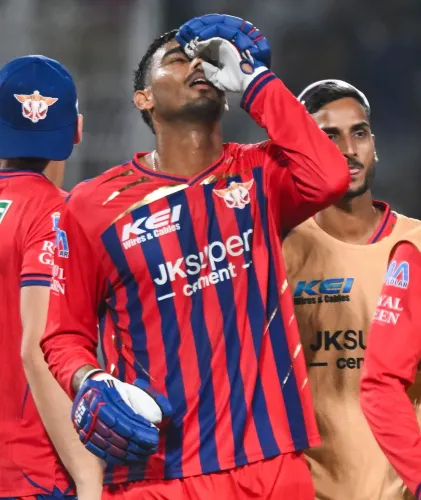
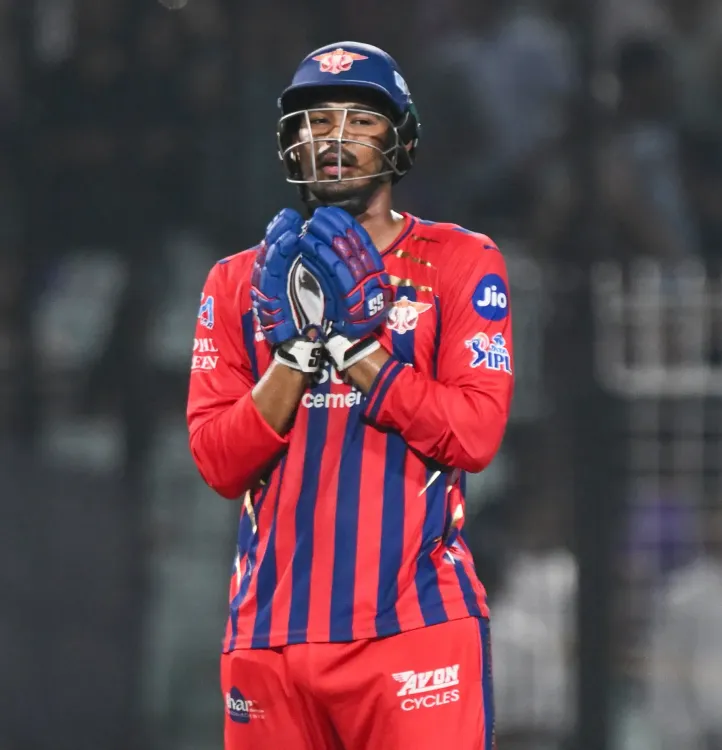
After scoring only a single run off his initial five deliveries, Choudhary quickly shifted gears, showcasing a series of powerful hits, including a helicopter shot reminiscent of MS Dhoni's signature move. With eight runs needed from the final three balls, Doru confidently predicted a six was imminent. True to his words, Choudhary launched a wide yorker from Vaibhav Arora over extra cover for a six.
When LSG claimed victory, and Choudhary, remaining unbeaten with 54 runs off 27 balls, offered thanks to the Almighty with folded hands, Doru was overjoyed. Their conversation the following morning revolved around Choudhary's ability to cast aside risk and fears, instead focusing on executing his shots in the closing overs.
To comprehend Doru’s unwavering composure, one must reflect on a pivotal moment from last year's Syed Mushtaq Ali Trophy, where a match against Delhi unfolded in a similar manner. The Rajasthan team had lost hope, yet Choudhary delivered an incredible 62 not out from just 26 balls, featuring seven sixes, and transformed a seemingly certain defeat into a stunning triumph.
“Mukul possesses an inherent belief that he can win matches for us if he remains at the crease till the end. In a critical final over, needing 25 runs, he hit four sixes off Ayush Badoni, culminating in a six on the last ball that secured the win,” Doru remembered.
After that match, Doru engaged Choudhary, who had transitioned from being an opener in U14 and U16 levels to a lower-order hitter, to understand his mindset during high-pressure situations. Choudhary's response has resonated with Doru ever since: “If I bat until the last ball, I will win the match for the team. My goal was to remain until the end, as that would ensure our victory.”
Doru considers these insights crucial in understanding Choudhary's cricketing persona. Initially, Choudhary wasn't included in the playing eleven for the Syed Mushtaq Ali Trophy. However, when Kartik Sharma sustained a finger injury, the coaching staff, who had previously advocated for Choudhary's inclusion, finally got their wish.
Choudhary faced travel challenges to reach Ahmedabad in time for the match. After considering alternative transportation options, he ultimately arrived at 4 AM after a long drive with a friend, managed a brief rest, and then stepped onto the field against Delhi, quickly becoming a fan favorite.
Post his match-winning display, Doru shared Choudhary's performance statistics and video footage with Vikram Solanki, the Director of Cricket for Gujarat Titans, as well as with V Cheluvaraj, a scout for Chennai Super Kings. During last year’s auction in Abu Dhabi, LSG acquired Choudhary for Rs 2.6 crore, outbidding interests from Mumbai Indians and Rajasthan Royals.
Originating from Khedaro Ki Dhani in Rajasthan's Jhunjhunu district, Choudhary's journey to stardom took 12 years. His father, Dalip, was determined that his firstborn would become a cricketer. Upon Choudhary's birth in 2004, Dalip embarked on this mission.
He resigned from his teaching position, abandoned his Rajasthan Administrative Services (RAS) aspirations, and sold his home, delving into the unpredictable realms of real estate and hospitality, accumulating debts of Rs three crores. Simultaneously, his mother, Sunita, sacrificed sleep to prepare meals at 4 AM and monitored Mukul’s progress from her classroom window before leaving her job.
Mukul joined the SBS Cricket Academy in Sikar, located 80 kilometers from Jhunjhunu, participating in coaching clinics led by Yograj Singh and Dinesh Lad before establishing a permanent training base at Jaipur’s Aravalli Coaching Centre, where coaches Vikas Yadav and Vijay Golada transitioned him from a pacer to the batting group.
Choudhary's family, including his younger sister, who aspires to join the Civil Services, currently reside in a rented home in Jaipur. Well before Choudhary's breakout moment, Doru recalled a significant instance during the Rajasthan probables camp for the 2025/26 season that highlighted his character.
Rajasthan's selection committee named only two specialist openers in the 25-member camp, which was insufficient for a full Ranji Trophy season. To remedy this, Doru approached established middle-order batters to see if they would be willing to open the batting.
Opening in first-class cricket poses significant risks, as the new ball’s seam and swing can jeopardize a middle-order player's career. Despite having made his debut in 2023 and still trying to establish his footing in senior cricket, Choudhary was the sole individual willing to embrace the challenge without hesitation.
“While many declined, he replied, ‘Yes, I am prepared to do whatever you need me to do. If you want to train me as an opener, I am ready to take on that role.’ I only asked him once, and he was willing to open the batting. This demonstrates his mental fortitude when he stated, ‘Nahi sir, mei karunga. Aap mujhe taiyaar kariye (No sir, I will do it. You prepare me for it).’
“For a middle-order batter to open the batting is one of the toughest tasks in red-ball cricket. Yet, he accepted this challenge, which revealed his excellent attitude and readiness to face any tough situation,” Doru mentioned.
Doru began working with Choudhary immediately, engaging in two months of intensive preparation that encompassed not just power-hitting for white-ball cricket but also the technical demands of red-ball cricket: managing the new ball, seam, and swing, along with adapting to various field settings.
Doru was tasked with presenting a case study at the BCCI Centre of Excellence on a batter he had worked with for two months, and Choudhary became his chosen subject. “Through initial assessments and video analysis, I discovered that his power-hitting abilities and capacity to hit sixes were exceptional.
“I didn’t impede his power game but instead amplified it for T20 formats—facing fast bowlers, managing the new ball, and adjusting his gameplay according to in and out field settings. I genuinely believe that my work with him over those two months significantly boosted his confidence and improved his shot selection,” he added.
Choudhary scored 44 as an opener against Chhattisgarh and subsequently became the top run-scorer in the Under-23 List A trophy, accumulating 617 runs at an average nearing 103 and a strike rate exceeding 142, peppered with 39 sixes and 34 fours.
Following a swift defeat by Jammu and Kashmir in a Ranji Trophy match in Srinagar, an optional training session was scheduled for the next morning. Out of 15 squad members, only two showed up: Choudhary and Sumit Goddar.
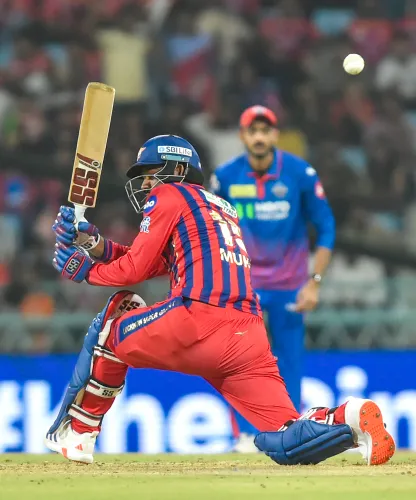
Doru also provided an insightful technical analysis of Choudhary's distinct hitting style, attributing it to his flexible wrists and rapid bat speed. “Technically, he maintains a sideways position, keeping his shoulders closed. When facing an incoming ball, his shoulders do not open—hence, he resorts to playing the helicopter shot as he needs to adjust his body to strike on the leg side.
“However, since his body remains closed, he must utilize his wrists or the helicopter shot, which has become his natural shot. In the future, teams may target him with balls aimed at his feet, pads, and hips because of this closed stance. Yet, the advantage of maintaining a closed body is that it allows the bat to achieve a full arc for executing shots and utilizing the helicopter shot effectively, showcasing his strength in the wrists,” Doru elaborated.
Doru noted that for the past 18 months, Choudhary has practiced hitting 100-200 sixes daily, especially after recognizing the demands of contemporary T20 cricket. “Every player today aspires to play in the IPL, and only those capable of hitting sixes can secure a spot. He has relentlessly practiced this skill, and it is now bearing fruit. When compared with other players in his age group, he possesses exceptional strength, which is why he can hit such impressive sixes. Without the remarkable strength in his wrists and a robust physical build, it would be challenging to hit sixes with such power,” he stated.
In a recent report to the RCA, Doru remarked that Choudhary “exhibits a commendable attitude, displays confidence, and is willing to accept any challenge. He is always ready to take on tasks and never declines.” Doru's conviction that Choudhary will soon don the Indian jersey stems from his exceptional willingness to embrace risk—frequently stepping up to challenges that others shy away from and leading his team to victory from precarious situations.
“Playing at the number six or seven positions is quite challenging. If you find a finisher like this, the ascent to success can be rapid. As Justin Langer pointed out, occupying these positions is difficult, as one must perform until the end while executing the necessary shots. Additionally, they must manage playing alongside tail-enders, which adds another layer of complexity.
“But Mukul thrives in such situations—when Avesh Khan came to bat, I could sense from his body language that he was communicating that victory was within reach. Given his current style of play and attitude, I firmly believe he will represent India in the near future,” he concluded.
In that Udaipur restaurant, the skepticism of Doru’s friends evaporated as they witnessed Choudhary’s masterful finish. On that day, as Choudhary basked in the global spotlight, it merely reaffirmed the belief that Doru had recognized long before the floodlights of Eden Gardens illuminated the field.
Point of View
Nikhil Doru. It showcases the resilience and determination that can lead to unexpected victories in sports.
NationPress
7 Oct 2026
Frequently Asked Questions
Who is Mukul Choudhary?
Mukul Choudhary is a talented cricketer who plays for the Lucknow Super Giants and is recognized for his ability to turn matches around with his batting prowess.
What did Nikhil Doru predict?
Nikhil Doru predicted that Mukul Choudhary would win the match for Lucknow Super Giants when they were in a challenging position.
What was Mukul's significant performance in IPL 2026?
Mukul Choudhary scored an unbeaten 54 runs off 27 balls, leading LSG to victory against Kolkata Knight Riders.
What role did Mukul Choudhary play in his team's success?
Mukul Choudhary played a crucial role as a lower-order hitter, showcasing his ability to handle high-pressure situations and secure victories.
How has Mukul Choudhary's journey been so far?
Mukul Choudhary's journey has been marked by hard work, dedication, and a strong belief in his abilities, leading to his recent success in the IPL.