Krishna Nagar calls for corporate sponsors in para-badminton after Asian Para Games medals
Synopsis
Two medals in Nagoya and a clear message to India Inc: Krishna Nagar, one of only two Indian shuttlers to win Olympic-level gold, says para-badminton's results demand corporate recognition — and without it, the sport's growth will plateau well short of its potential ahead of Los Angeles 2028.
Key Takeaways
Krishna Nagar won silver in men's doubles SH6 and bronze in mixed doubles SH6 at the 2026 Asian Para Games in Aichi-Nagoya, Japan .
Nagar called for greater corporate sponsorship, saying para-badminton lacks commercial recognition despite Olympic-level results.
He and Pramod Bhagat are the only Indian shuttlers to have won gold at the Olympic level, across both para and able-bodied badminton.
Nagar acknowledged tactical errors in his singles and doubles campaigns, including surrendering a 16–11 third-set lead against China.
The 27-year-old is targeting gold at the Los Angeles 2028 Paralympics , with the qualification cycle beginning in 2027 .
He said the new 15-point format suits his aggressive playing style and will require no warm-up phase from the opening rally.
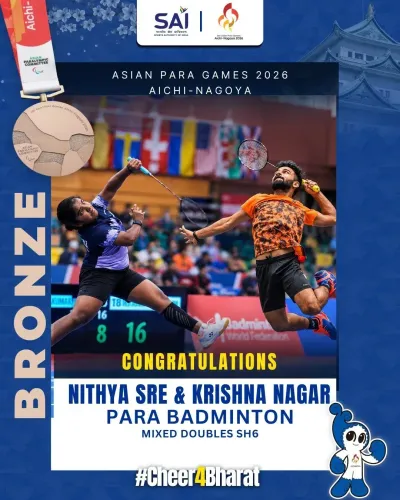
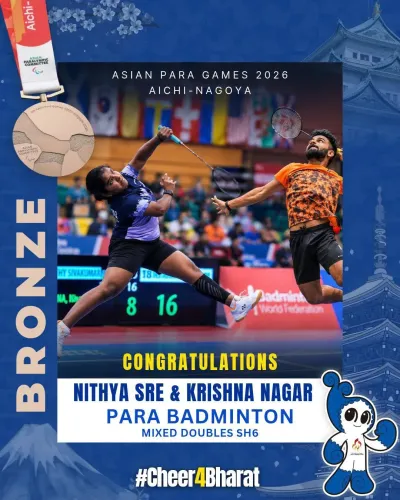
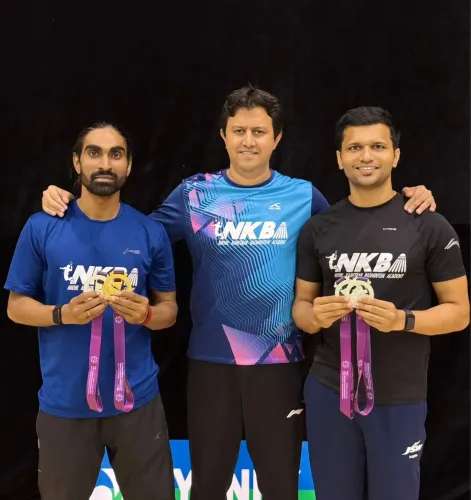
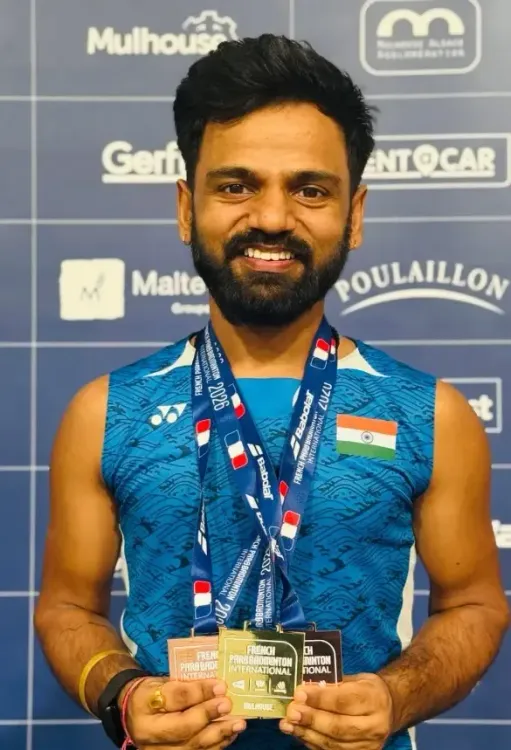
Tokyo 2020 Paralympics gold medallist Krishna Nagar has called for greater corporate investment and public recognition for para-badminton in India, arguing that stronger commercial backing could significantly expand opportunities for athletes in the sport. Nagar made the appeal on 22 October 2026 in Aichi-Nagoya, Japan, after winning a silver medal in men's doubles SH6 alongside Sivarajan Solaimalai and a bronze in mixed doubles SH6 with Nithya Sre Sumathy Sivan at the 2026 Asian Para Games.
The Case for Corporate Sponsorship
Nagar drew a pointed comparison with cricket, arguing that para-sport could expand its reach considerably if it received similar levels of commercial attention. 'There are many big companies in India. If para sports are endorsed, it will be great for our sport, because there are many players in para sports,' he said. He also noted that both he and Pramod Bhagat remain the only Indian shuttlers to have won gold at the Olympic level — across both able-bodied and para-badminton — yet para-badminton still lacks commensurate recognition. 'Pramod bhaiya and I are the only people to win gold at the Olympic level. But there is no recognition for para badminton yet,' he observed.
Government Support Acknowledged, But Not Enough
Nagar acknowledged the backing extended by the Centre, the Sports Authority of India (SAI), and flagship programmes such as TOPS and Podium. 'The central government supports us a lot. The Prime Minister always supports us… The central government is always backing us to achieve more and is doing a lot for the players,' he said. However, he stressed that government assistance alone cannot substitute for the visibility and resources that come with private-sector investment. He pointed to the rapid growth of Indian para-sport since 2021 and 2024 as a foundation that sponsors could build upon.
Asian Para Games — Medals and Missed Opportunities
Despite returning with two medals, Nagar acknowledged tactical shortcomings in Nagoya. In the men's doubles SH6 final, he and Solaimalai struggled to maintain coordination against China, with their patient rally-based strategy failing to materialise as planned. 'There were some patches where we couldn't coordinate well with each other, and the Chinese took advantage of this,' he recalled. In singles — his primary event — Nagar said he held a 16–11 lead in the third set against China before errors in the closing stages cost him the match. 'I was then leading 19–17, but after that, I started making mistakes… I lost my quarter-finals and semi-finals by making these mistakes,' he admitted. The mixed doubles semifinal loss against Indonesia's Rina Marlina and Subhan followed a similar pattern, with unforced errors at critical moments shifting momentum to the opposition.
Adapting to the 15-Point Format
A significant tactical adjustment on Nagar's radar is the transition to 15-point games. The 27-year-old shuttler believes the shorter format suits his fast, powerful game but demands sharper focus from the opening rally. 'There is no room for mercy. If you don't leave a single point, things can get out of your hands at any time,' he said. He also acknowledged the competitive unpredictability of the SH6 category, where the world champion has changed across successive major tournaments — from Nagar himself in 2021, to a French player in 2024, to a US player at the 2026 World Championships.
Eyes on Los Angeles 2028
Nagar is targeting gold at the Los Angeles 2028 Paralympics, with the qualification cycle set to begin in 2027. A 2028 World Championships also features in his preparation roadmap alongside his doubles partner Solaimalai. 'I know I will and get on top of the podium,' he said with characteristic confidence. For now, he sees the twin goals of athletic performance and commercial growth as inseparable — stronger results will attract sponsors, and stronger sponsors will create the infrastructure needed to sustain future champions.
Point of View
Yet the commercial ecosystem that sustains able-bodied sport has barely touched it. The comparison with cricket is rhetorically convenient but analytically correct: media rights, endorsements and broadcast attention create a self-reinforcing cycle that para-badminton has never entered. Government programmes like TOPS and Podium address training and competition costs, but they do not generate the grassroots visibility that turns champions into role models and role models into recruitment funnels. With the SH6 category growing more competitive and the 15-point format reshaping match dynamics, the window for India to consolidate its para-badminton dominance is narrowing — and no government scheme fills the gap that a single prime-time broadcast deal could.
NationPress
22 Oct 2026
Frequently Asked Questions
What medals did Krishna Nagar win at the 2026 Asian Para Games?
Krishna Nagar won a silver medal in men's doubles SH6 alongside Sivarajan Solaimalai and a bronze medal in mixed doubles SH6 with Nithya Sre Sumathy Sivan at the 2026 Asian Para Games in Aichi-Nagoya, Japan. He did not compete in singles, which is his primary event.
Why is Krishna Nagar calling for more corporate sponsors in para-badminton?
Nagar argues that despite producing Olympic-level gold medallists, para-badminton receives far less commercial attention than able-bodied sports like cricket. He believes corporate sponsorship could expand opportunities for a wider pool of para-athletes, not just established names.
How does Krishna Nagar compare to other Indian badminton players at the Olympic level?
According to Nagar, he and Pramod Bhagat are the only two Indians — across both able-bodied and para-badminton — to have won gold at the Olympic level. Nagar won gold at the Tokyo 2020 Paralympics in singles SH6.
What is Krishna Nagar's target for the Los Angeles 2028 Paralympics?
Nagar is aiming to win gold at the Los Angeles 2028 Paralympics. The qualification cycle is set to begin in 2027, and he also has a 2028 World Championships in his preparation roadmap alongside his doubles partner.
How is the new 15-point format expected to affect Krishna Nagar's game?
Nagar believes the shorter 15-point format suits his fast and powerful playing style, as it eliminates the early loosening-up phase he previously used in longer formats. He says every point from the start will be critical and there is 'no room for mercy' in the new format.