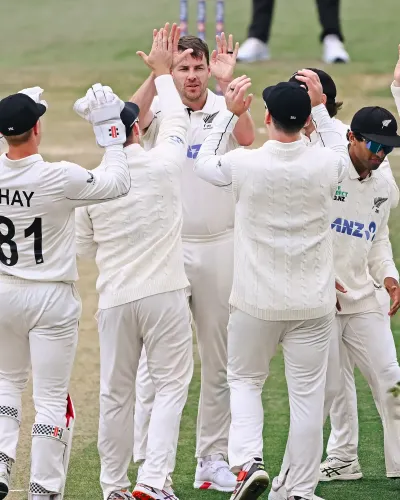
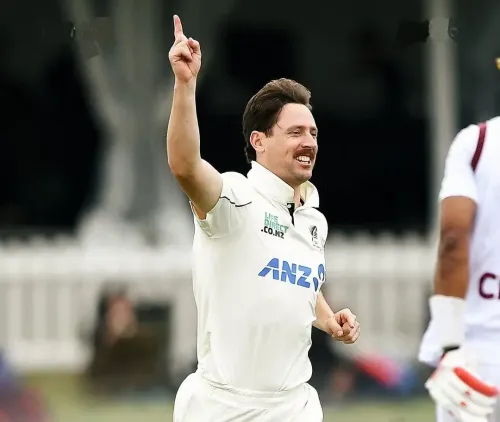
Pant dismissal: Duffy explains plan as India slump to 116/6
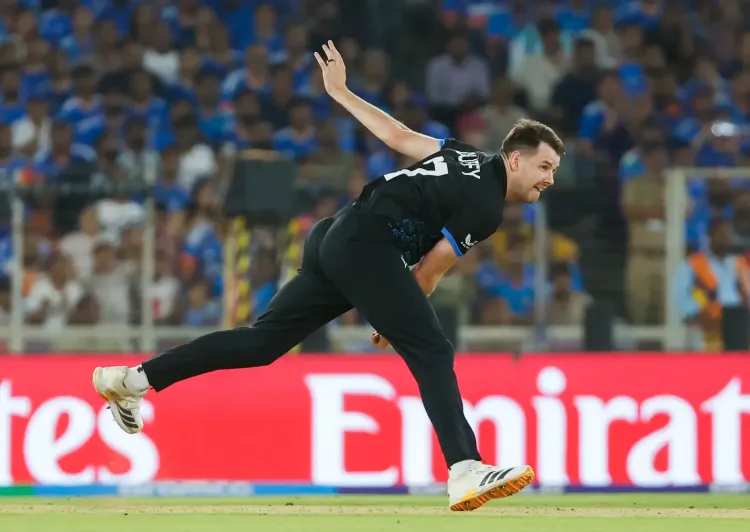
Synopsis
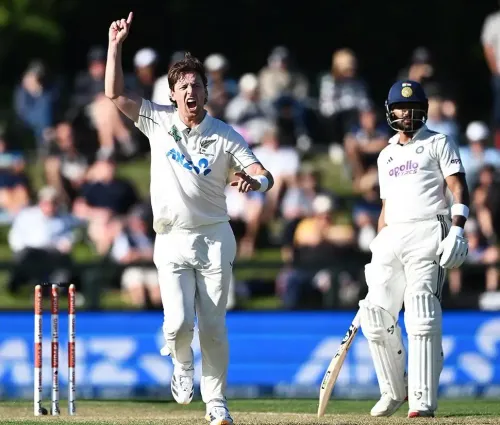
Rishabh Pant hit Jacob Duffy for six, then charged him again and miscued to point. Duffy says that was the plan: don't flinch, stay on top of off. India ended Day 2 at Hagley Oval on 116/6, trailing New Zealand by 240.
Key Takeaways
Rishabh Pant was dismissed by Jacob Duffy with India at 96/3 in reply to New Zealand's 356 in the second Test at Hagley Oval .
Pant had hit Duffy for a six towards long-on in the previous over before miscuing to point.
Duffy said the plan was to avoid changing length and keep bowling on top of off .
Duffy returned 2-21 in eight overs , while Kyle Jamieson also took two wickets.
India ended Day 2 on 116/6 , trailing by 240 runs .
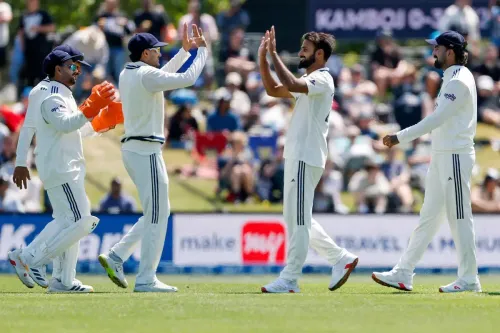
New Zealand fast bowler Jacob Duffy has explained the thinking behind his dismissal of Rishabh Pant in the first innings of the second Test at Hagley Oval in Christchurch. Pant's wicket left India at 96/3 in reply to New Zealand's 356. By stumps on Day 2 on Saturday, 28 November 2026, the visitors had slumped to 116/6, still 240 runs behind.
Duffy finished the day with 2-21 from eight overs. Kyle Jamieson also took two wickets as the hosts tightened their grip on the match.
How Pant Fell at Hagley Oval
Pant had made a start and appeared to be taking the attack to New Zealand. In Duffy's previous over, the left-hander charged down the track and hit him for a six towards long-on.
Duffy changed his line and length in his next over. He pitched one on a good length, angling in, as Pant advanced again. This time Pant miscued the ball to point, giving away his wicket with India already under pressure.
The shot was widely seen as reckless given the match situation. India were facing a large first-innings deficit, and the dismissal pushed them into deeper trouble.
What Duffy Said About Bowling to Pant
Speaking to the media after the end of Day 2, Duffy said the key was to stay calm when Pant attacked. “Yeah, it's obviously with Rishabh (varying the line and length). When he's obviously coming down the track and having a slog every now and then. It's just, it's not getting stressed about that,” he said.
“You know, sometimes it's going to come off, and sometimes it's not. I guess for us it's still like not letting him hit you off your length. I guess what it is. You know, sometimes when guys do that, and the bowler reacts, and it changes their length, and that's exactly what he wants,” Duffy explained.
“He wants you to not be put in on top of off. So, it's not getting deterred by that, I guess. And obviously using short ball is still pretty important, no matter if it's Rishabh or anyone. So, that's always going to be important,” he added.
The Follow-Up Ball Strategy
Duffy also described New Zealand's broader plans against Indian batters. He noted that they tend to move late at the crease, especially in white-ball cricket. “I think we see it, especially in white-ball cricket, that Indian players move so late. So, it's actually really hard,” he said.
“I guess it's just the follow-up balls that you do. You know, if a guy advances at you and then, I guess, the next ball, he wants you to drop short in theory there, right, because he's sitting back and waiting for it shorter,” Duffy said.
“So, I guess it's not getting deterred by that and put off by it, and it's actually just going back to OK, back to top of off,” he added.
Notably, the dismissal followed exactly this pattern. After being hit for six, Duffy kept his length rather than dropping short, and Pant's second charge ended in a miscue.
India Face Uphill Task on Day 3
At 116/6, India trail by 240 runs with only four first-innings wickets left. The New Zealand seam attack, led by Duffy and Jamieson, has exploited the conditions at Hagley Oval.
India's lower order now faces the task of reducing the deficit, while New Zealand will look to wrap up the innings quickly on Day 3 and build a commanding position in the Christchurch Test.
Point of View
But this dismissal shows its cost when the side is in trouble. Duffy's comments reveal that New Zealand were not unsettled by the six. They expected the charge and waited for the mistake. Coming at 96/3 against a 356-run total, it was a poor choice of moment. India's batting group now has to show it can read the match situation, not just the ball.
NationPress
28 Nov 2026
Frequently Asked Questions
How was Rishabh Pant dismissed in the second Test against New Zealand?
Pant charged down the track to a good-length ball from Jacob Duffy and miscued it to point. In the previous over, he had hit Duffy for a six towards long-on.
What was Jacob Duffy's plan against Rishabh Pant?
Duffy said the plan was to stay calm when Pant attacked and not change his length. He said bowlers needed to keep going back to top of off while still using the short ball.
What is the score at the end of Day 2 of the Christchurch Test?
India ended Day 2 on 116/6 in reply to New Zealand's first-innings total of 356. They trail by 240 runs.
Who took wickets for New Zealand on Day 2?
Jacob Duffy took 2-21 in eight overs, and Kyle Jamieson also claimed two wickets as India slipped to 116/6.
Where is the second India vs New Zealand Test being played?
The second Test is being played at Hagley Oval in Christchurch, New Zealand.