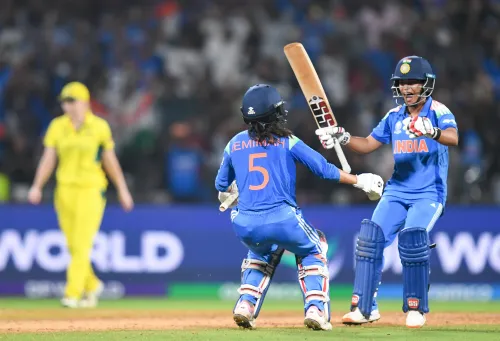
Australia Women's T20 World Cup win: Saba Karim on what rivals must do
Synopsis
Australia's seventh Women's T20 World Cup title wasn't just another trophy — it exposed a widening strategic gap. Saba Karim's verdict is stark: rivals, including India, cannot match Australia player-for-player and must out-think them or be outclassed. The Litchfield-Mooney Powerplay blitz at Lord's made the case better than any stat sheet could.
Key Takeaways
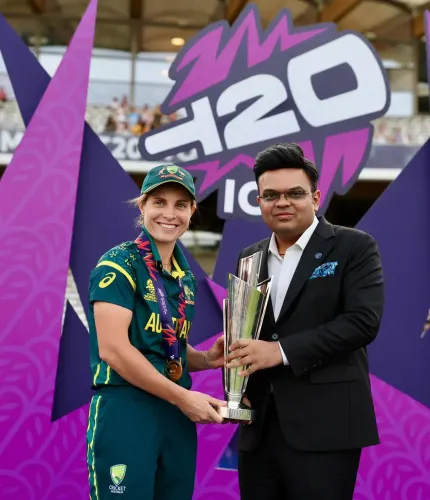
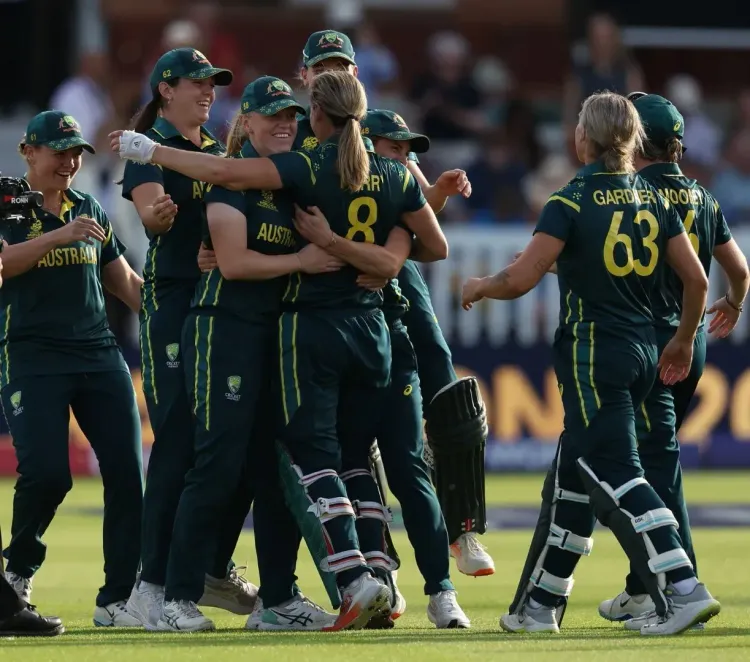
Australia won their seventh Women's T20 World Cup title, beating England by seven wickets at Lord's Cricket Ground .
Saba Karim said rivals must be 'more ruthless and one step ahead strategically' to challenge Australia.
Phoebe Litchfield and Beth Mooney scored 62 runs in the Powerplay, effectively ending the final early.
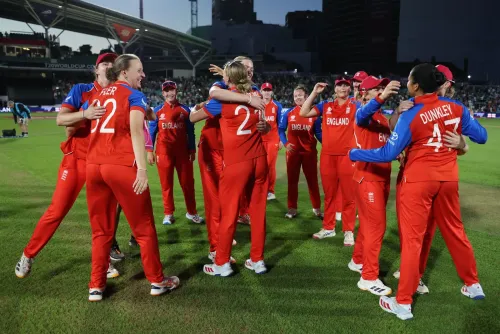
England scored only 39 runs in their Powerplay, losing two wickets — a start Karim called a match-losing error.
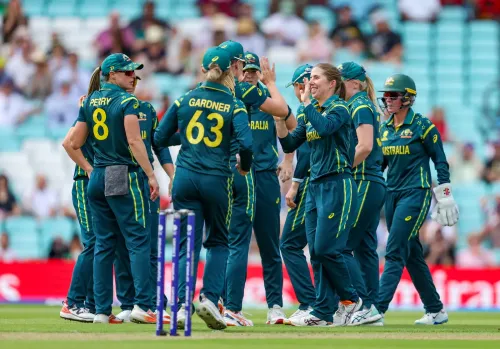
Ellyse Perry , in her 10th World Cup , improved her strike rate from 120 to 140 — cited by Karim as the standard others must chase.
Karim urged India to identify and develop players capable of scoring at high strike rates in T20 internationals.
Former India cricketer and national selector Saba Karim has said that teams aspiring to dethrone Australia in women's cricket must be 'more ruthless' and think strategically ahead of them — a lesson he believes India must absorb urgently. His remarks came after Australia claimed their seventh Women's T20 World Cup title with a commanding seven-wicket victory over England at Lord's Cricket Ground.
Australia's Dominance on Display at Lord's
In the final, England were restricted to 150/4 before Australia overhauled the target with 17 balls to spare, finishing the chase in clinical fashion. Phoebe Litchfield and Beth Mooney stitched together 62 runs in the first six overs alone, effectively ending the contest inside the Powerplay. It was a masterclass in aggressive, purposeful batting that underlined why Australia remain the benchmark in the women's game.
What Karim Said Rivals Must Do
'The other teams can compete with this Australian side only when they are a bit more ruthless and one step ahead of them strategically, because in a player-to-player comparison, they simply cannot match them,' Karim said on JioStar.
He stressed that the lesson is particularly relevant for India: 'To compete against and defeat Australia, they need to think ahead about the kind of players they require, players who can score heavily in T20 internationals at a higher strike rate.'
The Perry and Mooney Standard
Karim singled out veteran Ellyse Perry — appearing in her 10th World Cup — as a model of relentless self-improvement. 'Why does she need to work so hard and improve her strike rate from 120 to 140? She could have stayed in her comfort zone. But she put in that effort to improve,' he observed.
He added that Beth Mooney is currently striking at 140, noting: 'That is the difference in the T20 format. Until players ask themselves uncomfortable questions, reaching that level will be difficult.'
England's Timid Approach Dissected
Karim was pointed in his criticism of England's batting strategy. England managed just 39 runs in the Powerplay while losing two wickets, a start he described as conceding half the match. He noted that captain Nat Sciver-Brunt, despite being 'a brilliant batter', scored only 58 runs off 53 balls at a strike rate of 109.
'How can you defeat a team like Australia with such a timid approach? You need to score at least 175-180 runs in 20 overs, have that fearless approach, only then can you build pressure on this team,' he said.
The Tactical Gap and What Comes Next
Karim concluded that it is Australia's tactical brilliance — not just individual talent — that separates them from every other side. Mooney herself reportedly stated that her goal was to 'finish half the match in the Powerplay', a mindset that proved decisive. For India and other contenders, the path forward demands not just better players but a fundamentally different strategic culture — one built around high-pressure, high-strike-rate batting and a willingness to ask hard questions of themselves well before the next World Cup cycle begins.
Point of View
But because they have the highest collective floor of self-demand. The Perry example is instructive — a 10-World-Cup veteran still reengineering her strike rate is not a feel-good story, it is a competitive threat. India's women's setup has the talent but has repeatedly stalled against Australia at knockout stages. The question is whether the national programme will build a pipeline around strike-rate culture or continue selecting for accumulation. England's final — 150 on a Lord's surface, captain striking at 109 — shows what happens when the answer is the latter.
NationPress
5 Oct 2026
Frequently Asked Questions
How did Australia win the Women's T20 World Cup final?
Australia beat England by seven wickets at Lord's Cricket Ground, chasing 151 with 17 balls to spare. Phoebe Litchfield and Beth Mooney put on 62 runs in the Powerplay, effectively settling the contest inside the first six overs.
What did Saba Karim say about beating Australia?
Saba Karim said teams can only compete with Australia by being more ruthless and thinking strategically ahead of them, since a player-for-player comparison does not favour any rival side. He specifically urged India to develop high-strike-rate T20 batters.
Why did Karim criticise England's batting in the final?
Karim pointed out that England scored only 39 runs in the Powerplay while losing two wickets, and that captain Nat Sciver-Brunt batted at a strike rate of just 109. He argued that such a conservative approach cannot put Australia under pressure and that teams need to target 175-180 runs.
What example did Karim give of Australia's work ethic?
Karim highlighted Ellyse Perry, who is playing her 10th World Cup and has improved her strike rate from 120 to 140. He used her as an example of a player who refused to stay in her comfort zone despite Australia's dominance.
What is the lesson for India from Australia's Women's T20 World Cup victory?
According to Karim, India must plan ahead to identify and groom players capable of scoring at high strike rates in T20 internationals. He said that to defeat Australia, India needs a fearless batting culture rather than a defensive one.