Yogasana must be treated as a sport, not spiritual act: Udit Sheth on PM Modi's vision

Synopsis
Yogasana is not yoga — and that distinction sits at the heart of Udit Sheth's pitch. With PM Modi backing a strict 'sport-first' framing, Yogasana Bharat is betting on broadcast quality, AR/VR, and global curricula to turn an Indian heritage practice into the country's first home-grown sporting export.
Key Takeaways
Udit Sheth , President of Yogasana Bharat , said PM Narendra Modi has directed that Yogasana be treated as a sport, not a spiritual activity.
The Sports Authority of India is supporting the discipline via the ACTC programme and championship backing.
Yogasana is a codified competitive sport with electronic scoring and individual, pair, rhythmic, and artistic formats — distinct from traditional yoga.
Yogasana Bharat is investing in AR, VR, live scoring, and world-class commentary to make the sport broadcast-friendly.
The federation plans MoUs to embed Yogasana in school and university curricula globally.
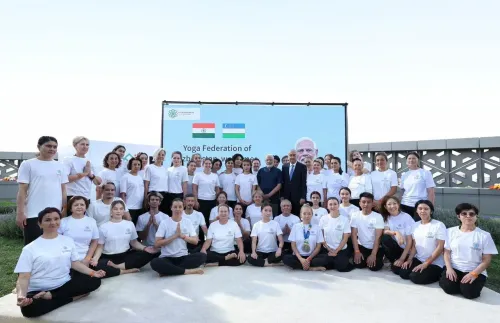
Yogasana must be positioned as a competitive global sport rather than a spiritual practice, Udit Sheth, President of Yogasana Bharat and Vice President of World Yogasana, said on 3 June, citing direct guidance from Prime Minister Narendra Modi. In an exclusive interview in New Delhi, Sheth outlined a roadmap built around federation structure, world-class broadcast presentation, and international participation.
The Prime Minister's directive
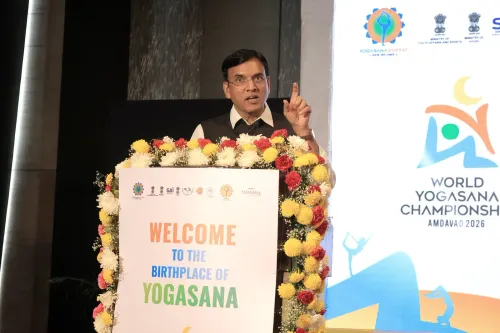
Sheth said the PM's clarity has been pivotal in shifting Yogasana's positioning from a wellness or cultural activity to a structured sporting discipline. “The Prime Minister has been very clear that when we talk about Yogasana sport, we must treat it as a sport. It should not be positioned primarily as a spiritual activity. It must be global. It must have a strong federation structure. The commentary must be world-class, and we must maximise international participation,” Sheth said.
He credited the Sports Authority of India (SAI) for backing the discipline through programmes such as ACTC and for ensuring that championships receive both state and central government support.
Yoga versus Yogasana — the key distinction
Sheth flagged a common misconception that yoga and Yogasana are interchangeable. While traditional yoga spans meditation, breathing techniques, and philosophy, Yogasana is a competitive sport focused exclusively on asana performance under a codified rulebook and scoring system.
Today's competitions feature defined judging criteria, difficulty classifications, challenge rounds, electronic scoring, and multiple formats — individual, pair, rhythmic, and artistic — evaluated on technical and artistic parameters.
Building a broadcast-ready product
Drawing on nearly two decades in sports infrastructure, including his role in developing The Arena by TransStadia, Sheth argued that participation alone will not secure Yogasana's future. “If viewers change the channel, we are finished,” he said, stressing the need to build narratives, heroes, and fan followings comparable to those of Sachin Tendulkar or David Beckham.
Yogasana Bharat is reportedly investing in live scoring, enhanced graphics, action replays, augmented reality (AR), virtual reality (VR), and immersive viewing tools to make competitions accessible to first-time audiences. Sheth singled out commentary as the single most important element — a point he said the Prime Minister had personally emphasised.
Global ecosystem and curriculum push
Sheth's long-term plan extends to embedding Yogasana in school and university curricula across multiple countries, backed by MoUs with governments, educational institutions, and sporting bodies. He also envisages dedicated academies, structured coaching pathways, and internationally recognised athlete development programmes.
India's sporting contribution to the world
Unlike most global sports adopted from abroad, Sheth argued, Yogasana offers India an opportunity to export an original discipline. “Yogasana has the potential to become India's greatest sporting contribution to the world,” he concluded, noting that elite athletes globally already use yoga for flexibility, recovery, and mental conditioning.
The next phase, by his account, hinges on execution — turning a heritage practice into a sustainable, televised, internationally competitive sport.
Point of View
Not spirituality' framing is strategically sharp — it sidesteps the cultural baggage that has kept yoga out of competitive sporting structures globally. But the real test isn't federation paperwork or AR graphics; it's whether Yogasana can build a televised star system in a market already saturated with cricket and kabaddi. India has tried to export disciplines before — kabaddi's global push remains uneven despite a successful domestic league. Without a marquee international circuit and identifiable athlete heroes, Yogasana risks remaining a participation sport with ceremonial weight but limited commercial pull.
NationPress
27 Sept 2026
Frequently Asked Questions
What is the difference between yoga and Yogasana sport?
Yoga is a broader philosophical practice encompassing meditation, breathing, and asanas, while Yogasana is a competitive sport that focuses exclusively on the asana component under a codified rulebook. Yogasana competitions use electronic scoring, defined difficulty levels, and multiple formats including individual, pair, rhythmic, and artistic categories.
What has PM Modi said about Yogasana as a sport?
According to Yogasana Bharat President Udit Sheth, PM Narendra Modi has directed that Yogasana be treated strictly as a sport rather than a spiritual activity. Modi has reportedly stressed the need for a strong federation structure, world-class commentary, and maximum international participation.
How is the Sports Authority of India supporting Yogasana?
The Sports Authority of India (SAI) is supporting Yogasana through its ACTC programme and by ensuring that championships receive backing from both state and central governments. This institutional support is helping the sport establish a competitive structure across India.
What are Yogasana Bharat's plans for global expansion?
Yogasana Bharat plans to sign MoUs with foreign governments, educational institutions, and sporting bodies to embed Yogasana in school and university curricula. The federation also intends to set up academies, coaching pathways, and internationally recognised development programmes.