Roshibina Devi wins third straight Asian Games medal, eyes gold after silver in Nagoya
Synopsis
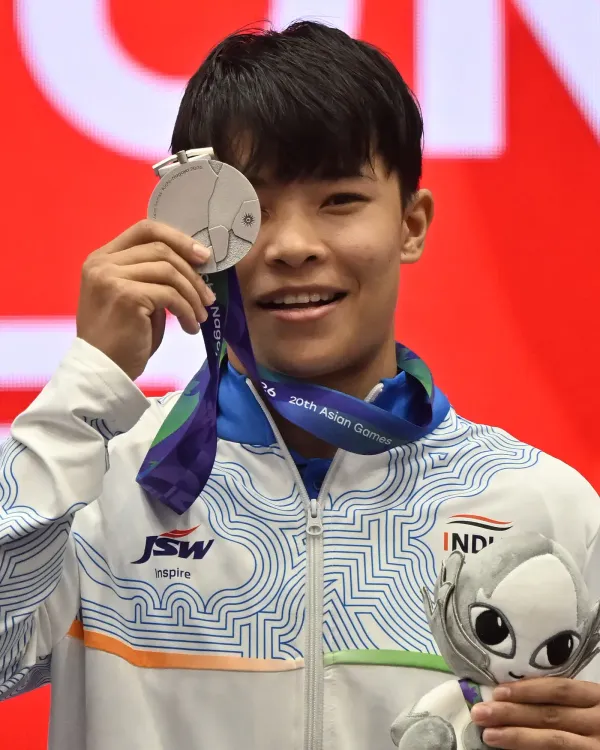
Roshibina Devi walked into Nagoya 2026 as a last-minute replacement, with barely any preparation time, and still made three Asian Games medals in a row. She lost gold to China's Zhang Xiaoyu again — but her vow to 'change the colour' signals this Manipur farmer's daughter is nowhere near done competing at the highest level.
Key Takeaways
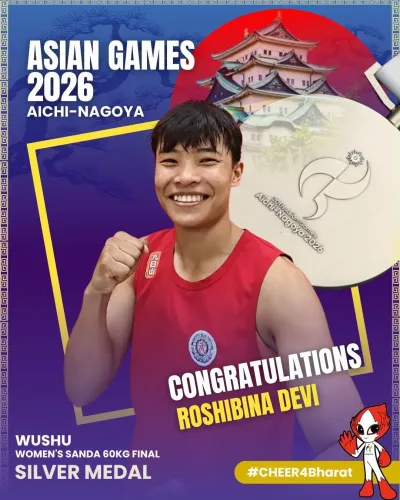
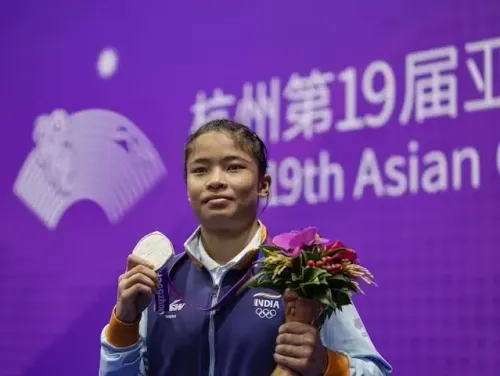
Roshibina Devi won silver in Women's Wushu 60kg at the 2026 Asian Games in Nagoya on 24 September 2026 .
She lost the gold-medal bout 0-2 to Zhang Xiaoyu of China , her second successive Asiad final defeat to a Chinese opponent.
This is her third consecutive Asian Games medal — bronze in Jakarta 2018, silver in Hangzhou 2023, and silver in Nagoya 2026.
She entered Nagoya as a last-minute replacement after Divyanshi Choudhary withdrew due to medical reasons.
Roshibina trains at SAI NCOE Imphal under coach Maibam Premkumar Singh and is an Arjuna Award recipient.
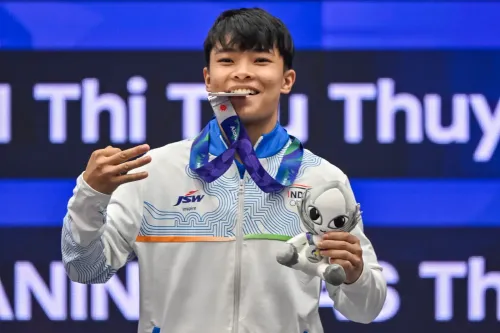
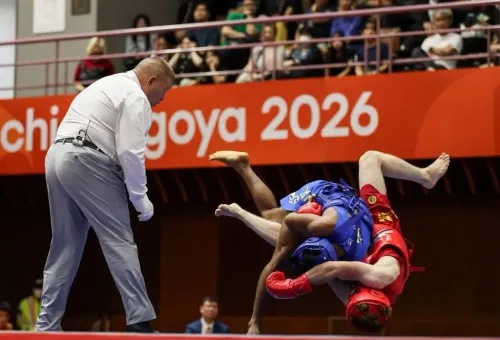
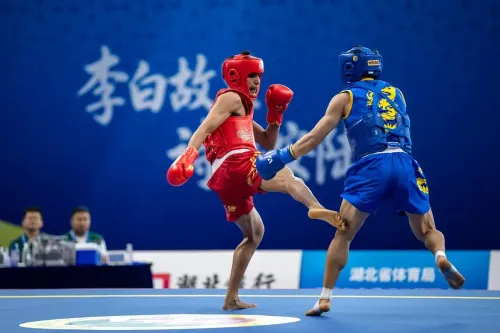
Arjuna Award-winner Roshibina Devi claimed her third consecutive Asian Games medal on Thursday, 24 September 2026, finishing with a silver in the Women's Wushu 60kg category at the Aichi Prefectural Martial Arts Hall in Nagoya. The Manipur-born athlete lost the gold-medal bout 0-2 to Zhang Xiaoyu of China, marking the second successive Asiad final in which she has been edged out by a Chinese opponent.
How the medal was won
Roshibina navigated a demanding draw on her way to the final. She opened with a commanding 5-0 victory over Macao's Chu Man Sin in the quarterfinals, booking her a guaranteed podium finish. She then advanced with a 2-0 win over Indonesia's Thania Kusumaningtyas in the semifinals, before ultimately going down 0-2 to China's Zhang Xiaoyu in the gold-medal contest.
The athlete's own words
'I am very happy to win the Wushu medal for the third time for India. I will prepare for more games in the future and look to change the colour of the medal,' Roshibina said after the bout. She acknowledged the constraints heading into the tournament: 'I had a short preparation time, and Zhang's range is also a little longer than mine. So, she took advantage of that. I am preparing to improve and do better than before.'
She also reflected on the physical and competitive demands of continuing to compete: 'It was not easy to win a medal back-to-back. It is not easy to recover from injuries and compete with the youth. But I will do better in the future. I want to be ready to compete with them.'
A last-minute entry with a storied past
Roshibina's path to Nagoya was anything but straightforward. She initially missed out on the Indian squad after losing the selection trial to Divyanshi Choudhary. She was called up as a replacement only after Divyanshi withdrew following medical examinations — leaving Roshibina with minimal preparation time ahead of the continental showpiece.
Her medal haul at the Asian Games now reads: bronze at the 2018 Jakarta Asiad, silver at the 2023 Hangzhou Asiad — where she lost to China's Wu Xiaowei — and now a second successive silver in Nagoya 2026. She had become only the second Indian to win a Wushu silver at the Asian Games in Hangzhou; the Nagoya silver consolidates her position as the most decorated Indian Wushu athlete at the Games.
Background and recognition
Roshibina comes from a farming family in Kwasiphai, Bishnupur district, Manipur. She trains in the Women's Sanda 60kg category at SAI NCOE Imphal under coach Maibam Premkumar Singh. Her achievements have earned her the Arjuna Award — India's second-highest sporting honour — as well as the International Wushu Federation's Female Wushu Athlete of the Year (Sanda) title.
With her sights firmly set on gold, Roshibina's journey from a farming household in Manipur to back-to-back Asian Games finals remains one of Indian sport's more remarkable stories in recent years — and by her own account, it is far from over.
Point of View
With reduced training time, she still beat Macao and Indonesia convincingly before facing China. The question Indian sports administrators should be asking is not why she lost the final, but why India's selection system nearly kept its most decorated Wushu athlete out of the squad entirely. A process that requires an Arjuna Award winner to go through a single elimination trial — and then relies on injury luck for reinstatement — is a system that manages risk rather than nurtures excellence.
NationPress
24 Sept 2026
Frequently Asked Questions
What medal did Roshibina Devi win at the 2026 Asian Games?
Roshibina Devi won a silver medal in the Women's Wushu 60kg event at the 2026 Asian Games in Nagoya on 24 September. She lost the gold-medal bout 0-2 to China's Zhang Xiaoyu.
How many Asian Games medals has Roshibina Devi won in total?
Roshibina Devi has won three Asian Games medals in total — a bronze at the 2018 Jakarta Games, a silver at the 2023 Hangzhou Games, and a silver at the 2026 Nagoya Games. She is India's most decorated Wushu athlete at the Asian Games.
Why was Roshibina Devi's selection for the 2026 Asian Games unusual?
Roshibina initially failed to make the Indian squad after losing the selection trial to Divyanshi Choudhary. She was called up as a last-minute replacement only after Divyanshi withdrew following medical examinations, leaving her with very limited preparation time.
Who did Roshibina Devi defeat on her way to the final in Nagoya?
She defeated Macao's Chu Man Sin 5-0 in the quarterfinals and Indonesia's Thania Kusumaningtyas 2-0 in the semifinals before losing to China's Zhang Xiaoyu in the gold-medal bout.
What awards and honours has Roshibina Devi received?
Roshibina Devi has received the Arjuna Award, India's second-highest sporting honour, and the International Wushu Federation's Female Wushu Athlete of the Year (Sanda) title. She trains at SAI NCOE Imphal under coach Maibam Premkumar Singh.