Have 2.8 million Afghan refugees returned to their homeland in 2025?
Synopsis
In a significant turn of events, Afghanistan witnesses the return of approximately 2.8 million refugees in 2025. The Ministry of Economy reports economic growth and increased hopes for stability, as the government implements strategies to support local development. This article explores the implications of this mass repatriation and the Afghan government's plans moving forward.
Key Takeaways
2.8 million Afghan refugees returned in 2025.
The Afghan economy is showing signs of growth.
Government initiatives focus on private sector development.
Support for returning families includes humanitarian aid.
Telecom companies are assisting with communication needs.
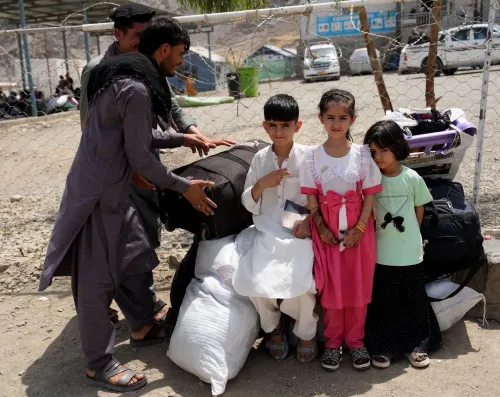
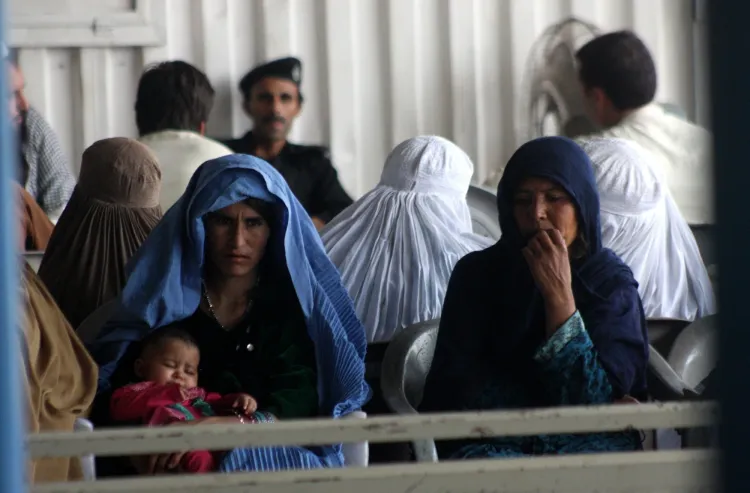
Kabul, Jan 1 (NationPress) In 2025, approximately 2.8 million Afghan refugees have made the journey back to their native land, Afghanistan, as reported by the country's Ministry of Economy. Abdul Rahman Habib, the ministry's spokesperson, shared details via the Radio and Television of Afghanistan (RTA) on Wednesday night, stating, "In just one year, around 2.8 million refugees have returned home. The economy is on an upward trajectory, and optimism for future economic stability is growing."
While Habib refrained from providing further specifics regarding the refugees' return, he emphasized that the Afghan government remains committed to bolstering the private sector, attracting foreign investment, and executing significant development projects. These measures are aimed at enhancing local production, stabilizing the national economy, generating job opportunities, and ultimately reducing poverty, according to reports from the Xinhua news agency.
For over four decades, millions of Afghan refugees had sought safety in neighboring Pakistan and Iran, fleeing war and civil turmoil.
Earlier on Wednesday, it was reported by a Taliban official that more than 2,000 Afghan refugees were repatriated from Pakistan and Iran in a single day.
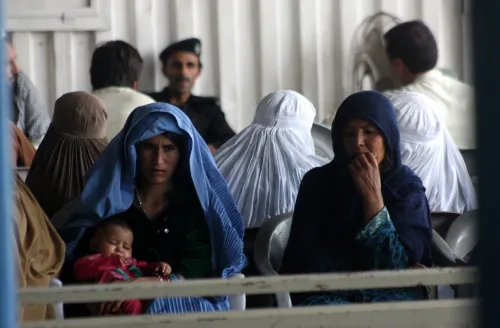
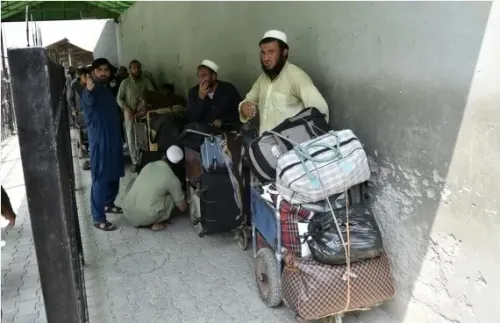
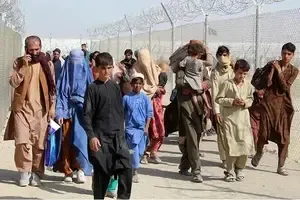
Deputy spokesperson Mullah Hamdullah Fitrat shared insights from the High Commission for Addressing Migrants' Issues on X, revealing that 450 families, totaling 2,254 individuals, returned to Afghanistan on Tuesday, as reported by Pajhwok Afghan News.
These refugees crossed back into Afghanistan through various points, including the Spin Boldak crossing in Kandahar, Bahramcha crossing in Helmand, Torkham crossing in Nangarhar, Islam Qala crossing in Herat, and Pul-i-Abresham in Nimroz.
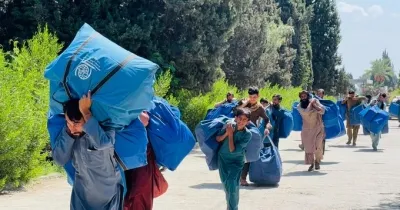
Fitrat mentioned that 199 families, comprising 1,018 individuals, were escorted to their original home areas, while 417 families received humanitarian support.
Additionally, telecommunication companies facilitated the transition by providing 390 SIM cards to the returning refugees.
A total of 2,827 Afghan migrants were also reported to have been deported from Iran and Pakistan.
Point of View
It is crucial to recognize the complexities surrounding the return of Afghan refugees. While the repatriation signifies hope for many, it is essential to assess the broader implications for the national economy and social fabric. Afghanistan must navigate this transition with care, ensuring support for returning families and fostering an environment conducive to recovery and growth.
NationPress
3 Oct 2026
Frequently Asked Questions
What factors have contributed to the return of Afghan refugees?
The return of Afghan refugees can be attributed to improving economic conditions, government support for local development, and the desire for stability after decades of conflict.
How is the Afghan government supporting returning refugees?
The Afghan government is focusing on bolstering the private sector, attracting foreign investments, and implementing major development projects to stabilize the economy and create job opportunities.
What challenges might returning refugees face?
Returning refugees may encounter challenges such as lack of resources, reintegration into local communities, and finding employment in a recovering economy.
Which countries were home to the Afghan refugees before their return?
Prior to their return, many Afghan refugees lived in neighboring countries, notably Pakistan and Iran, for over four decades.
What measures are being taken for the humanitarian support of returning refugees?
The Afghan government and various organizations are providing humanitarian assistance, including shelter and essential supplies, to support returning families.