Major Bust: 4 Arrested in Mumbai for Selling Elephant Tusks Worth Rs 3.5 Crore
Synopsis
Chembur Police busted a major ivory trafficking ring on April 22, arresting four men found with two elephant tusks weighing over 31 kg and valued at Rs 3.5 crore in a Mumbai hotel sting. The case exposes a growing wildlife crime network and is being investigated under the Wildlife Protection Act, 1972.
Key Takeaways
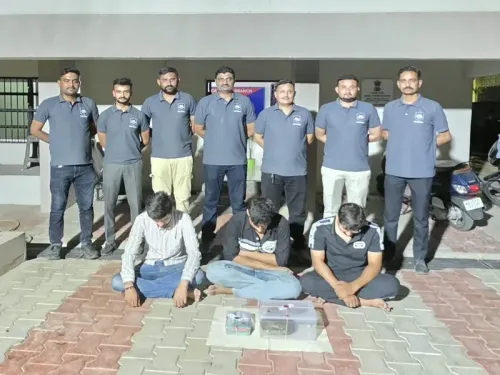
Four men — Akash Avhad, Sandip Bidlan, Shashank Ranjankar, and Dinesh Agnivanshi — were arrested by Chembur Police on April 22, 2025 for attempting to sell elephant tusks illegally.
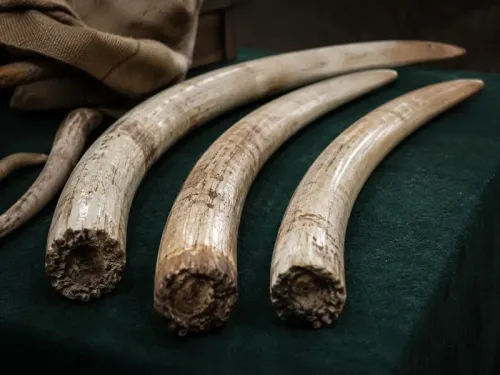
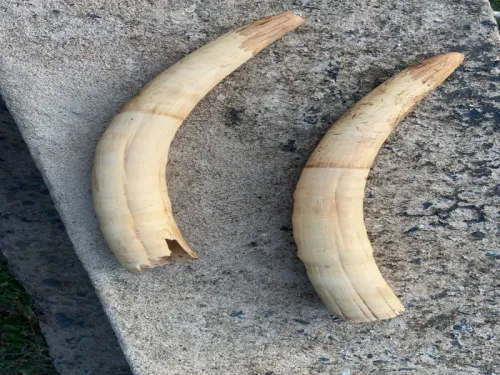
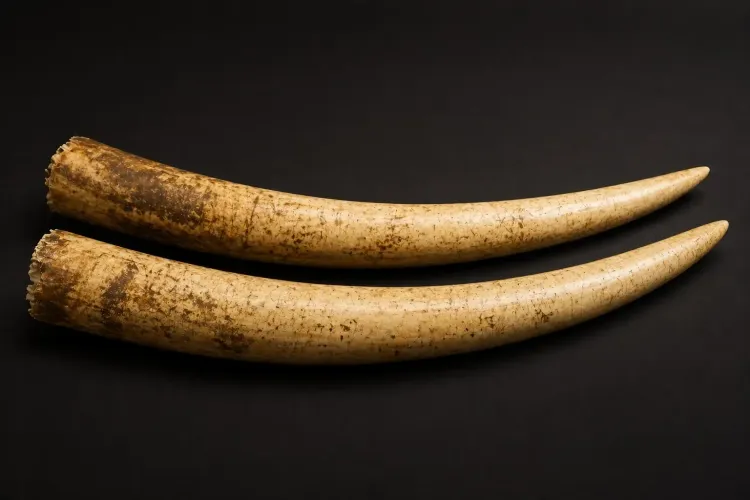
The seized tusks weighed 11 kg and 20.6 kg respectively and were valued at approximately Rs 3.5 crore on the black market.
The Maharashtra Forest Department confirmed the seized items were genuine elephant tusks during a spot inspection.
A case has been filed under the Bharatiya Nyaya Sanhita (BNS) and Wildlife Protection Act, 1972 (Sections 9, 39, 44, 48, 50, 51) .
Four mobile phones recovered from the accused are being examined to trace the wider ivory trafficking network and the source of the tusks.
This arrest follows a separate case in February 2025 involving the theft of two elephant tusks worth Rs 2 crore from the Pangode Military Station in Kerala .
Mumbai, April 25 (NationPress): In a significant crackdown on wildlife trafficking, the Chembur Police arrested four individuals on April 22, 2025, for allegedly attempting to illegally sell elephant tusks valued at approximately Rs 3.5 crore in Mumbai's RC Marg area. The operation, executed by the Crime Detection Unit (CDU), was triggered by a credible tip-off about an active illegal ivory trade network operating in the city.
How the Sting Operation Unfolded
Acting on specific intelligence, the Crime Detection Unit meticulously planned a trap at a hotel on RC Marg, Chembur. Informants were deployed to pose as prospective buyers and negotiate a deal with the accused. A room was booked at a local lodging facility where the suspects agreed to deliver the contraband ivory for the transaction.
Once informants signalled that the accused had arrived with the goods, the police team swiftly raided the hotel room. Officers found four individuals inside, with two ivory tusk-like objects placed openly on the bed — a brazen display that underscored the confidence of the traffickers.
The Accused and Seized Contraband
The four arrested individuals have been identified as Akash Ashok Avhad (28), Sandip Randhir Bidlan (33), Shashank Chandrashekhar Ranjankar (38), and Dinesh Rammanohar Agnivanshi (40). Officials from the Maharashtra Forest Department were immediately summoned to the scene and prima facie confirmed that the seized items were genuine elephant tusks.
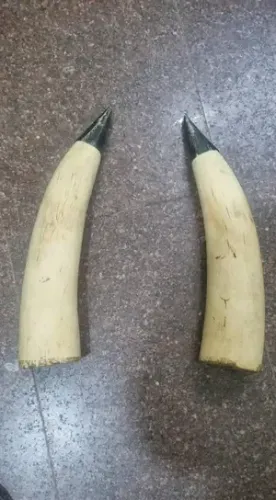
The seized contraband comprised two elephant tusks weighing approximately 11 kg and 20.6 kg respectively, along with bags and packing materials used for transportation. Police also recovered four mobile phones from the accused, which are expected to yield crucial leads about the wider trafficking network.
Legal Action and Charges Filed
All seized items were formally seized and sealed following prescribed legal procedure. The accused were taken into custody and brought to the Chembur Police Station for further legal proceedings.
A case has been registered under relevant sections of the Bharatiya Nyaya Sanhita (BNS) and provisions of the Wildlife Protection Act, 1972, including Sections 9, 39, 44, 48, 50, and 51. These sections collectively address the prohibition on hunting protected animals, possession of wildlife products, and illegal trade in scheduled species — offences that can carry imprisonment of up to seven years.
Wider Pattern of Ivory Trafficking in India
This arrest is not an isolated incident but part of a deeply troubling pattern of wildlife crime across India. Notably, in February 2025, the Poojappura Police in Thiruvananthapuram, Kerala, launched a separate investigation into the alleged theft of two elephant tusks worth Rs 2 crore from the Pangode Military Station — with a suspected connection to a DJ party held at the premises, raising serious questions about internal security protocols.
India's elephant population, already under pressure from habitat loss and human-wildlife conflict, faces an additional existential threat from poaching for ivory. According to wildlife conservation data, India is among the top five countries globally for elephant poaching incidents. The ivory black market remains lucrative, with tusks fetching anywhere between Rs 15,000 to Rs 25,000 per kilogram on the underground market — making the Rs 3.5 crore valuation in this case consistent with prevailing illegal rates.
Investigation Ongoing: Tracing the Supply Chain
Authorities are now focused on tracing the origin of the tusks — whether from poached wild elephants or from stolen temple/forest department stockpiles — and identifying other members of the trafficking syndicate. The four mobile phones recovered from the accused are being forensically examined to map the communication network.
The Maharashtra Forest Department is expected to play a central role in the ongoing probe, alongside the police. Wildlife trafficking syndicates in India are known to operate across state lines, often with links to international smuggling routes through Southeast Asia and Africa.
As the investigation deepens, authorities are likely to pursue leads that could expose a far larger interstate or even transnational ivory smuggling operation — making this Mumbai bust a potentially pivotal moment in India's fight against organised wildlife crime.
Point of View
Organised, and operating in plain sight within its megacities. The brazenness of suspects delivering tusks to a hotel room speaks to a syndicate with established supply chains and buyer networks. What authorities must urgently answer is not just who these four men are, but who their suppliers are — because every elephant tusk on a black market bed represents a dead elephant somewhere in India's forests. With a parallel tusk theft case from a Kerala military station still unresolved, India's law enforcement needs to treat ivory trafficking with the same urgency as narcotics smuggling.
NationPress
19 Sept 2026
Frequently Asked Questions
Who were arrested by Chembur Police for selling elephant tusks?
The four individuals arrested are Akash Ashok Avhad (28) , Sandip Randhir Bidlan (33) , Shashank Chandrashekhar Ranjankar (38) , and Dinesh Rammanohar Agnivanshi (40) . They were apprehended on April 22, 2025 , during a sting operation at a hotel in Chembur, Mumbai.
What is the value of the elephant tusks seized in the Chembur case?
The two seized elephant tusks were valued at approximately Rs 3.5 crore . The tusks weighed 11 kg and 20.6 kg respectively and were confirmed as genuine by officials from the Maharashtra Forest Department .
What laws apply to elephant tusk possession and sale in India?
Possession and sale of elephant tusks is strictly prohibited under the Wildlife Protection Act, 1972 , specifically Sections 9, 39, 44, 48, 50, and 51 . Offenders can face imprisonment of up to seven years and heavy fines.
How did the Chembur Police catch the ivory traffickers?
The Crime Detection Unit received a tip-off about illegal ivory trade and set up a sting operation. Informants posed as buyers, arranged a deal, and lured the suspects to a hotel room on RC Marg, Chembur , where police raided and arrested all four accused.
Is elephant ivory trafficking a major problem in India?
Yes, India is among the top countries globally for elephant poaching and ivory trafficking. Illegal tusks fetch between Rs 15,000 to Rs 25,000 per kilogram on the black market, making it a highly lucrative crime. A separate tusk theft case was reported from a Kerala military station in February 2025 , highlighting the scale of the problem.