Warnock calls Supreme Court voting rights ruling 'devastating blow' to democracy
Synopsis
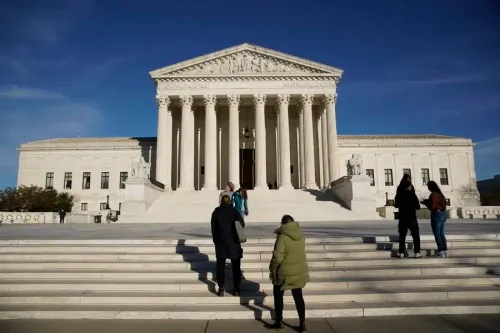
The US Supreme Court has made it harder to challenge racially discriminatory electoral maps — and Senator Raphael Warnock says the fallout will be felt most by Black voters in the South. By raising the bar to proving discriminatory intent, the ruling effectively shields practices that have historically suppressed minority votes, and could trigger a new wave of partisan redistricting ahead of upcoming elections.
Key Takeaways
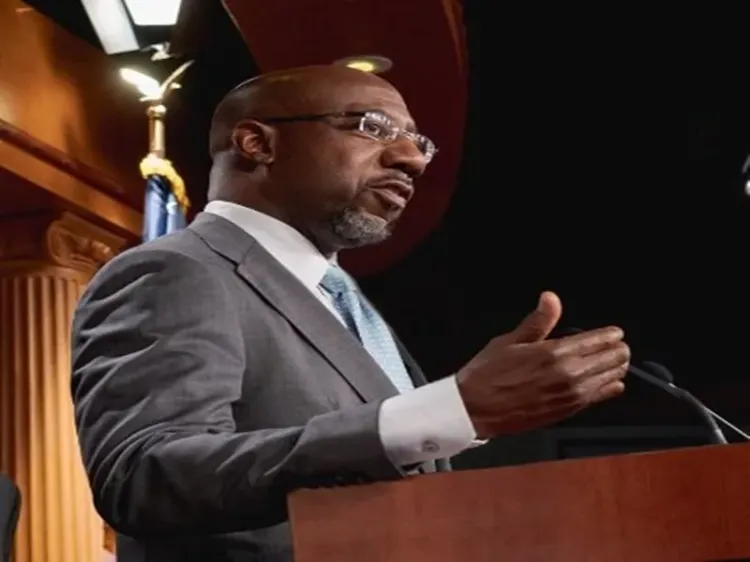
Senator Raphael Warnock called the Supreme Court ruling a "massive and devastating blow" to democracy in a CBS News interview on 3 May .
The ruling narrows Section 2 of the Voting Rights Act , requiring proof of discriminatory intent to challenge electoral maps on racial grounds.
Warnock linked the decision to the 2013 Shelby County v.
Holder ruling, saying the racial turnout gap has grown twice as fast in formerly covered states since then.
He warned the ruling will fuel a redistricting arms race and dilute minority voting power across the South.
Warnock called on Congress to restore federal preclearance requirements and has introduced legislation to ban partisan gerrymandering , which lacks bipartisan support.
Several states have reportedly begun reviewing congressional maps following the ruling, ahead of upcoming elections.
Democratic Senator Raphael Warnock on Sunday, 3 May warned that the US Supreme Court's latest voting rights ruling is a "massive and devastating blow" to democracy, cautioning that the decision will disproportionately harm Black and minority voters, particularly across the American South. Warnock made the remarks in a live interview with CBS News.
What the Ruling Changes
The Supreme Court ruling narrows the application of Section 2 of the Voting Rights Act of 1965, making it significantly harder to challenge electoral maps on the grounds of racial discrimination unless discriminatory intent can be explicitly proven. Critics argue the intent standard sets an almost impossible evidentiary bar, given that many historically suppressive measures were deliberately designed to appear race-neutral on paper.
"What happened this week is nothing less than a massive and devastating blow, not only to our democracy, but particularly to people of colour in the South," Warnock told CBS News.
Warnock's Core Argument
The Georgia senator directly challenged the court's intent-based framework, calling it historically blind. "This question about intent is on its head, misleading, and it ignores our history," he said, noting that Black Americans were denied the vote for decades through mechanisms that were facially neutral but racially targeted in practice.
Warnock drew a direct line to the 2013 Shelby County v. Holder ruling, which gutted federal preclearance requirements under Section 5 of the Voting Rights Act. "Since then, we've seen the racial turnout gap get wider and wider, not smaller," he said, adding that disparities have grown "twice as fast in the states that used to be under Section 5." He warned that the latest decision would accelerate those trends and embolden states to redraw district lines in ways that dilute minority voting power.
The Redistricting Risk
Warnock argued that the ruling pours fuel on what he described as a "redistricting arms race," acknowledging that both major political parties engage in gerrymandering but insisting the practice fundamentally distorts democratic representation. "Gerrymandering turns our elections on its head, so that rather than the people picking their politicians, the politicians are picking their voters," he said.
He noted he has already introduced legislation aimed at banning partisan gerrymandering outright, though the bill has yet to attract bipartisan support in Congress. Several states have reportedly begun reviewing their congressional maps in the wake of the ruling, raising immediate concerns about representation ahead of upcoming elections.
Call for Legislative Action
Warnock urged Congress to restore key provisions of the 1965 Voting Rights Act, including federal preclearance requirements for election law changes in jurisdictions with a documented history of discrimination. He also highlighted ongoing practices — including polling station closures and voter roll purges — which he said data confirms disproportionately affect Black and brown citizens.
Invoking a past dissent by the late Justice Ruth Bader Ginsburg, Warnock said: "Getting rid of the protections of the Voting Rights Act is like getting rid of your umbrella in the midst of a rainstorm because you're not getting wet." With multiple states already moving to redraw maps, the political and legal battles over minority representation are expected to intensify in the months ahead.
Point of View
And now this — that has systematically dismantled the federal architecture built after the Civil Rights era to protect minority voting. Warnock's intent-standard critique is well-founded: historically, the most effective voter suppression was always engineered to look neutral. What mainstream coverage often underplays is the cumulative effect — each ruling individually looks incremental, but together they have hollowed out the Voting Rights Act. The redistricting battles now expected in multiple states will test whether state courts and remaining federal provisions can fill the gap that the Supreme Court has left.
NationPress
21 Sept 2026
Frequently Asked Questions
What did the Supreme Court rule on voting rights?
The Supreme Court narrowed the application of Section 2 of the Voting Rights Act of 1965, making it harder to challenge electoral maps on racial discrimination grounds unless discriminatory intent can be explicitly proven. Critics argue this sets an almost impossible standard given the historically race-neutral framing of many suppressive practices.
Why is Senator Warnock criticising the ruling?
Senator Raphael Warnock argues the ruling ignores historical reality, as Black Americans were denied voting rights for decades through measures designed to appear race-neutral. He says requiring proof of intent effectively shields discriminatory outcomes and will worsen the racial turnout gap, particularly in Southern states.
How does this ruling connect to Shelby County v. Holder?
The 2013 Shelby County v. Holder decision removed federal preclearance requirements for election law changes in states with a history of discrimination. Warnock says that since that ruling, the racial turnout gap has widened and grown twice as fast in formerly covered states, and he warns the latest decision will accelerate those trends.
What legislation has Warnock proposed in response?
Warnock has introduced legislation aimed at banning partisan gerrymandering and restoring key provisions of the 1965 Voting Rights Act, including federal preclearance requirements. However, the bill has not yet attracted the bipartisan support needed to advance in Congress.
What is the immediate impact of the ruling?
Several states have reportedly already begun reviewing their congressional maps following the ruling, raising concerns about minority representation ahead of upcoming elections. Warnock warned the decision will embolden states to redraw district lines in ways that dilute Black and minority voting power.